
Hermetic Geometry

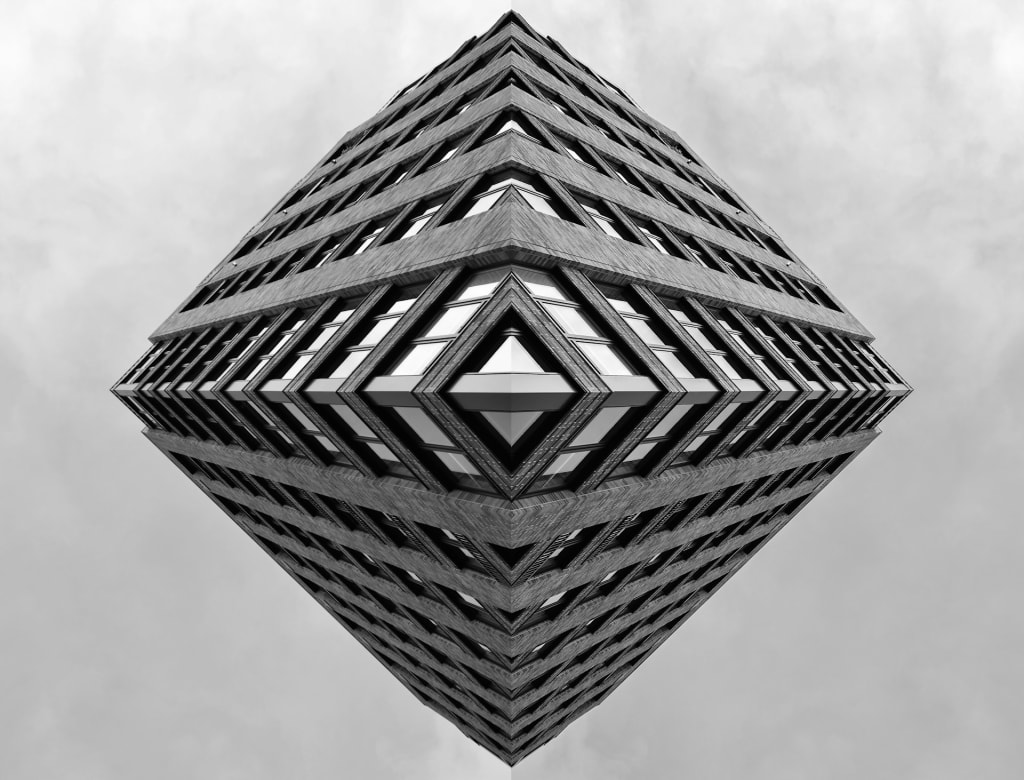
Hermetic geometry is a contemplative practice that uses number, shape, and proportion to align the soul with cosmic order. It blends metaphysical insight with embodied ritual, offering seekers a way to perceive and participate in the harmony of the universe.
Hermetic Geometry: A Spiritual Cartography of Number and Form
Hermetic geometry is not merely a study of shapes—it is a spiritual discipline rooted in the belief that the cosmos is intelligible, sympathetic, and structured by divine principles. In the Hermetic tradition, geometry serves as both map and mirror: a way to understand the universe and to refine the self. Through drawing, building, and contemplation, seekers engage with sacred patterns that reveal the hidden architecture of reality and awaken the soul to its place within it.
This expanded essay explores the philosophical foundations, symbolic motifs, historical expressions, and practical applications of Hermetic geometry, weaving together ancient wisdom and modern insight to illuminate how number and form become vehicles of spiritual transformation.
I. Hermetic Foundations: The Cosmos as Patterned Intelligence
The Hermetic tradition, attributed to the legendary Hermes Trismegistus—a fusion of the Greek Hermes and Egyptian Thoth—emerged in late antiquity and flourished through the Renaissance and into modern esotericism. It teaches that reality is layered but coherent, governed by correspondences between the visible and invisible, the material and spiritual.
Core Axioms
- As above, so below; as within, so without. This foundational Hermetic axiom posits that the microcosm reflects the macrocosm. Geometry becomes the shared language that connects these poles, revealing the order that binds all levels of existence.
- The cosmos is sympathetic. Hermeticism holds that all things are interconnected through resonance and analogy. Geometry, with its ratios and harmonies, expresses this sympathy in visual and spatial terms.
II. Sacred Geometry: Why Shapes Matter
In Hermetic thought, geometry is sacred because it reveals invariants amid change. Ratio, symmetry, and resonance are seen as signatures of Nous, the cosmic mind. These constants are not just mathematical—they are metaphysical.
Geometry as Contemplative Science
- Drawing and building are not merely technical acts. They discipline attention, evoke states of clarity, and mirror the order one seeks to embody.
- Proportional harmonies—such as the golden ratio or musical intervals—link part and whole, offering a sensory experience of unity.
Engaging with geometry becomes a form of ascesis, a spiritual exercise that quiets the mind and aligns intention with universal principles.
III. Symbolic Motifs: The Language of Form
Hermetic geometry uses specific shapes and figures to encode metaphysical truths. Each motif carries symbolic weight and invites reflection.
Foundational Forms
- The Point (The One): Origin without dimension, seed of manifestation.
- The Line and Vesica Piscis (Two): Duality and the generative portal formed by two interpenetrating circles.
- The Triangle (Three): Stability, mediation, and balance of opposites.
- The Square and Cross (Four): Material order, the four elements, the quaternary.
- The Circle: Totality, eternity, the sphere of the heavens.
Proportional Systems
- Golden Ratio (φ): Found in nature, art, and architecture; symbolizes aesthetic and metaphysical balance.
- Musical Intervals: Used in talismans and rituals to invoke specific planetary or emotional qualities.
- Modular Geometry: Systems that link part and whole, such as the Fibonacci sequence or nested polygons.
Archetypal Bodies
- Platonic Solids: Tetrahedron (fire), cube (earth), octahedron (air), icosahedron (water), dodecahedron (ether). These forms are tied to elemental forces and cosmic architecture.
- Tree of Life: Ten sephiroth and 22 paths, often embedded in lattices like the Flower of Life or Metatron’s Cube, serve as maps of spiritual ascent and psychological integration.
IV. Historical Expressions: Geometry as Devotion
Hermetic geometry has inspired thinkers, artists, and mystics across centuries. Its influence spans philosophy, science, architecture, and esoteric art.
Classical and Renaissance Roots
- Pythagoras and Plato: In the Timaeus, Plato assigns elements to regular solids, suggesting a mathematical substrate of matter. Hermeticists adopt this as a metaphysical grammar.
- Euclid as Spiritual Exercise: Renaissance Hermetists read The Elements with devotion, treating geometric proof as a ladder of mind, purifying thought to receive illumination.
Scientific Mysticism
- Kepler’s Mysterium Cosmographicum: Kepler placed planetary orbits between nested Platonic solids, seeking a sacred architecture. His later refinement through ellipses shows mystical intuition evolving into empirical science.
Sacred Architecture
- Chartres Cathedral: Its ground plan uses sacred ratios; the 11-circuit labyrinth serves as a walking mandala mapping the soul’s journey within cosmic order.
- Islamic Geometric Art: Though distinct, it influenced Hermetic Europe. Nonfigural star patterns encode unity-in-multiplicity, echoing Hermetic correspondences.
Alchemical and Esoteric Imagery
- Alchemical Emblems: Symbols like the squaring of the circle or the Rebis unite geometric impossibilities with psychological integration, pointing to the coniunctio of spirit and matter.
- Robert Fludd and Agrippa: Their diagrams tie musical ratios, angelic hierarchies, and cosmic spheres to geometric schemes, inviting contemplation through image.
V. Practice and Embodiment: Geometry as Ritual
Hermetic geometry is not just theoretical—it is embodied through ritual, art, and meditative practice.
Techniques and Applications
- Ascesis of Attention: Constructing figures with compass and straightedge trains patience, accuracy, and equanimity.
- Symbolic Anchoring: A ritual circle becomes a microcosm of the macrocosm, invoking wholeness and protection.
- Resonance and Intention: Proportional harmonies are used in talismans and architecture to invite specific qualities (clarity, balance, courage).
- Embodiment: Walking a labyrinth, tracing a yantra-like pattern, or arranging an altar by the tetractys makes virtue spatial and kinesthetic.
- Dialogue with the Unconscious: Geometric images constellate archetypes. Engaging them can surface insights or reconcile inner polarities.
VI. Concrete Explorations: Exercises in Hermetic Geometry
These practices invite direct engagement with Hermetic motifs and principles.
1. As Above, So Below
- Exercise: Draw your own body grid, noting where natural proportions approximate simple ratios. Reflect on habits that distort or restore balance.
- Example: Da Vinci’s Vitruvian Man maps the human body to cosmic ratios.
2. The Ladder of Spheres
- Exercise: Create a hexagram altar layout for clarity and vitality, using six candles at the points and one at the center.
- Symbol: Hexagram for the Sun, heptagram for Saturn—each linked to planetary seals.
3. The Marriage of Opposites
- Exercise: Draw two equal circles to form a Vesica Piscis, then inscribe an equilateral triangle within. Contemplate where in life you are birthing a third term from tension.
4. Elemental Equilibrium
- Exercise: Build paper models of the five Platonic solids. Meditate with each while attending to breath qualities.
5. Proportion as Prayer
- Exercise: Compose a small space (desk, niche) with golden rectangles and musical fifths in object placement. Observe changes in mood or productivity over a week.
VII. Contemporary Integrations: Hermetic Geometry Today
Modern science and design echo Hermetic principles in surprising ways.
Systems Thinking
- Feedback loops and network geometry resemble Hermetic correspondences. Tools like causal loop diagrams function as modern talismans for collective intelligence.
Fractals and Chaos
- Self-similarity offers a dynamic as above, so below, replacing static hierarchy with iterative emergence. Mandelbrot sets become modern mandalas for contemplative viewing.
Cymatics and Sound Geometry
- Visual patterns from vibrating plates demonstrate how frequency shapes matter, resonating with Pythagorean number-as-vibration metaphysics.
Biophilic Design
- Fractal densities and natural ratios in architecture improve wellbeing, offering measurable correlates for traditional claims about sacred proportion.
Psychotechnology
- Geometric breathwork (square breathing), mandala coloring, and VR sacred spaces offer secular pathways to Hermetic states of coherence.
VIII. Ethics and Discernment: Navigating the Sacred
Hermetic geometry invites reverence—but also discernment.
- Don’t force-fit. Not every structure encodes a secret canon. Use geometry to inquire, not to project.
- Avoid cultural flattening. Hermeticism intersects with but is not identical to Vedic, Buddhist, or Islamic geometries. Acknowledge lineages.
- Balance symbol and reality. Let geometry guide practice toward compassion, clarity, and service; otherwise, it can become escapist aestheticism.
- Test with outcomes. If a ritual layout or proportional practice leads to steadier attention, kinder action, or wiser choices, the geometry is doing spiritual work.
IX. A Short Practice Sequence
Try this contemplative sequence to experience Hermetic geometry firsthand:
- Preparation: Five minutes of square breathing to settle mind and body.
- Drawing: Construct a Seed of
2. Drawing: Using compass and straightedge, construct a Seed of Life—a sixfold circle lattice. Move slowly and precisely, letting each arc be a gesture of intention.
3. Reflection: Pause and observe your inner state. Where did frustration arise? Where did ease or insight emerge? What qualities did the geometry evoke?
4. Embodiment: Walk a simple taped labyrinth or spiral in your room, matching steps to a steady breath rhythm. Let your body trace the pattern as your mind quiets.
5. Integration: Journal a single sentence that links a geometric quality you noticed—symmetry, center, boundary—to a concrete decision or challenge in your life. Let form guide action.
This sequence is not about mastering technique. It’s about cultivating presence, coherence, and symbolic awareness—qualities that Hermetic geometry seeks to awaken.
X. Closing Reflections: Geometry as a Spiritual Companion
Hermetic geometry is not a system of secret codes or esoteric elitism. It is a spiritual cartography—a way of mapping the soul’s journey through the language of number and form. It invites us to apprentice ourselves to patterns that endure, not to escape the world, but to meet it with clarity and grace.
In this view, the compass and straightedge are not just tools—they are instruments of attunement. Space becomes scripture. Proportion becomes prayer. The act of drawing a circle or building a Platonic solid becomes a ritual of alignment, a way to embody the principle: as above, so below.
This practice does not promise certainty. It does not guarantee enlightenment. But it offers a path—a contemplative science that refines perception, anchors mystery in form, and helps us become people who can meet change with order, complexity with clarity, and the finite with a felt sense of the infinite.
Sources and Further Reading
• Godwin, Joscelyn. The Harmony of the Spheres: A Sourcebook of the Pythagorean Tradition in Music. Inner Traditions, 1993.
• Critchlow, Keith. Order in Space: A Design Source Book. Thames & Hudson, 1969.
• Kepler, Johannes. Mysterium Cosmographicum. Translated editions available via Springer.
• Plato. Timaeus. Translations by Benjamin Jowett and others.
• Fludd, Robert. Utriusque Cosmi Historia. 1617–1621.
• Agrippa, Heinrich Cornelius. Three Books of Occult Philosophy. Translated by James Freake, edited by Donald Tyson.
• Lawlor, Robert. Sacred Geometry: Philosophy and Practice. Thames & Hudson, 1982.
• El-Said, Issam and Parman, Ayse. Geometric Concepts in Islamic Art. World Wisdom, 2006.
• Alexander, Christopher. The Nature of Order. Center for Environmental Structure, 2002–2004.
• Mandelbrot, Benoit. The Fractal Geometry of Nature. W. H. Freeman, 1982.
• Sagan, Carl. Cosmos. Random House, 1980. (For Kepler and sacred science references)
About the Creator
Julie O'Hara - Author, Poet and Spiritual Warrior
Thank you for reading my work. Feel free to contact me with your thoughts or if you want to chat. [email protected]
Keep reading
More stories from Julie O'Hara - Author, Poet and Spiritual Warrior and writers in Humans and other communities.
The Complexity of Infidelity: Beyond Moral Judgment
Infidelity is not a simple moral failure—it is a complex human behavior shaped by personal wounds, relational dynamics, and cultural conditions. Understanding this complexity allows us to respond with clarity, compassion, and integrity, without excusing harm.
By Julie O'Hara - Author, Poet and Spiritual Warrior2 months ago in Humans


Comments
There are no comments for this story
Be the first to respond and start the conversation.