
The Sound of the Bell
How a Silent Town Learned to Listen Again

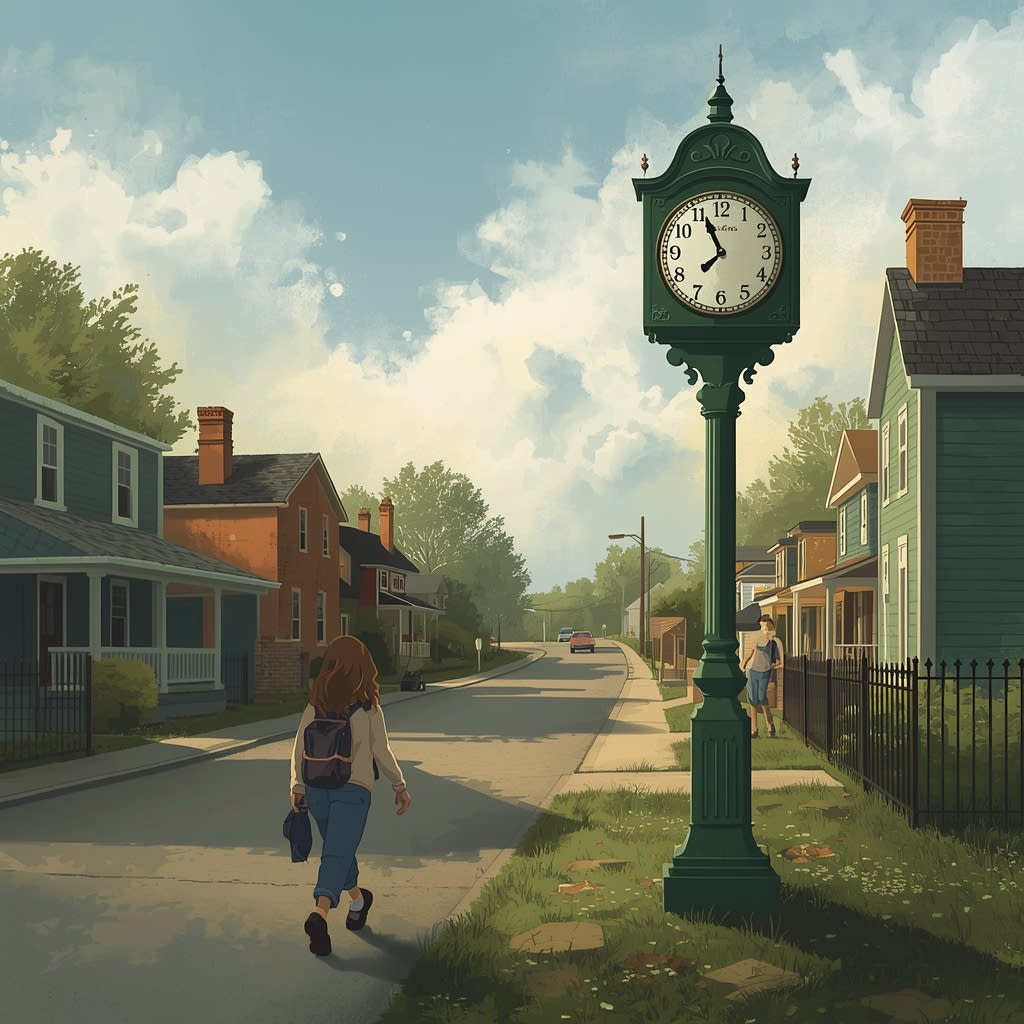
In the town of Qasba-e-Noor, there was a bell that no one rang anymore.
It hung in the center of the town, above an old stone archway that once marked the entrance to the marketplace. Long ago, the bell had meaning. It was rung to announce weddings, to warn of storms, to gather people when someone was lost or when help was needed.
But now, it was silent.
The rope had frayed. The metal had dulled. And the people had learned to live without it.
Years back, Qasba-e-Noor had split — not by walls or borders, but by belief. Different opinions, different leaders, different interpretations of what was right and wrong. What started as discussion became argument. Argument hardened into distance.
People stopped gathering.
Stopped listening.
Stopped trusting.
The bell, once a symbol of togetherness, became a reminder of what was lost. So no one touched it.
Except for Maryam.
Maryam was a schoolteacher — quiet, observant, and deeply ordinary. She lived alone in a small house near the archway, close enough to hear the bell sway when the wind was strong.
Every morning, she passed under it on her way to school.
And every morning, she looked up.
Not with nostalgia — but with curiosity.
One day, one of her students asked, “Miss, why is there a bell if nobody uses it?”
The question stayed with her longer than it should have.
That evening, Maryam climbed the steps of the archway. The bell was heavier than she expected. Cold. Dusty. Scarred with age.
She didn’t ring it.
She cleaned it.
She returned the next day. And the next.
People noticed her climbing the steps — wiping the metal, repairing the rope little by little. Some shook their heads.
“Why bring back old things?” someone muttered.
But Maryam didn’t answer.
She wasn’t trying to bring the past back.
She was preparing something for the present.
Weeks passed.
The bell looked different now — not new, but cared for. The rope was strong again.
One afternoon, a fire broke out on the edge of town.
Not large. Not dramatic. But dangerous enough.
People ran — some toward it, some away. Shouting filled the air. Confusion spread faster than flames.
And then —
Dong.
The sound cut through everything.
People froze.
Dong.
The bell rang again — firm, steady, unmistakable.
Maryam stood above the archway, pulling the rope with both hands.
The sound traveled farther than voices ever had.
People followed it.
Buckets were brought. Help arrived. The fire was controlled before it grew.
When it was over, no one spoke for a long moment.
The bell echoed once more in the silence — not as alarm, but as presence.
From that day on, the bell was not used often.
But it was no longer ignored.
When a child went missing, it rang.
When an elderly man passed away with no family left, it rang — calling people to stand together.
When heavy rain threatened the lower streets, it rang — not in panic, but in warning.
Slowly, people began to gather again.
Not because they agreed.
But because the sound belonged to all of them.
Arguments didn’t disappear.
Differences didn’t dissolve.
But when the bell rang, people paused — and that pause became space.
Space to listen.
Space to help.
Space to remember that coexistence didn’t require sameness.
One evening, Maryam passed under the archway as usual.
An old man stopped her.
“You brought the town back,” he said.
She shook her head gently.
“No,” she replied. “I just rang the bell. You chose to come.”
Years later, children would grow up knowing the sound — not as history, but as habit.
And the bell, once silent with resentment, became a reminder:
Peace doesn’t begin when we agree.
It begins when we respond.
About the Creator
M.Farooq
Through every word, seeks to build bridges — one story, one voice, one moment of peace at a time.
How One Neurology Book Changed the Way I Understand the Human Mind
Reading “The Man Who Mistook His Wife for a Hat” Made Me Question What It Means to Be a Person I picked up The Man Who Mistook His Wife for a Hat thinking it would just be one of those clever science books. You know, the kind that explains how the brain works and throws in a few strange cases. I wasn’t really prepared for how weirdly emotional it would feel. Not in a dramatic way. More like the kind of feeling that sits with you quietly while you’re reading.
By Rosalina Janeabout 20 hours ago in Humans



Comments
There are no comments for this story
Be the first to respond and start the conversation.