
Half the Sky, Unequal Ground
A Story of Gender Inequality and the Cost of Silence

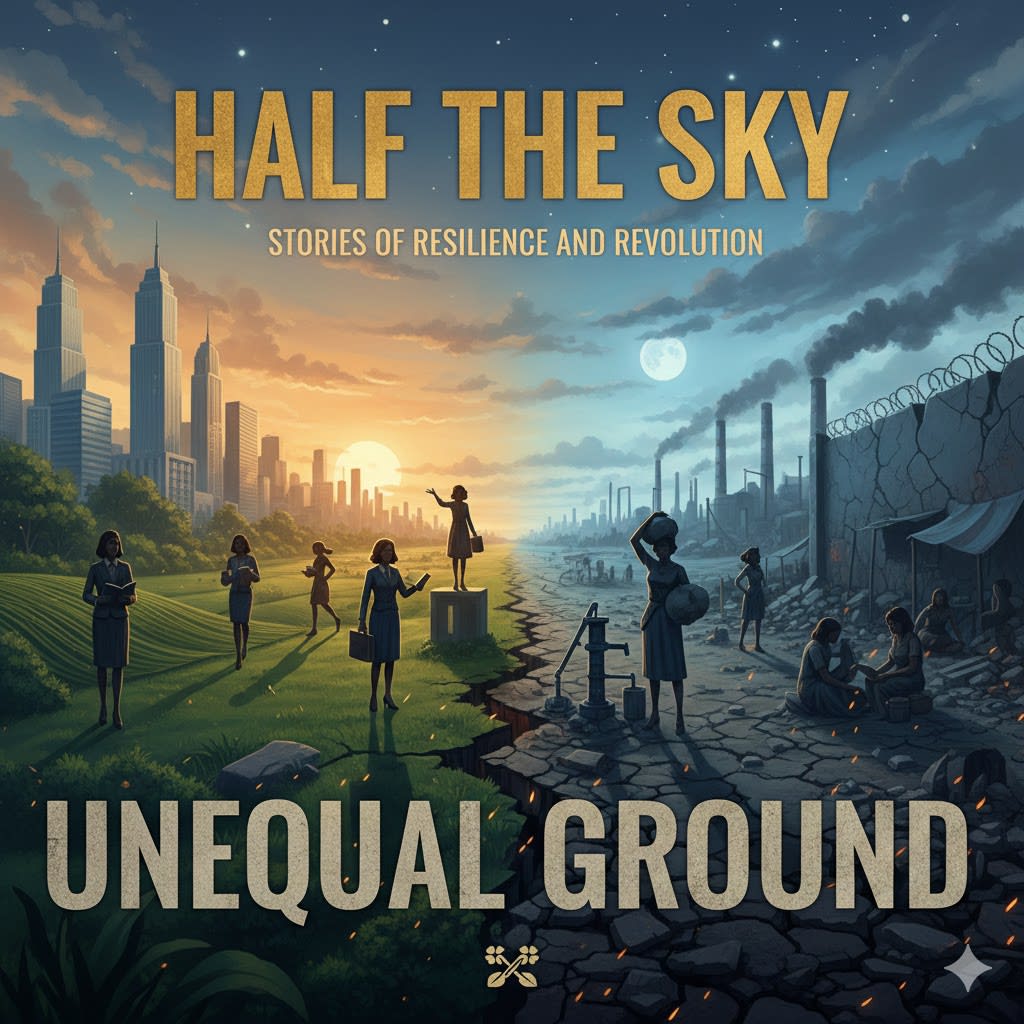
The town of Larkspur prided itself on tradition. Its streets were named after founders, its laws shaped by old habits, and its people comforted by the belief that “this is how things have always been.” On the surface, it was peaceful. But beneath that calm lived an imbalance so familiar that most no longer noticed it.
Mira noticed.
She noticed it when her brother, Sameer, was encouraged to speak loudly, argue boldly, and dream endlessly, while she was praised for being quiet, agreeable, and practical. She noticed it at school, where teachers asked boys to lead group projects and asked girls to take notes. She noticed it at home, where her mother worked from dawn until night without pay or recognition, while her father’s single salary was treated as the household’s backbone.
Mira was intelligent—curious in the way that made adults uncomfortable. She asked questions that exposed cracks in certainty. “Why can’t girls stay out late like boys?” “Why do women’s opinions need permission?” “Why is strength only measured in volume?”
The answers were always the same: That’s just how it is.
As Mira grew older, inequality grew quieter but heavier. At university, she studied economics, one of the few women in her department. Her ideas were often repeated by male classmates and praised only when spoken in a deeper voice. When she challenged this, she was called emotional. When she stayed silent, she was called unengaged.
Sameer, meanwhile, flourished. He was not cruel or unkind—just unaware. Doors opened for him so easily that he mistook access for effort. When Mira mentioned unfairness, he frowned. “I don’t see it,” he said honestly. “Maybe you’re overthinking.”
That was the first implication of inequality Mira learned: when privilege is invisible, injustice feels imaginary.
After graduation, Mira returned to Larkspur and began working at the local planning office. She was qualified, driven, and prepared. Yet she earned less than men with fewer credentials. She was assigned supportive roles rather than leadership ones. When she proposed changes to improve women’s employment in the town, the committee smiled politely and moved on.
One evening, while reviewing old town records, Mira discovered something unsettling. A decade earlier, a proposal for a women’s vocational center had been submitted—and quietly rejected. No public discussion. No explanation. Just silence.
That silence echoed everywhere. In the clinic where women waited longer for care. In households where daughters were taught sacrifice as virtue. In workplaces where harassment was endured rather than reported, because reporting came with consequences.
Mira’s friend Asha understood this cost better than anyone. Brilliant and creative, Asha left her job after repeated “jokes” from her supervisor turned into threats. When she spoke up, she was told she had misunderstood his intentions. Soon after, her contract was not renewed.
Gender inequality did not always shout. Often, it whispered until women doubted their own hearing.
The implications stretched far beyond individual pain. Businesses lost talent. Children grew up absorbing imbalance as normal. Men were pressured into narrow definitions of strength, denied vulnerability. Women carried double burdens—working outside the home while maintaining full responsibility inside it.
One night, during a power outage, the town gathered in the community hall. Candles lit tired faces. The mayor spoke about unity and progress. Mira felt something tighten in her chest. She stood up before fear could stop her.
“I want to talk about what we don’t talk about,” she said.
The room shifted.
She spoke calmly, not accusingly. She spoke of lost potential, of silent departures, of girls who stopped raising their hands. She spoke of how inequality hurt everyone—not just women, but families, economies, futures.
“This town runs on half its strength,” she said. “And then wonders why it’s tired.”
There was discomfort. Resistance. A man stood and said she was exaggerating. Another said change would disrupt harmony. Mira nodded. “Harmony for whom?” she asked.
The next weeks were not easy. Mira was criticized, dismissed, and warned not to “damage her reputation.” But something had changed. Women began sharing stories quietly at first, then openly. Men began listening—not all, but enough.
Sameer surprised her most. One evening, he admitted, “I never noticed how much you had to fight for things I was given.” He didn’t ask for forgiveness. He asked how to help.
Slowly, policy discussions reopened. The vocational center proposal returned—this time approved. Pay structures were reviewed. A reporting system was introduced to protect employees. None of it was perfect. Progress never is.
But inequality had been named. And naming it broke its strongest weapon: silence.
Years later, Mira stood outside the new center as young women entered—laughing, nervous, hopeful. She knew inequality still existed. It always tried to adapt, to hide in new language and softer rules. But she also knew something else now.
Gender inequality was not inevitable.
Its implications were not unavoidable.
And tradition was not an excuse to remain unjust.
Change did not come from waiting.
It came from speaking—
even when the ground felt uneven.
About the Creator
Whiskey At Dusk
Guess the whiskey was more important to you in the end, wasn’t it? It was more than the well-being of your friends; more vital than showing up to the places you promised you would and could come to; more critical of a matter than fulfilling your damn responsibilities and getting the press off your back.
By Snarky Lisa7 days ago in Humans
Heartbreak in Town Centre: Pensioner Dies in Early Morning Flat Fire
A devastating fire ripped through a ground‑floor flat in the heart of Shrewsbury in the early hours of Tuesday morning, leaving an elderly woman dead and another person injured. Emergency services were alerted to the blaze shortly after 3:20 a.m., and despite the swift response from firefighters and medical teams, the life of the woman—believed to be in her 80s—could not be saved. Another individual at the scene suffered injuries that are not thought to be life‑threatening. �
By Ayesha Lashari5 days ago in Humans



Comments
There are no comments for this story
Be the first to respond and start the conversation.