
Imran Khan: From Cricket Legend to National Leader
A deep dive into the life, personality, and legacy of Pakistan’s most charismatic and controversial leader
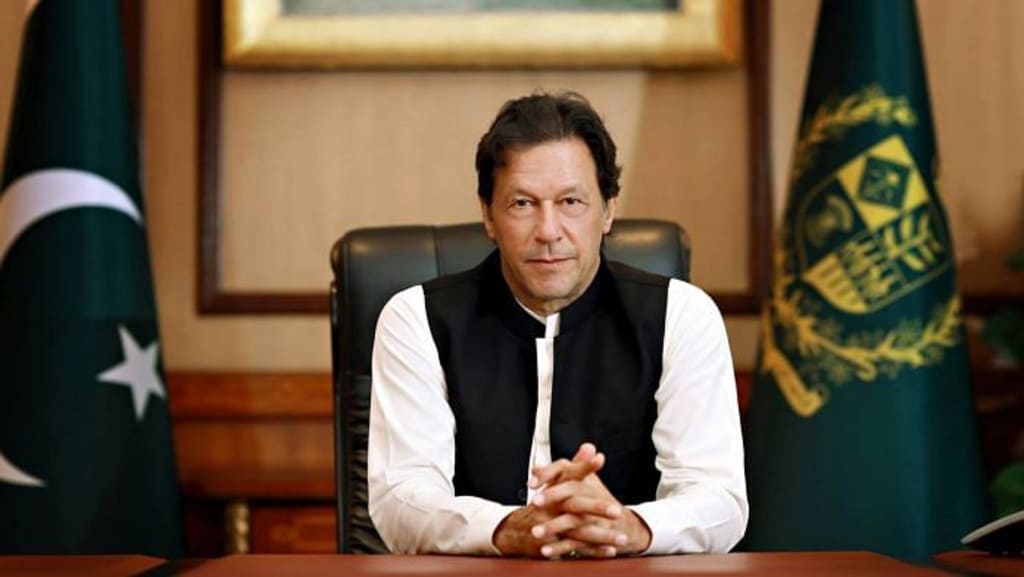
Early Life and Background
Imran Ahmed Khan Niazi was born on October 5, 1952, in Lahore, Pakistan, into a Pashtun family of the Niazi tribe. Raised in an upper-middle-class household, he received an elite education — first at Aitchison College in Lahore, then at Royal Grammar School Worcester, and finally at Keble College, Oxford, where he studied philosophy, politics, and economics.
Despite a quiet and shy childhood, Khan showed early signs of ambition, independence, and athletic talent — qualities that would define his future.
---
The Cricketing Hero
Imran Khan began his international cricket career in 1971, and over the next two decades, he would become one of the greatest all-rounders in cricket history. Known for his fiery pace and aggressive leadership, Khan transformed the Pakistani cricket team into a world-class force.
His crowning achievement came in 1992, when he led Pakistan to its first and only ICC Cricket World Cup victory, defeating England in the final. This victory elevated Khan to national hero status and immortalized him in the hearts of millions.
Career Highlights:
Played 88 Test matches, scoring 3,807 runs and taking 362 wickets.
Represented Pakistan in 175 ODIs.
Inducted into the ICC Cricket Hall of Fame in 2010.
His charisma, confidence, and leadership on the field laid the groundwork for his future political ambitions.
---
Philanthropy: Shaukat Khanum and Namal University
After retiring from cricket, Imran Khan channeled his fame into philanthropy. Motivated by the death of his mother, Shaukat Khanum, from cancer, he launched a bold dream: to build Pakistan’s first free cancer hospital.
Shaukat Khanum Memorial Cancer Hospital & Research Centre opened in 1994, funded by public donations and driven by Khan’s relentless campaigning.
He later established Namal University in Mianwali, aiming to provide world-class education in rural Pakistan.
These projects showcased his determination, organizational skills, and deep connection with the people, particularly the underprivileged.
---
Political Rise: Founding Pakistan Tehreek-e-Insaf (PTI)
In 1996, Khan founded Pakistan Tehreek-e-Insaf (PTI), the "Movement for Justice." His early years in politics were met with mockery and repeated failure, winning just one National Assembly seat (his own) in the 2002 elections.
But Khan persisted, fueled by his vision of a "Naya Pakistan" (New Pakistan) — a country free from corruption, elitism, and injustice. His anti-corruption narrative, calls for Islamic welfare democracy, and fierce opposition to U.S. drone strikes in tribal areas resonated with the youth and middle class.
PTI steadily grew, and by 2013, it became the second-largest party by popular vote.
---
Prime Ministership (2018–2022)
In 2018, Imran Khan became the 22nd Prime Minister of Pakistan after PTI won a majority in the general elections. His leadership style was a blend of populism, nationalism, and reformist zeal.
Key initiatives and policies:
Ehsaas Program – Pakistan’s largest social safety net for poverty alleviation.
Health Cards – Free healthcare for millions under the Sehat Sahulat program.
Anti-corruption drive – Targeting politicians and bureaucrats.
Foreign policy independence – Strengthening ties with China, Turkey, and Russia while distancing from the U.S.
Climate leadership – Billion Tree Tsunami and environmental sustainability projects.
Despite bold intentions, his government struggled with economic instability, inflation, rising debt, and resistance from entrenched political elites.
---
Ouster and Legal Struggles
In April 2022, Imran Khan was removed from office via a no-confidence vote orchestrated by an opposition alliance and allegedly supported by powerful elements of the establishment.
After his ouster, Khan launched a relentless public campaign, denouncing what he called a "foreign-backed regime change conspiracy." His massive rallies drew hundreds of thousands, reigniting public support.
In 2023–2024, Khan faced numerous legal challenges, including disqualification, arrest, and trials under various charges ranging from corruption to terrorism. Yet, his popularity remained undiminished, especially among Pakistan’s youth and diaspora.
---
Personality and Charisma
Imran Khan's personality is a complex blend of:
Charisma – A natural orator and crowd-puller.
Resilience – Unfazed by failure, he reinvents and rebounds.
Ego and Vision – Often accused of being stubborn or arrogant, but always driven by a larger-than-life vision for Pakistan.
Spirituality – Deepened over time; influenced by Sufism and Islamic teachings.
Patriotism – Devoted to Pakistan’s sovereignty, dignity, and Islamic identity.
Whether adored or criticized, Khan is never ignored.
---
Legacy: A Divisive Icon
Imran Khan’s legacy is deeply polarizing. To supporters, he is a revolutionary reformer who challenged a corrupt status quo and awakened national consciousness. To critics, he is a populist who struggled with governance and fueled political chaos.
However, few can deny:
He inspired a new generation to engage in politics.
He built institutions like Shaukat Khanum and Namal from scratch.
He changed the narrative of leadership in Pakistan — from dynasties to ideals.
His journey from cricket pitches to the Prime Minister’s Office is unmatched in Pakistani history, and still ongoing.
---
Conclusion
Imran Khan is more than a cricketer, politician, or philanthropist — he is a symbol of struggle, ambition, and the quest for justice. His story is one of triumph, tragedy, and transformation. Whether history will remember him as a savior or a disruptor remains to be seen, but one truth is certain:
Imran Khan changed Pakistan — forever.
About the Creator
Keep reading
More stories from Ikram Ullah and writers in Humans and other communities.
Cristiano Ronaldo Finally Proposes to Georgina Rodríguez After a Decade Together
Portuguese football legend Cristiano Ronaldo and his long-time partner Georgina Rodríguez have taken a major step forward in their relationship. After ten years of being together, the couple is now officially engaged. The 40-year-old football icon presented Georgina with a dazzling diamond engagement ring, marking a milestone in their journey that has been closely followed by fans and the media alike.
By Ikram Ullah7 months ago in Humans
Co-Living Impacts Dating Dynamics Communication And Emotional Connection Significantly
Dating is greatly affected by co-living, in which couples or partners live together in one house. It brings about quick intimacy and interaction in real life and one gets a chance to learn about routines, habits, and preferences. Shared space brings intimacy as well as it reveals the possible difference of lifestyle including cleaning, schedules, and personal boundaries.
By Mark Hipster7 days ago in Humans




Comments
There are no comments for this story
Be the first to respond and start the conversation.