
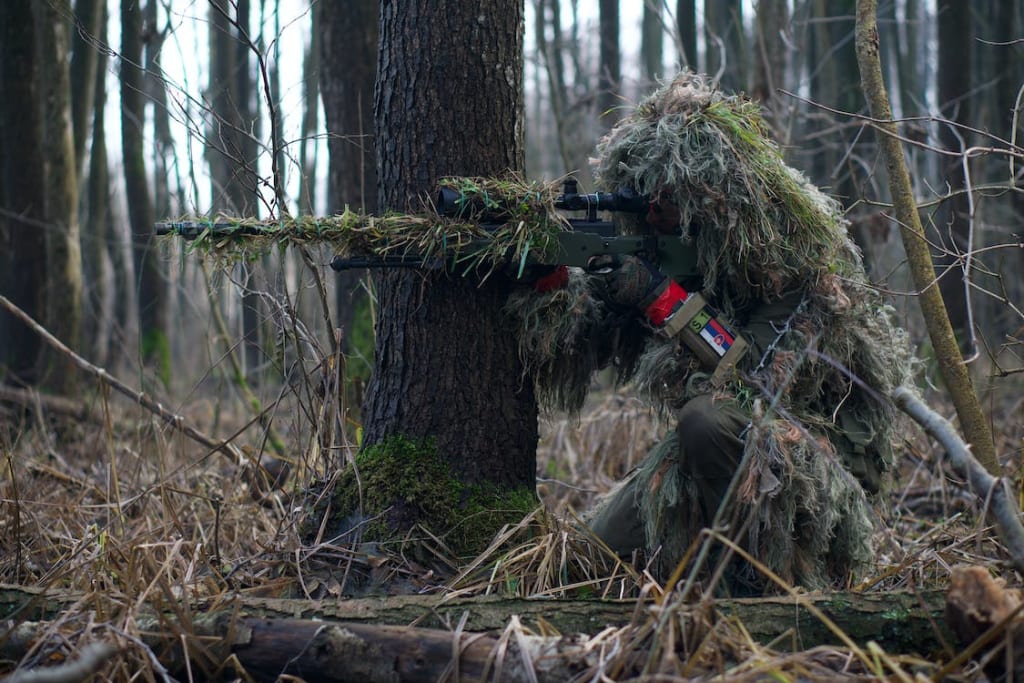
Greatest snipers of all time
Simo Häyhä - a Finnish sniper who fought in the Winter War and is considered to be the most successful sniper in history, with an estimated 505 confirmed kills in just 100 days of combat.
Lyudmila Pavlichenko - a Soviet sniper who fought in World War II and is credited with 309 confirmed kills, making her the most successful female sniper in history.
Carlos Hathcock - a United States Marine Corps sniper who fought in the Vietnam War and is credited with 93 confirmed kills, but is believed to have had more kills that were not officially confirmed.
Adelbert Waldron - a United States Army sniper who fought in the Vietnam War and is credited with 109 confirmed kills, making him one of the most successful snipers in U.S. military history.
Chris Kyle - a United States Navy SEAL sniper who served in the Iraq War and is credited with 160 confirmed kills, making him the most successful sniper in U.S. military history.
These are just a few examples of the greatest snipers of all time, and there are many others who have made significant contributions to their respective military forces throughout history.
• "The White Death" is a nickname given to Simo Häyhä, a Finnish sniper who is considered to be one of the most deadly snipers in history. He earned this nickname during the Winter War between Finland and the Soviet Union in 1939-1940, where he is credited with killing over 500 Soviet soldiers.
Häyhä was a skilled marksman who preferred to use a Finnish Mosin-Nagant rifle with iron sights instead of a scoped rifle. He was also known for his ability to camouflage himself in the snowy terrain, making him difficult to spot.
During the Winter War, Häyhä served as a sniper for the Finnish Army and fought against the Soviet invasion of Finland. He was eventually shot in the jaw by a Soviet soldier but survived and later became a successful moose hunter.
Today, Häyhä is remembered as a hero in Finland and is widely regarded as one of the most successful snipers in history.
• Lyudmila Pavlichenko (1916-1974) was a Soviet sniper during World War II and is considered one of the deadliest female snipers in history. She was born in Bila Tserkva, Ukraine and later moved to Kiev where she attended Kiev University, studying history.
In June 1941, when Germany invaded the Soviet Union, Pavlichenko joined the Red Army as a sniper. She was assigned to the 25th Chapayev Rifle Division and quickly gained a reputation as an excellent sniper. She was credited with 309 confirmed kills, including 36 enemy snipers.
In 1942, Pavlichenko was sent to the United States on a goodwill tour to drum up support for the Soviet Union's war effort. While in the US, she met with President Franklin D. Roosevelt and toured the country, speaking to large crowds about her experiences as a sniper.
After the war, Pavlichenko completed her education and became a historian. She died in 1974 at the age of 58 and was buried in Moscow's Novodevichy Cemetery. Today, she is remembered as a symbol of Soviet bravery and is celebrated as a hero in Russia and Ukraine.
• Carlos Hathcock (1942-1999) was a legendary United States Marine Corps sniper who served during the Vietnam War. He is widely considered to be one of the best snipers in American military history.
Hathcock began his military service in 1959 and served as a military policeman before becoming a sniper in 1966. He quickly earned a reputation as a skilled marksman and was credited with 93 confirmed kills during his two tours of duty in Vietnam.
One of Hathcock's most famous missions took place in 1969 when he was sent to eliminate a high-value target, a North Vietnamese Army general who was known for his brutal tactics. Hathcock spent four days crawling through enemy territory, often within a few hundred yards of enemy soldiers, in order to get into position for the shot. He finally took the shot at a distance of over 700 yards, hitting the general in the chest and killing him instantly.
Hathcock received numerous awards for his service, including the Silver Star and the Purple Heart. After leaving the military in 1979, he became a civilian firearms instructor and wrote a book about his experiences called "Marine Sniper: 93 Confirmed Kills."
Hathcock died of multiple sclerosis in 1999 at the age of 57. He is remembered as one of the greatest snipers in American military history and his techniques and tactics continue to be studied and taught to new generations of snipers.
• Adelbert Waldron (1933-1995) was a United States Army sniper who served during the Vietnam War. He is widely considered to be one of the most successful snipers in American military history.
Waldron began his military service in 1951, serving in the Korean War before being honorably discharged in 1953. He later joined the US Army and was sent to Vietnam in 1968, where he served as a sniper with the 9th Infantry Division.
During his time in Vietnam, Waldron was credited with 109 confirmed kills, making him one of the most successful snipers in American military history. He was known for his accuracy and his ability to remain calm under pressure.
One of Waldron's most notable kills took place in February 1969 when he eliminated a North Vietnamese Army sniper who was known for targeting American officers. Waldron took the shot from a distance of over 900 yards, hitting the enemy sniper in the head and killing him instantly.
Waldron received numerous awards for his service, including the Silver Star, the Bronze Star, and two Purple Hearts. After leaving the military, he worked as a private security guard before passing away in 1995.
Today, Waldron is remembered as one of the greatest snipers in American military history and his techniques and tactics continue to be studied and taught to new generations of snipers.
• Chris Kyle (1974-2013) was a United States Navy SEAL and sniper who served during the Iraq War. He is widely considered to be one of the most successful snipers in American military history.
Kyle served four tours of duty in Iraq and was credited with 160 confirmed kills, making him the deadliest sniper in US military history. He was known for his marksmanship skills, as well as his bravery and leadership.
After leaving the military, Kyle wrote a bestselling autobiography, "American Sniper," which was later adapted into a movie. The book and movie chronicled his experiences in Iraq and his struggles with post-traumatic stress disorder (PTSD) after returning home.
In 2013, Kyle was tragically killed while helping a fellow veteran who was struggling with PTSD. His legacy continues to live on, however, through the Chris Kyle Frog Foundation, which provides support to military and first responder families, as well as through the continued use of his techniques and tactics in military sniper training programs.
About the Creator
Keep reading
More stories from writers in Humans and other communities.
Time to change your life.
Is it even possible for you to change your life? A lot of people, more than there should be, are unhappy with their lives. But what are they doing about it? Usually nothing. People talk about how shitty their lives are and want change, but are they not taking the actions to change?
By Jen Phillipsabout 12 hours ago in Humans
Ways Healthy Relationships Reduce Anxiety And Improve Mental Health Naturally
Emotional security forms through healthy relationships and this is very important in alleviating anxiety. When people become emotionally secure, the nervous system can rest instead of being on alert. The fact that a person is trustworthy, helpful, and empathetic will decrease the fear of being rejected or antagonistic. This feeling of security enables the mind to relax reducing the stress levels in the daily lives. It is also emotional security which promotes openness and thus can easily reveal worries before they turn into excessive stress or even obsessive worrying thoughts.
By Mark Hipster2 days ago in Humans




Comments
There are no comments for this story
Be the first to respond and start the conversation.