
Globalization: An Integrating Force in the World Economy
Globalization and its effects and challenges

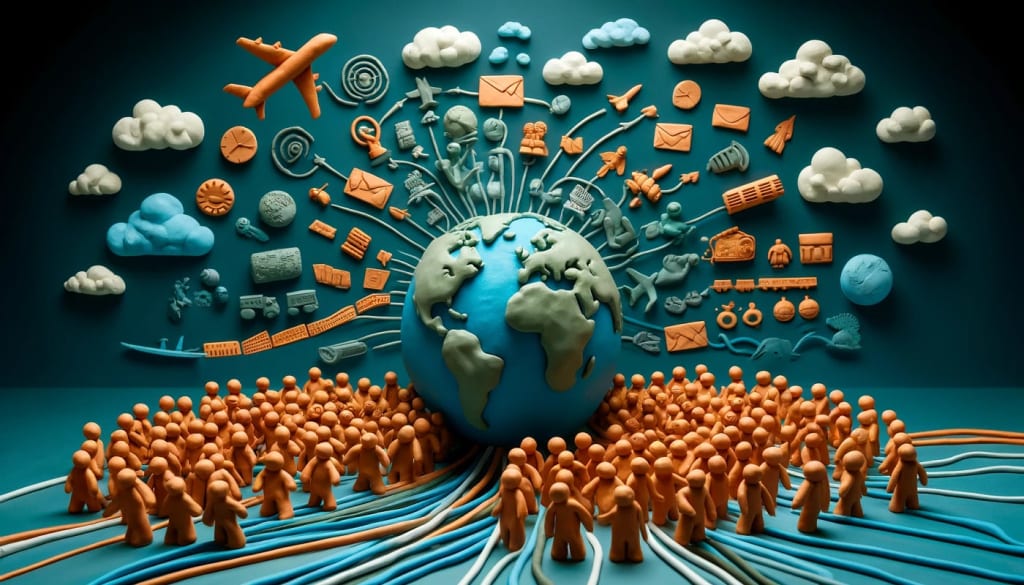
Globalization has become a part of everyday life, so mostly, people do not realize how many advantages they receive out of such integration today. Rather, they take it for granted that cuisines and technology now come from around the world.
Even though globalization makes life better, it brings some challenges along with it when companies begin to grow and expand across borders.
Differences in culture from one part of the world to another stand out a lot in business. It is these differences that form hurdles for businesses venturing in foreign markets. Adjustment of daily operations of businesses, be it hiring workers in a new region or carrying out marketing communications among foreign audiences about the usefulness of their products.
Keep on reading to learn about the benefits and challenges of globalization and how business strategies navigate these hurdles for global expansion.
What is Globalization?
The right understanding of globalization needs a theoretical starting point for it is crucial to know what this term means before delving in detail into its advantages and challenges.
The dictionary definition of globalization refers to the increasing international influence of business and other organizations or initiatives by them while functioning internationally.
Simply put, globalization means the free flow of information, technology, and goods among nations and consumers by various means, between business, geopolitics, and technology on one hand and travel, culture, and media on the other.
Given the interlinked state of the world, it becomes very difficult for an ordinary individual to notice globalization on a regular basis. But since with time the world is shrinking, it is equally essential for companies to understand what it means for the future of doing business.
Non-embracing of globalization potholes such a-threat in present times to those businesses that do not build up an urge of inculcating a competitive advantage, thus allowing other businesses to take over innovative opportunities on the global scene.
Political Aspects of Globalization
Globalization is viewed not only as an economic phenomenon but also as a powerful current shaping governance, style of policymaking, and international relations. The rapid expansion of liberal democracy has been one of the most dynamic political aspects of globalization.
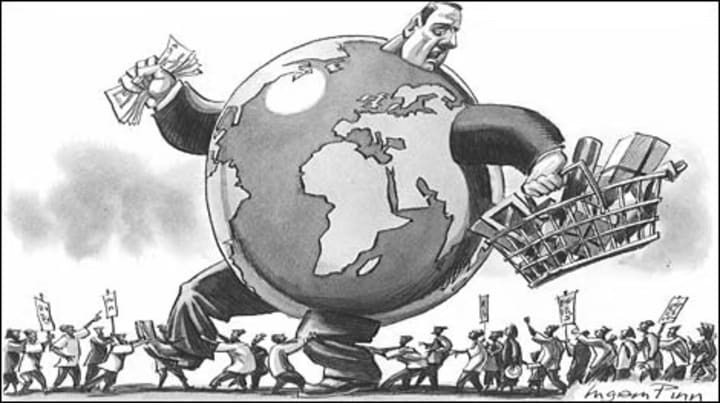
1. The Impetus Forward for Western Liberal Democracy
The concepts of Western liberal democracy, human rights, and good governance have been universalized and popularized through globalization. Institutions such as the UN and the EU explicitly spread the gospel of democratic ideas and human rights worldwide.
In contrast, however, this proliferation has been resisted from authoritarian regimes and cultural nationalists who see globalization as a new form of neo-imperialism.
2. Challenges to Political Sovereignty
Diverse activities are increasingly pooling state sovereignty to form an international order. Such activities include international trade agreements, environmental treaties, and human rights conventions requiring national governments to align their domestic policies with internationally accepted standards.
Interference in one nation's internal affairs by another often creates most of the political friction between the participants.
3. Cultural Homogeneity vs. Cultural Clashes
Globalization further yields cultural homogeneity whereby world cultures converge into common culture usually dominated by Western influences.
Responses include the vast influence of American pop culture, the global status of English as a language of choice, and the rise of consumerist lifestyles.
4. Cultural Homogeneity and Loss of Identity
It is argued that globalization stands to erode the native cultures, traditions, and languages. This has varied from Japanese samurai to native Australian aboriginal lifestyles.
Capitalism combined with cultural homogenization approaches cultural dominance, where local traditions are forced to succumb to global trends.
5. Clash of Civilizations
Samuel Huntington presented a thesis of the clash of civilizations that contends that globalization widens the gap for cultural and religious conflicts.
Cultural friction, for example, between the West and the Islamic world points to challenges faced by a multiplicity of cultural identities in a globalized world.
6. Environmental Challenges and Globalization
One of the other serious challenges of globalization is its impact on the environment. The fast-paced industrialization, deforestation, and pollution have become a serious issue much aggravated by rising global economic activities.
Multinational corporation expansion inevitably involves natural resource exploitation, environmental degradation, and thus contributes to global climate change.
7. Carbon Emissions and Climate Change
Globalization has led to an increase in carbon emissions because vast industrial production has gone unregulated, coupled with high rates of international transportation and urbanization.

While formal options to curb this rise are available in international instruments or conventions like the Paris Climate Accord, truly effective enforcement remains an extremely challenging problem.
8. Resource Exploitation and Sustainability Problems
In many developing countries, the exploitation of resources by multinational corporations involves Strip Mining, a situation whereby the precious raw materials are extracted, leaving behind destruction of tropical forests, big compensation claims by affected local communities and a few jobs for the youth.
Unfortunately for these local communities, many developing nations live with this dilemma, since they cannot afford stringent environmental regulations.
What are the challenges of globalization?
Despite all the great benefits associated with globalization, organizations do face their share of challenges. Some of these roadblocks may include international zoning:
1. International recruiting
One global challenge common among global leaders is international recruiting. When recruiting across boundaries, the human resources team faces unknown situations.
First, they put together a framework for an interview, job assessment, and background verification to assure the candidates' capabilities, often thousands of miles away from headquarters. Finally, a competitive offer ought to be made, and this entails knowledge of the market regarding salaries and benefits.
The task of identifying a suitable candidate capable of making a successful hire comprises dealing with the challenges posed by time zones, cultural differences, and language barriers to pinpoint a good individual for the organization.
2. Employee immigration
Despite the advantages of global mobility, immigration remains a big challenge for companies when it comes to the operations of overseas expansion. The laws concerning immigration shift too often, and in certain countries, obtaining visas for foreign national employees can be almost impossible. In the U.S., for instance, the public has found the procurement of H-1B visas more austere, as Brexit has complicated immigration into U.K. immensely.
3. Incurring tariffs and export fees
Another obstacle leaders encounter in international business is tariffs and export fees. For companies that want to market their offerings overseas, transporting goods to international markets can become expensive depending on the industry and geographic region.
4. Payroll and compliance issues
Another generally recognized issue in global expansion is paying salaries for an international service and ensuring compliance with ever-changing employment and tax laws. As expected, it becomes difficult to handle these operations across several markets.
5. Cultural identity loss
While globalization offers other countries new options and accessibility, it has also proved to appropriate different societies hence erasing the local identities. The success of a few cultures around the world has led to perfect imitations from other countries. Once cultures start losing their unique properties, the world loses its diversity.
6. Exploitation of foreign labor
Though lower prices boost many consumers' needs, it also creates a highly competitive environment that requires some companies to look for cheap labor sources. A few Western companies are transferring production to nations such as China and Malaysia to avail themselves of more lenient regulations that allow them to exploit workers.
7. Global capacity building challenges
This isn't easy for companies that want to build global bridges to realize the benefits globalization dredges up; since taking the traditional legal route for setting up an overseas presence will necessitate substantial upfront capital, sometimes up to $20,000 with annual running costs sometimes touching $200,000.
About the Creator
Mrinal Prakash
Exploring the intersection of economics, geopolitics, and sustainability. Unpacking complex global issues, resource paradoxes, and socio-economic dynamics. Follow for insights, stories, and solutions-driven perspectives.
Keep reading
More stories from Mrinal Prakash and writers in Humans and other communities.
The Resource Paradox: Jharkhand's Tale of Riches and Poverty
Imagine walking down roads and lanes where mica, coal, and iron treasures lie beneath your feet. Yet around are people fighting to survive in a land where schools and their facilities have been denied their minimum rights to healthcare. So is the paradox of Jharkhand, a resource-rich state severely ravaged by poverty.
By Mrinal Prakashabout a year ago in Chapters
The Process of Strategic Planning: A Step-by-Step Guide That Actually Works
Strategic planning isn’t just a corporate buzzword—it’s the backbone of long-term success for any business, startup, or even personal brand. Without a clear strategy, you’re not moving forward; you’re just staying busy.
By M Yawer Yousaf6 days ago in Humans


Comments
There are no comments for this story
Be the first to respond and start the conversation.