
GENDER
WHAT IT MEANS TO BE A BLACK WOMAN IN AMERICA
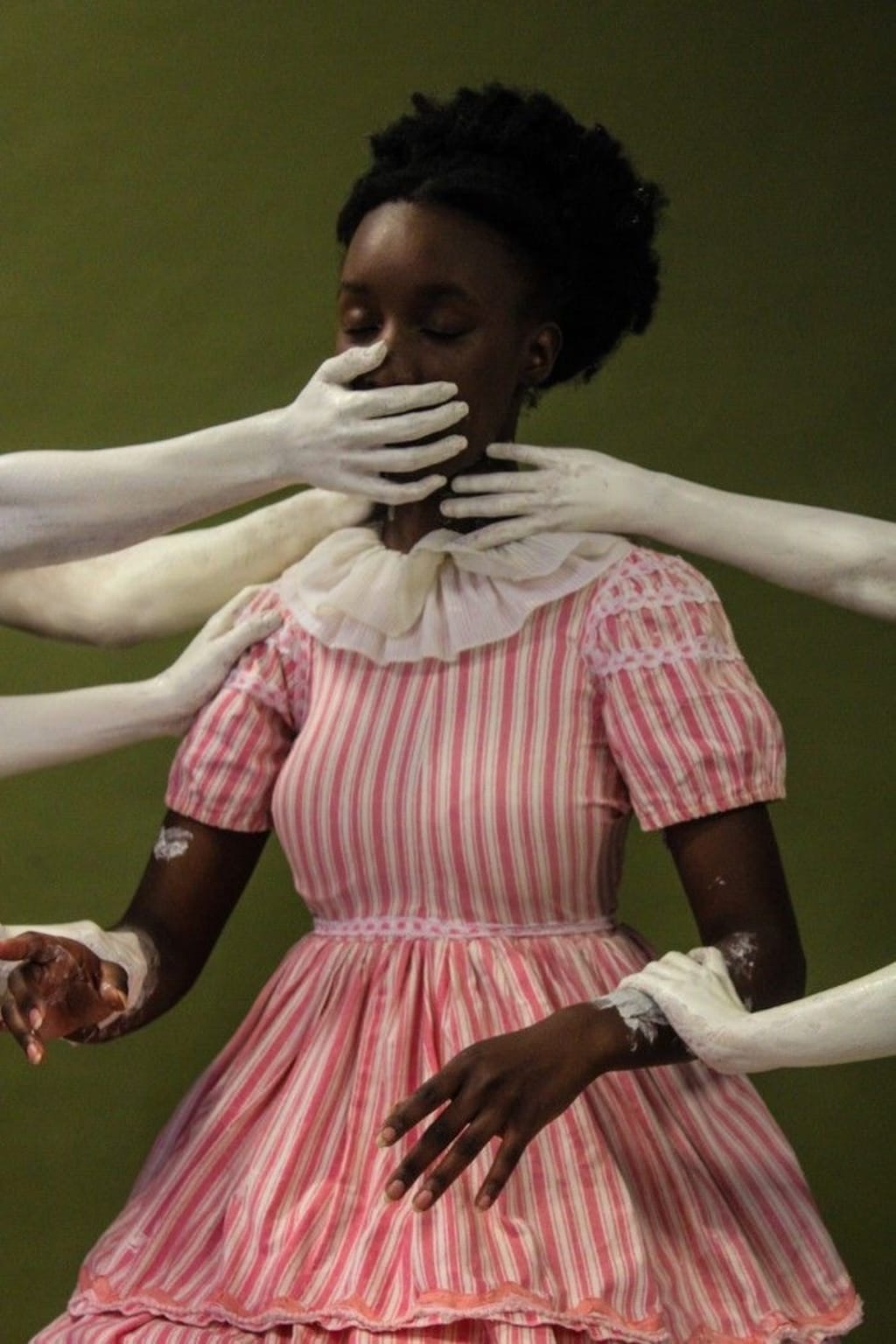
For centuries, women fight for their place in society, having to overcome unfair treatment and inequality in work fields, justice systems, and many more. Octavia.E. Butler and Dr. Joy DeGruy Leary illustrates the theme of gender both in slavery times, the mid-20th century in Kindred (1979), and the video on Post Traumatic Slave Syndrome (2008). Although Butler and Leary explore several topics through their work, they distinctly demonstrate how Black women have little to no power compared to men, are deprived of their role as mothers, and are indiscriminately raped.
Throughout Butler’s text, Kindred (1979), she shows how Black women have little to no power in society during slave times. This was also one of the most prominent ways in which they were mistreated during slavery. Dana, the main character in Kindred, is a Black woman who is transported to the antebellum South. She feels the lack of power that women face at that time like when she witnesses Rufus Weylin, the plantation owner’s son, sexually assaulting Alice, a slave girl. Dana does her best to try and intervene in order to save Alice, but her efforts are useless. This demonstrates the point to which Black women lacked any form of power throughout slavery. The lack of Black women’s power can further be seen with Kevin, Dana’s White husband, who goes back in time with Dana. He does not face the same kind of discrimination as Dana. He is not whipped, and he is free to wander around without danger of being apprehended. This gives us an insight into how Black women were more vulnerable during slavery as compared to other people. Also, in the text Free Joan Little by Greene Christiana, in chapter five; Joan Little acted for us all, she says, “First, they often stressed a Black woman’s right against a white male attacker. By privileging the racial and at times the class-based dimensions over the gendered aspects of the case, they deftly elided the issue of interracial violence against African American women.” the author, contends that by highlighting the racial and economic features of Joan Little's case against a white male assailant, activists, and supporters sometimes disregarded the gendered aspects of violence against African American women in interracial relationships. Some may disagree and say that Black women had some power compared to men during slavery compared to men because they were in charge of raising and caring for children as this was an important job that provided them with a sense of purpose and influence in their communities. Although it is true that Black women had key responsibilities in raising and caring for children, this is not nearly equal to influence in society. Black women had no say over their own or their children's life. Slave masters could separate Black mothers from their children at any moment, and nothing they said or did could stop this from happening. This lack of control exemplifies women's lack of authority throughout slavery. Dana says, "I was losing what little control I had over my own life. The whip had taught me that," with her saying this, we can understand how Black women’s lack of influence in society unarguably made them more prone to all kinds of abuse.
The deprival of motherhood to Black women was another way in which women were oppressed under slavery. Dana is sent back in time to a plantation in Kindred, where she meets Alice, a slave girl. In the past, Alice has been forced to have multiple children by her owner, and she is concerned that her most recent pregnancy would end up in the taking away of her child. Slave owners often separated mothers from their children, so this worry is not unjustified. Later when Alice gives birth to her child who is ironically the product of rape by the white slave owner Rufus Weylin, who mercilessly takes away her child from her to sell it. This topic also similarly comes up in Dr. Joy DeGruy Leary’s video, Post Traumatic Slave Syndrome (2008). In this video, she explains in depth how Black women were looked at as more breeders than they were looked at as women. From a young age, these Black women were sold off to produce children who were then to be sold off by the white slave masters so that they would acquire wealth. This had a lasting effect on Black women as a whole causing mental and emotional problems like depression, anxiety, and low self-esteem that could all be traced back to the denial of Black women to be mothers in their own right timing. Similarly, in the autobiography of Harriet Jacobs, Incidents in the Life of a Slave Girl (1861),she dives deep into the topic of Black women being denied the chance to be mothers to their children during slavery and makes it the main focus of this text. The protagonist of this text, Linda Brent, is a Black woman who is constantly denied the chance to be a mother to her very own children. Throughout the text, Linda’s children are taken away from her and sold to other slave owners. She painfully describes the agonizing feeling of being unable to hold and caress her newborn baby. Her white slave master, Dr. Nicholas Flint, threatens to take her children away from her if she does not conform to his demands, and because of this, she is constantly abused by him. Linda explains the separation of Black mothers and their children on many occasions, an example is when she says, "They [slave owners] control not only the bodies of their bondsmen, but their very souls. They take the mothers from their children and sell them, and, as a natural consequence, the young children are abandoned, and left to the tender mercies of a brutal overseer.” Linda is explaining slave owners' terrible practice of removing Black women from their infants, resulting in the abandonment of young children and their vulnerability to the torture of the overseer. She claims that slave masters had complete control over their slaves' life, including their families and mental well-being, thereby creating a system of dehumanization and subjugation.
Even with this, some people may come forth and argue that it is not the case that only Black women were deprived of their role as mothers because Black men were also separated from their families, and they too suffered the loss of their children and a chance to be present fathers. Bell Hooks says in his text, We Real Cool: Black Men and Masculinity (1996), "Both black men and black women suffered under slavery, and both were denied the opportunity to be the parents they wanted to be, to love and nurture their children, and to have that love and nurture returned. The legacy of slavery continues to harm us all, and only by working together can we begin to heal the wounds of the past and build a better future.", she says this as she tries to explain that Black men were as well denied the chance to be fathers to their children. Although it is true that men also suffered from the loss of their families, women were particularly vulnerable due to the fact that they were responsible for carrying and giving birth to children. Nothing can be compared to a mother losing her child. They were also the primary caregivers for their children, and the loss of their children had a more significant impact on their lives. Dr. DeGruy Leary mentions in her video, Post Traumatic Slave Syndrome (2008), "Black women were not allowed to be mothers in the traditional sense. Our children were taken away from us at young ages and sold off. So, the role of being a mother was never really something that we could practice," with saying this she emphasizes the fact that Black women were denied their natural roles as mothers. Therefore, the pain caused by this dehumanizing act of taking children away from their Black mothers for whichever reason, without their consent, should never be dismissed.
Throughout Butler’s text Kindred (1979), the protagonist, Dana, is repeatedly raped and sexually assaulted by numerous characters. When Dana travels back in time she is forced to face the harsh realities of being a black woman in a time where Black women are regarded as property and are treated as less than humans. Dana's experiences demonstrate the indiscriminate nature of rape during slavery. This is proven when Dana’s own ancestor, Rufus Weylin, rapes her. Also, Isaac, the slave overseer attempts to rape Dana when he finds her trying to escape but she luckily fights him off. Rape is used as a means of power and control as some men think it can be used to assert dominance over Black women. Dana painfully says, "He took what he wanted from me, and it wasn't just my body. It was something inside me. Something that belonged to me. And he took it, and I don't know how to get it back.", this can elaborate to us how rape was used as more than a way to cause pain unto Black women but to rather control them.
Dr. Leary also discusses the issue of rape in her video, Post Traumatic Slave Syndrome (2008). She explains that trauma from rape of Black women over the centuries has had a huge impact on the mental health of Black women today as this trauma has been passed down through generations. Dr. Leary says, "The rape of enslaved Black women was not only a physical violation, but it was also an intentional effort to destroy the spirit and the will of a people." says Dr. Leary. The objectification and dehumanization of Black women’s bodies are the reason that Black women are considered disposable and not worth protection from law-enforcing bodies. As a result, African American women stand a higher chance of being sexually abused and not being given justice as compared to their White counterparts.
Despite this evidence, some may disagree and claim that indiscriminate rape of women was not unique to slavery and Black women as women of other races struggle with rape both today and throughout history. Thomas R. Dew, a pro-slavery writer says in his text Review of the Debate in the Virginia Legislature of 1831 and 1832 (1832), "I have been thus explicit upon this point, because I know that it is one which has been greatly relied upon by the advocates of abolition, as affording a strong ground of objection to slavery. But I maintain that the cases in which the connection is formed, are extremely rare and that the general treatment of the slave is such as to preclude its existence to any considerable extent.", he says this as he attempts to deny allegations of rape of Black slave women at the time.
Although rape and sexual assault have always been a common concern for all women, it is critical to understand the particular historical background in which rape was utilized as a means of power and control throughout slavery. During slavery, the dehumanization and objectification of enslaved Black women created a society in which rape was not only acceptable but also expected. During slavery, the rape of Black women was not considered a crime. Black women continue to receive little to no help or protection from the authorities for centuries when it comes to rape as compared to White women. This heritage continues to shape African American women's lives today, as they are still considered as disposable and undeserving of protection. As Dana worries for an enslaved girl that is too trusting of a white man, she says, "She doesn't seem to realize that her Black skin makes her more vulnerable to rape and less likely to get justice if she's attacked,” she is concerned about an enslaved girl who is overly trusting of a white man, noting that the girl is oblivious of the heightened vulnerability to rape that comes with being a Black woman, as well as the extremely unlikely possibility of obtaining justice if she is unfortunately raped. This emphasizes the terrible realities of systematic racism and injustice encountered by Black women in the United States, both historically and today.
Throughout slavery, Black women were extremely oppressed and marginalized. Their bodies were disrespected beyond words can explain and their voices were silenced beyond measure. Even after times of slavery, these vices still linger within society regardless of how much is being done to fight against them. There is still so much to be done by society before the wounds of Black women left behind by white oppressors can fully be healed. Coretta Scott King says, "We are all human beings, and we should be treated as such. Black women deserve respect just like any other woman.”, with this famous quote, I can conclude by saying that Black women deserve respect just like any other human beings.
About the Creator
Keep reading
More stories from writers in Humans and other communities.
Time to change your life.
Is it even possible for you to change your life? A lot of people, more than there should be, are unhappy with their lives. But what are they doing about it? Usually nothing. People talk about how shitty their lives are and want change, but are they not taking the actions to change?
By Jen Phillips2 days ago in Humans
Ben Shelton and the Pressure of Growing Up in Pro Tennis
Some tennis careers begin quietly, while others unfold under a bright, uncomfortable spotlight. Ben Shelton belongs to the second group. From his first breakthrough matches, expectations followed him closely. Fans noticed his power. Commentators talked about his age. Social media moved faster than his own understanding of what was happening. A name suddenly carried weight. For many viewers, Ben Shelton feels like a story still being written in real time. His journey is not just about forehands and serves. It is about learning who you are while the world watches. This article looks at Ben Shelton’s rise, his playing style, the pressure surrounding young athletes, and what his path says about patience in modern tennis.
By Muqadas khan5 days ago in Humans
Instructions Included Challenge Winners
For the Instructions Included challenge, we asked writers to tell a story through instructions and to trust the form to carry what could not be said outright. Across the top entries, that trust paid off in many different ways.
By Vocal Curation Team6 days ago in Resources




Comments
There are no comments for this story
Be the first to respond and start the conversation.