
Five Film Scenes That Prove Crying Sets You Free
From the park bench in Good Will Hunting to Pixar, how cinema shows that crying sustains and connects


“It’s not your fault.” Robin Williams repeats four words like a mantra as he hugs Matt Damon in Good Will Hunting. At first, Will retreats to his head: “I know.” Sean persists. The armor cracks. Three minutes that reshaped the on-screen conversation about male vulnerability: sometimes someone needs to give us permission to feel.
Crying in film isn’t an accident; it’s staged liberation that reminds us tears don’t signal weakness, but humanity in its clearest state.
The Therapy We Carry Inside
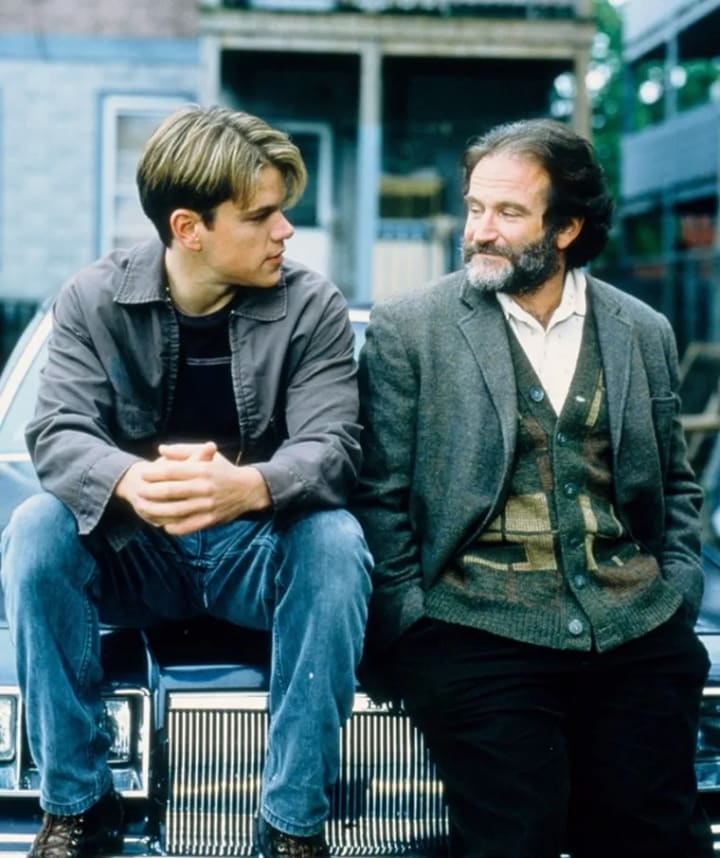
Good Will Hunting (1997): The embrace that breaks decades of silence
Will Hunting is a genius who solves the impossible on paper while postponing what can’t be postponed inside. He’s sabotaged therapy with irony and defensive logic until Sean Maguire appears—someone who knows the same streets and the same edge of pain.
Key moment: the “it’s not your fault” litany pierces the armor. Will collapses and cries like the child no one held.
Why it works: trauma doesn’t dissolve through intellectual explanation; it needs validation and contact.
Technique that reinforces meaning: sustained medium shot and slow push-in; no manipulative music—the sound design becomes the silent fourth presence in the room.
When Heroes Allow Themselves to Break

The Pursuit of Happyness (2006): Tears that feed hope
Chris Gardner protects his son in a subway bathroom turned “cave.” When the boy falls asleep, he finally lets himself fall apart.
Key moment: muffled tears behind a hand so as not to wake him; exhaustion and love in the same gesture.
Why it works: not surrender, but processing—the body discharges to keep going.
Technique that reinforces meaning: fixed, almost documentary camera and a jump to extreme close-up at the breaking point; tight space that compresses the viewer’s breathing.
The Affective Wisdom Pixar Gave Us
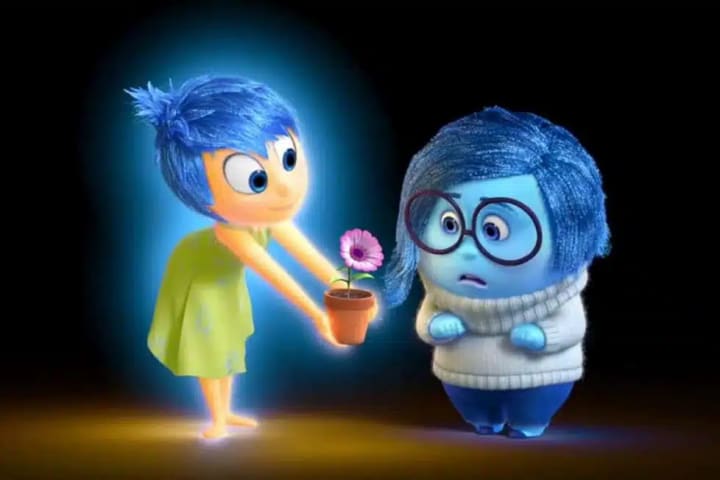
Inside Out (2015): When sadness becomes a superpower
For years, happiness was sold as the sole objective. Pixar redraws Riley’s inner map and gives Sadness her place back.
Key moment: Riley allows herself to cry in front of her parents and says she misses her old life. They don’t correct or minimize; they accompany.
Why it works: by acknowledging what hurts, the bond opens. On the “control panel,” Sadness and Joy co-activate, creating a bittersweet memory.
Language tweak: it isn’t about “fixing” what she feels—it’s recognizing it; that’s where connection begins.
Pain Without Easy Promises

Manchester by the Sea (2016): Mourning without the pledge of a happy ending
Lee Chandler carries an unbearable guilt. No redemptive epiphanies, no miracle therapy.
Key moment: the encounter with Randi on the street. She offers forgiveness; he can’t take it. He cries without aesthetics, without a score telling us how to feel.
Why it works: some pain isn’t “overcome”; it’s carried while time keeps moving. Crying doesn’t cure, but it lets you breathe one more day.
Technique that reinforces meaning: ambient silence and a respectful camera distance; the frame refuses to beautify.
Redefining Masculinity Through Tears
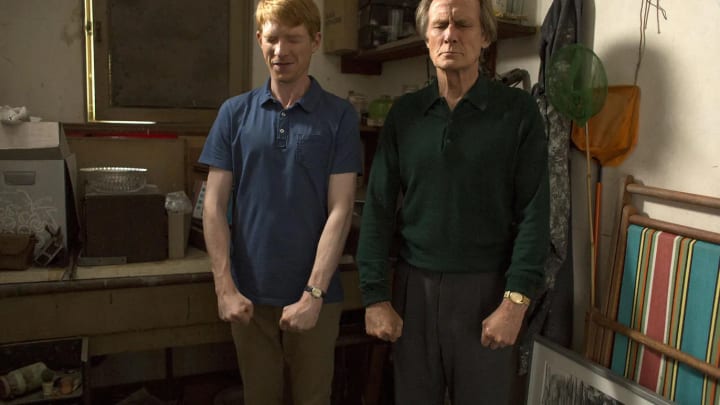
About Time (2013): When men cry out of pure gratitude
Tim Lake learns the power isn’t in rewriting the past but in looking the ordinary straight in the eye.
Key moment: he plays in the sand with his daughter and cries with joy. No loss—just awe.
Why it works: it opens a masculine affective register that celebrates, not only reacts to pain.
Technique that reinforces meaning: natural light and intimate tempo; the music accompanies rather than excuses the tears.
The Neuroscience Behind Our Tears
Why the brain needs to cry
When we cry, the system releases endorphins (analgesia) and oxytocin (bonding). Emotional tears differ in composition from irritation tears, as William Frey described; they serve discharge and connection. Crying activates the parasympathetic system: the body finds rest.
The social function of crying
Tears are a social signal of openness and a request for support. In studies, observing expressions activates empathic networks in the viewer’s brain; that’s why shared crying strengthens group fabric.
Cinema as an Affective Laboratory
Watching others cry lets us explore—without personal risk—what we avoid outside the theater. When Will breaks, the same door opens in us. That’s the old catharsis of the stage, refined for the big screen: a collective ritual reminding us pain, joy, and loss run through us all. It’s our affective grammar.
Keep the conversation going
Medium: Which scene set you free? Drop it in the comments and we’ll analyze it in a future post.
Substack: If you’re into how film frames sadness and connection, subscribe—weekly scene breakdowns and annotated scripts.
Vocal: Pitch a scene and I’ll tear it down shot by shot in the next installment.
About the Creator
DramaT
Defective survival manual: confessions, blunders, and culture without solemnity. If you’re looking for gurus, turn right; if you’re here for awkward laughs, come on in.
Find more stories on my Substack → dramatwriter.substack.com
First Date Strategies Help Singles Build Rapport Trust And Connection
The first date should be prepared. The advantage of pre-reflection on the expectation, interests, and boundaries is beneficial to singles. Being aware of own goals in the date assists in steering the dialogue and actions as well as alleviating anxiety. Mental preparedness also enables people to come out themselves in the real sense and have the confidence to do so.
By Mark Hipster7 days ago in Humans




Comments
There are no comments for this story
Be the first to respond and start the conversation.