
Fever: Nature's Ancient Defense Mechanism
The role of fever in immunity and the implications of modern medicine

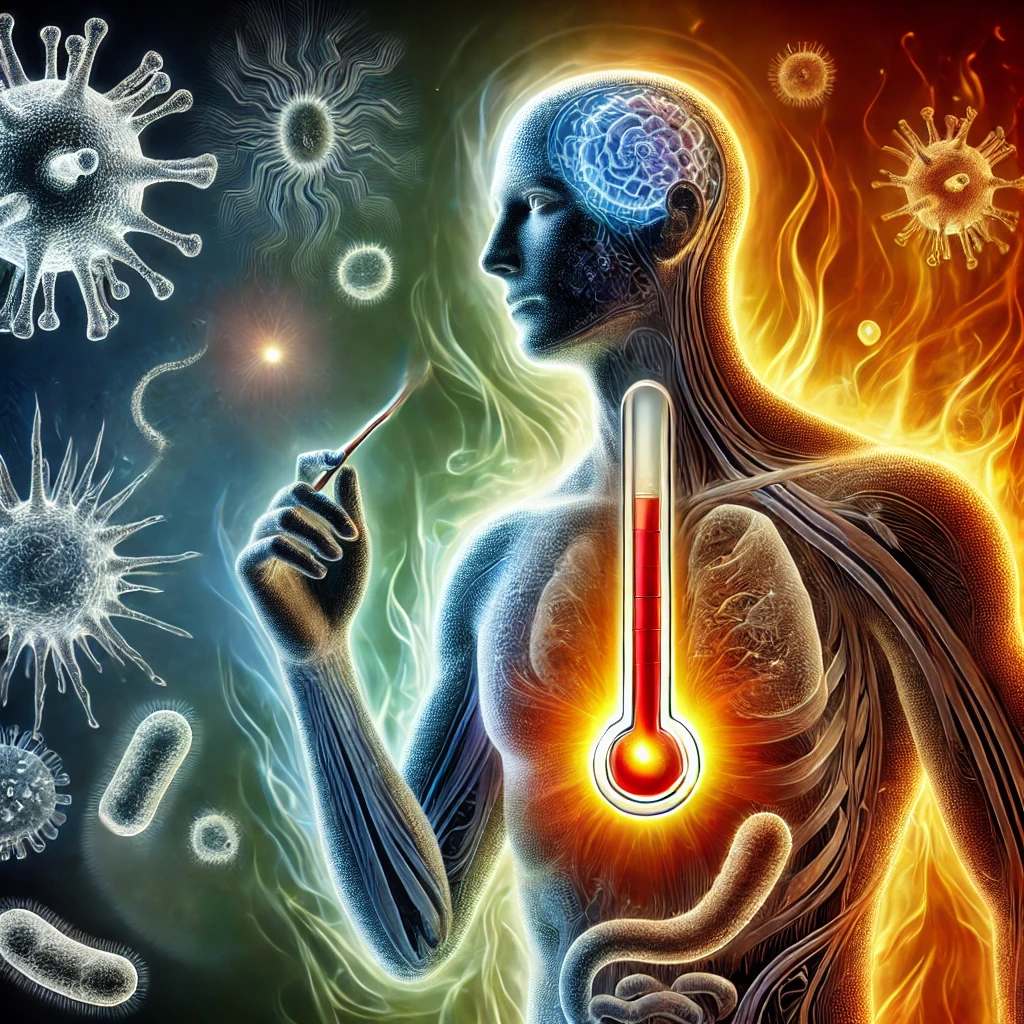
Fever is an uncomfortable experience, and many of us instinctively reach for medication to suppress it. But is that really the best course of action? Fever is one of our body's oldest and most effective defenses against illness.
Understanding what fever is, how it enhances our immune system, and whether or not we should combat it with medication can help us make more informed decisions about our health.
Life on Earth thrives within specific temperature ranges. These ranges vary widely, from the frigid -10°C of deep, cool pools to the scorching 120°C of thermal vents. However, life outside these extremes is unsustainable. Every organism, whether an animal or microbe, has a temperature range that is ideal for survival, and a broader range that is stressful but survivable for a limited time.For humans, the ideal body temperature is around 37°C or 98.6°F. This is the temperature at which our cells operate most efficiently and our bodies are best adapted to their environment.
As warm-blooded animals, we expend a significant amount of energy to maintain this temperature, which might seem wasteful. However, this constant internal temperature actually serves as a defense mechanism, making us almost entirely immune to one of nature’s most formidable threats: fungi. Most animals with cooler body temperatures are vulnerable to fungal infections, but our relatively high body temperature keeps us safe from many of these pathogens. Fever, then, is an extension of this natural defense.
When a microbe invades your body, it encounters a hostile environment designed to thwart its survival. Fever acts as a form of "defensive climate change," raising your body temperature beyond the ideal range for these invaders.The evolutionary roots of fever run deep, dating back at least 600 million years. Fever is a common response to illness across the animal kingdom.
Fish seek out warmer waters, lizards bask in the sun, and bees heat up the air inside their hives to fend off pathogens. As a warm-blooded mammal, your options are even more drastic. When you’re infected by bacteria or viruses, your body initiates a fever as part of its first line of defense. Fever is triggered by a diverse group of chemicals known as pyrogens, or "creators of heat." These chemicals signal your brain to increase your internal thermostat. As a result, you begin to shiver, generating heat through rapid muscle contractions. Your blood vessels also constrict to prevent heat from escaping through your skin, causing your skin to cool while your internal temperature rises.Fever is a systemic response that demands significant energy from your body. For every degree Celsius your temperature rises, you burn about 10% more calories just to stay alive.
Fever also compels you to rest, conserving energy so your immune system can fight off the infection more effectively. When bacteria invade, they try to remain undetected, but during a fever, they are forced to switch into high production mode to survive. This rapid multiplication requires substantial resources, adding to their stress. Your immune system exacerbates this stress by triggering inflammation, which floods the infection site with fluids, attack proteins, and immune cells. Fever adds even more pressure by disrupting bacterial functions, damaging their DNA, and inhibiting protein production
While fever is stressful for your own cells as well, your immune system is better equipped to handle it. Fever boosts the efficiency of immune cells like neutrophils, macrophages, and killer cells. It also helps your immune cells deplete critical resources that pathogens need, such as iron, glucose, and glutamine, effectively starving the invaders.
Viruses, which are highly sensitive to heat, fare even worse during a fever. For example, the rhinovirus, which causes the common cold, can only infect the cooler environment of the respiratory tract. The elevated body temperature during a fever makes it harder for such viruses to survive and replicate. Infected cells, struggling to cope with the heat, produce large amounts of heat shock proteins (HSPs) in an attempt to repair themselves.
However, this response backfires, as the overproduction of HSPs signals immune cells that the infected cells are under stress. As a result, Natural Killer Cells and Killer T Cells are attracted to these stressed cells and destroy them along with the viruses they harbor.
Given that fever is such an effective defense mechanism, why haven’t pathogens evolved to withstand it? The answer lies in the evolutionary trade-offs. While some pathogens might adapt to survive higher temperatures, this adaptation becomes a disadvantage when they try to infect new hosts.
Healthy humans with lower body temperatures are less susceptible to these heat-adapted pathogens, giving an advantage to microbes that thrive in cooler environments.
Serious pathogens like the measles virus avoid this dilemma by using "hit-and-run" tactics. The measles virus replicates rapidly and is most infectious just before fever peaks. By the time the fever and full immune response kick in, the virus has already done significant damage.
Despite the effectiveness of fever in fighting infections, modern medicine often encourages us to suppress it. Over-the-counter medications like Aspirin, Ibuprofen, and Paracetamol are widely used to alleviate pain and reduce fever. However, the widespread availability of these medications is a relatively recent development in human history. In the past, pain and fever were accepted as natural parts of illness, signaling the body to rest and conserve energy. Fever is often suppressed, particularly in children, due to concerns that it might cause harm. However, for most people, fever below 40°C (104°F) is not necessarily dangerous and may not need to be suppressed. Check with a medical professional before deciding.
Exceptions include vulnerable populations such as pregnant women, the elderly, and individuals with weakened immune systems, for whom fever can pose serious risks.In cases of serious illness, the role of fever becomes more complex. While some studies suggest that antipyretic drugs do not help in healing diseases like influenza or chickenpox, ethical concerns make it difficult to conduct definitive clinical trials. There is evidence that more people may survive serious infections with a fever, but more research is needed to fully understand the implic
tions.In conclusion, fever is a crucial component of the immune response, helping the body fight off infections by creating an inhospitable environment for pathogens. While it may be uncomfortable, fever is generally beneficial and should not always be suppressed. However, it’s essential to consult with a healthcare professional to determine the best course of action when dealing with fever, as individual circumstances vary. Avoid relying solely on internet advice or self-medication, especially in serious cases.
About the Creator
Smart Dating Lessons In Love Every Heart Should Learn Early
Among the dating lessons that every human being should learn at a young age is the fact that one must know himself or herself before getting into a relationship. Most individuals end up dating without having the slightest idea about what they want or need to know about their values, emotional needs, and long-term aspirations. Lack of self-awareness means that a person cannot make the right choice of a partner or create a stable relationship. Self-recognition enables people to understand the exact things they desire in love instead of adhering to cultural norms or short-term lust.
By Mark Hipster6 days ago in Humans




Comments
There are no comments for this story
Be the first to respond and start the conversation.