
There is a game I used to like to play with people. People would ask me where I’m from, and I would smile and say, “Guess.”
I was born in South Africa. After a measly two years that my brain can hardly remember, I was carted off to the other side of the world - Japan. In Japan, I was almost fluently greeting people in formal Japanese by the time that I was plucked from Nagoya, into Brasilia, Brazil. After a year of hardly getting a taste for the city, I was once again on a plane. This time, we were off to Maryland, USA, where I learned to read and write in English. Then, to New York. Then, back to Brasilia, Brazil.
The catch is, not even I know the answer to my question. “Guess” is not a command. It is a plea. I plead for others to tell me.
This is what happens when your father has a job that makes you move around. You arrive, you begin to settle, and just when you can recognize streets and buildings, and approaching the school drop-off area and walking into class are not so terrifying anymore, you are hauled off and forced to do it all again. This was not so bad as a baby. But as I grew older, I got shier, quieter, and it got harder and harder to say goodbye to friends and the place I called home for that year.
Moving to Brazil for the last time was a tragedy and a relief all in one. That last time saying goodbye and packing everything up made my chest ache more intensely than it ever had before. But arriving, unpacking, and knowing my stuffed animals and snow globes would not be moved out of their place at least for the foreseeable future was comforting. I could relax.
What I did not foresee was a new layer to my original problem of starting over (and specifically, starting middle school): starting in a new language. I spoke Portuguese. Allegedly. My family is Brazilian and my parents have always spoken in Portuguese to me. I used to speak in Portuguese to them as well, until one day while living in the US, I didn’t. I just stopped, and chose English.
I never stopped understanding Portuguese. I always visited my family in Brazil every summer growing up and had the chance to practice in those moments. But my Portuguese did not develop fully the way that of Brazilian children actually living in Brazil did. It was broken, with all the wrong grammar and a very limited vocabulary. And middle school kids sniff out otherness. And fear.
I discovered this the hard way. Teachers called on me to read a paragraph from our textbook. As I made my way through the words shyly, I could hear my classmates snickering at my thick accent. I had an awkward cadence, my words didn’t flow naturally the way the other kids’ did and I couldn’t form the pronunciations that well.
“Gringa,” or foreigner, was the word that floated around through the school halls and stuck to my forehead for everyone to see.
If I dared to answer a question in class, it was often accompanied by some quiet-but-not-so-quiet comment from a classmate that went along the lines of “cara, ela nem sabe falar português!” (dude, she doesn’t even know how to speak Portuguese). Besides speaking in class, the question of where I’m from was always one I dreaded. Students being friendly and curious would come up to me and ask, “Where are you from? You sound American!” I had the script memorized. “Actually,” I would say, voice a little hollow and a polite, rehearsed smile, “I’m Brazilian.” And I would count the seconds - 3, 2, 1… “Séeerio?! Como assim?!” - Really?! How?! Then followed my legal court case defense of how I’m Brazilian, complete with evidence and official signatures because otherwise no one would believe it at all.
I used to think an elaborate explanation of my background - learning English and growing up outside Brazil in cool places - would somehow make up for my lack of Brazilianness and my bad Portuguese, make the teasing stop. But kids are kids. So it did not. Nothing changed no matter how many times I explained that I had been in South Africa and Japan. It only solidified that I was the gringa who spoke weirdly.
I hated my Portuguese and its peculiarities. I was ashamed. And I made the only natural decision.
If I was going to be labeled a gringa, I might as well act like one. I would take this deadweight rock of a past I had, and polish it in whatever way I could. I hung out with the foreigners in my school, turning my attention to the one language I could at least speak well - English. I decidedly neglected Portuguese. I abhorred the vowels and loathed the accentuation that shut me out of the very country my passport claimed was mine. The document felt more like a condemnation. Whatever. Samba was stupid anyway, right?
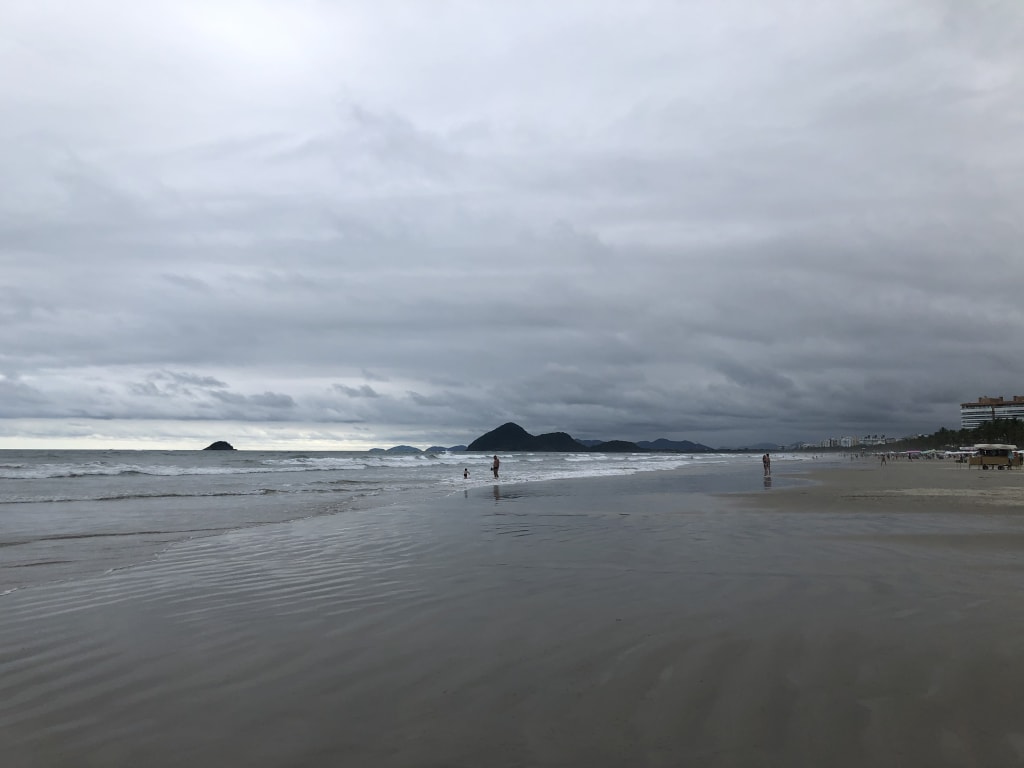
All those long summers I spent visiting Brazil in between grades, in São Paulo watching Xuxa in my grandma’s TV room, playing at the beach my cousins, with beads in my hair and anklets and eating Brazilian chips and drinking Brazilian soda, with road trips to Natal or Riviera singing along to Marisa Monte… they don’t matter. They don’t count. They don’t make me Brazilian. Right?
I got to sit back and unwind for five years in Brasilia - the longest I had ever spent in any one place. I thought that was it, at least until college. I was comfortable, living in a crafted Americanized image. After a year or two, I was no longer the shiny new thing the kids poked at as much, though comments still came here and there. I had found my niche and could inhabit it peacefully.
And then my parents threw me a curveball.
No, I didn’t have to move again.
Instead, I would have the pleasure of changing schools to begin a different program. The rationale behind this was that this new program, the International Baccalaureate (IB), would raise my chances of getting into a good college. So I was plucked from the hallways and students and teachers I knew, and released into the savage, unknown environment of a new school.
Poof, the image I had fashioned was stripped from me.
My American image didn’t transfer with me, nor did my life story and briefcase of evidence of my Brazilianness and Non-Brazilianness. I had to start from scratch, a blank canvas. But there, five years later, I was not so pessimistic and tortured about my suspension between two worlds. And so, feeling a little more at home in the place I was supposed to call home, I was more at peace starting anew.
The uncertainty still snatched the breath out of my lungs, but the students were different, and the IB program was challenging. Public speaking and anything that made me visible had always terrified me and wrenched my gut with anxiety. The little ghost in me that was happy to be overlooked by others begged to stay undisturbed, but I did not have that choice, and looking back, I am so glad. Ghosts can’t dance samba, and I had come to love samba. Anxiety became excitement. I was forced to make myself visible in class presentations and oral exams, to make myself seen - or rather, heard - in Portuguese. I made better friends who didn’t maliciously snicker every time I awkwardly pronounced something in class.
Bit by bit, I let my accent roll off my tongue, like Rapunzel letting down her long, golden hair from the tower. This proved to be a connection to the world outside that brought me closer to the people I loved than I could’ve imagined. I found myself shouting along to Brazilian songs like I used to during my family road trips, like the Brazilian beat was that of my own heart. I began to open up the little part of me that was, well, gigantically Brazilian - more than I could have ever fathomed at eleven years old when I first moved back.
For the first time after changing schools, I could see my past for what it was: a privilege, and a blessing - not a curse, and that the rock I thought I had to polish had been a diamond all along. I cannot deny my upbringing. There are African masks and San art in my house that won't let me forget where I first stepped foot into this world. I have bits of memories of traditional architecture and the curved roofs of temples in Japan. Japanese mannerisms such as removing my shoes at home are habitual. I have a warm, Brazilian heart and speak Portuguese with a slight American twang. These are all things that compose me. I carry this diamond in me as I samba shamelessly through life.
Now, when people ask me where I’m from, I no longer play the game. I smile and I say, “Long story short, Brazil.”
About the Creator
Gabriela Alves
I am yet another person tenderly obsessed with the inherently human nature of storytelling, connecting, and empathizing.
Keep reading
More stories from writers in Humans and other communities.
Adaptability: The Skill That Future-Proofs Your Career
Introduction: Why Adaptability Is the New Career Insurance The modern job market is changing at an unprecedented pace. Automation, artificial intelligence, remote work, and global competition have reshaped how careers are built and sustained. In this environment, technical expertise alone is no longer enough. The single most important skill that separates professionals who thrive from those who struggle is adaptability.
By Muhammad Talha Ahmad3 days ago in Humans




Comments
There are no comments for this story
Be the first to respond and start the conversation.