
Exploring the Complex Relationship between Psychology and Money
Psychology and Money
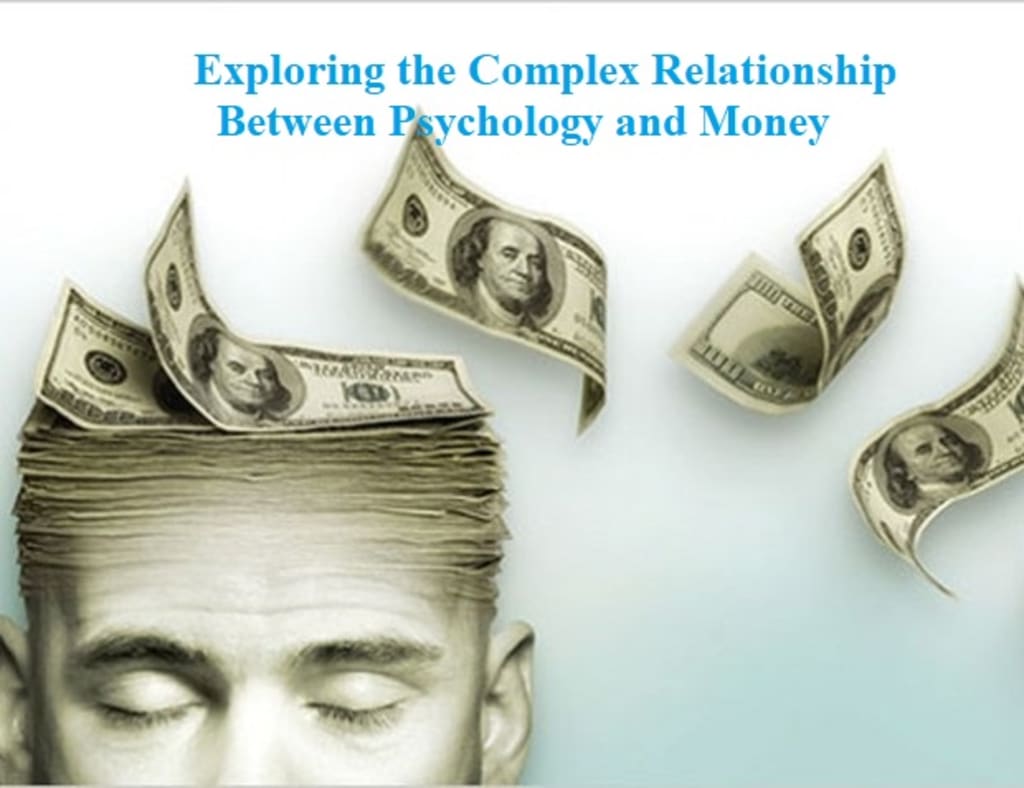
I. Introduction
A. Definition of the psychology of money: The psychology of money refers to the study of how our thoughts, emotions, and behaviors are related to our financial decisions and actions. It encompasses a wide range of topics, including the impact of money on our emotional well-being, the relationship between money and our values, the psychology of spending and saving, and the influence of societal and cultural factors on our money psychology.
B. Importance of understanding the psychological aspect of money: Money plays a significant role in our lives and understanding the psychological factors that influence our money behaviors can help us make better financial decisions, improve our well-being, and achieve our financial goals. For example, by understanding the emotional triggers that lead to impulsive spending, we can learn how to control our spending habits and save more money. Similarly, by understanding the impact of money on our relationships, we can learn how to manage conflicts and build stronger, more fulfilling relationships.
C. Brief overview of what the blog post will cover: This blog post will explore the different aspects of the psychology of money in more detail, including the role of money in our lives, the relationship between money and our values, the psychology of spending and saving, and the influence of societal and cultural factors on our money psychology.
II. The role of money in our lives
A. How money affects our emotions and well-being: Money can have a significant impact on our emotional well-being. Research has shown that people who have more money tend to report higher levels of happiness and life satisfaction. However, money can also cause stress, anxiety, and other negative emotions, especially when we feel like we don't have enough. For example, people who are struggling to make ends meet may feel a constant sense of financial insecurity, which can lead to feelings of anxiety and depression.
B. The impact of money on our relationships: Money can also affect our relationships. Research has shown that financial disagreements are one of the leading causes of divorce. Money can also create tension and conflict in our relationships, especially when one partner feels like they are contributing more than the other. On the other hand, having a shared financial goal can bring couples closer together. For example, couples who are saving for a home or a child's education may feel a sense of unity and purpose as they work towards their goal together.
C. The influence of money on our self-esteem and self-worth: Money can also have an impact on our self-esteem and self-worth. People who feel like they have enough money tend to have higher self-esteem, while those who feel like they don't have enough may experience lower self-worth. For example, people who are struggling to make ends meet may feel like they are not good enough, or that they are not living up to society's expectations.
III. The relationship between money and our values
A. How our values shape our money behaviors and habits: Our values play a significant role in shaping our money behaviors and habits. For example, people who value financial security may be more likely to save money, while those who value experiences may be more likely to spend money on travel and other experiences. Our values can also influence our career choices and the type of work we do. For example, people who value creativity may be more likely to pursue a career in the arts, while those who value security may be more likely to pursue a career in finance.
B. The link between money and our sense of purpose: Money can also be related to our sense of purpose. People who feel like they have a purpose
Siva Tech
give me more details
in life may be more likely to invest in their future and save money, while those who don't may be more likely to spend money impulsively. For example, people who are passionate about their work and have a sense of purpose may be more likely to save money for retirement, while those who are not as invested in their work may be more likely to spend money on immediate pleasures. The link between money and purpose is a complex one and can also be influenced by other factors, such as age, life stage, and personal circumstances.
C. How our values and money goals change over time: Our values and money goals can change over time. For example, as we get older, we may value financial security more than we did when we were younger. This can be influenced by a variety of factors, such as life events, personal experiences, and changes in our circumstances. For example, as we approach retirement, we may become more focused on saving money and planning for our financial future, while as young adults, we may be more focused on spending money on experiences and enjoying our youth.
IV. The psychology of spending and saving
A. The emotional triggers behind impulsive spending: Impulsive spending can be triggered by various emotional factors, such as boredom, stress, or even happiness. Research has shown that people are more likely to spend money impulsively when they are in a positive mood. For example, people who are feeling down may go shopping as a way to cheer themselves up, while people who are feeling happy may be more likely to indulge in a luxury purchase. Understanding these emotional triggers can help us to control our spending habits and make more mindful financial decisions.
B. The role of self-control and discipline in saving money: Saving money requires self-control and discipline. People who have good self-control are more likely to save money and make financial plans, while those who lack self-control may find it difficult to save money. Self-control can be developed and strengthened through various techniques, such as mindfulness, cognitive-behavioral therapy, and goal setting.
C. How our financial decisions are influenced by our past experiences and memories: Our past experiences and memories can also influence our financial decisions. For example, people who grew up in a financially stable home may be more likely to save money, while those who grew up in a financially unstable home may be more likely to spend money impulsively. Our past experiences can also shape our attitudes towards money and influence our financial behaviors. For example, people who had a traumatic financial experience in the past may be more likely to be financially risk-averse, while those who had a positive financial experience may be more financially confident.
V. The influence of societal and cultural factors on our money psychology
A. How societal norms and expectations shape our money attitudes and behaviors: Society plays a significant role in shaping our money attitudes and behaviors. For example, societal norms and expectations can influence our spending and saving habits, our career choices, and even our financial goals. For example, in some cultures, it is considered to be a sign of success to have a large amount of wealth, while in others, it is considered to be more important to live a simple, modest lifestyle.
B. The impact of social comparison on our financial well-being: Social comparison can also have an impact on our financial well-being. For example, people who are constantly comparing themselves to others and feeling like they are not measuring up may feel like they are not good enough, which can lead to feelings of low self-worth and depression. On the other hand, people who are able to focus on their own financial goals and progress may feel more satisfied and fulfilled.
C. How cultural factors affect our spending and saving.
VI. Conclusion
A. Summary of key points: The blog post discussed the different aspects of the psychology of money, including the role of money in our lives, the relationship between money and our values, the psychology of spending and saving, and the influence of societal and cultural factors on our money psychology. We also looked at how money can affect our emotional well-being, relationships, self-esteem, and sense of purpose.
B. Implications for understanding and improving our money psychology: Understanding the psychology of money can help us to make better financial decisions, improve our well-being, and achieve our financial goals. By understanding the emotional triggers that lead to impulsive spending, we can learn how to control our spending habits and save more money. Similarly, by understanding the impact of money on our relationships, we can learn how to manage conflicts and build stronger, more fulfilling relationships.
C. Suggestions for further reading and resources: For those who are interested in learning more about the psychology of money, there are many books, articles, and resources available. Some popular books on this topic include "The Psychology of Money" by Morgan Housel, "Thinking, Fast and Slow" by Daniel Kahneman, and "The Wealth of Nations" by Adam Smith. Additionally, there are many websites and blogs that offer advice and resources on personal finance and money management.
About the Creator
Time to change your life.
Is it even possible for you to change your life? A lot of people, more than there should be, are unhappy with their lives. But what are they doing about it? Usually nothing. People talk about how shitty their lives are and want change, but are they not taking the actions to change?
By Jen Phillipsabout 17 hours ago in Humans
The Most Kissed Face in History
The history of medicine is often a sterile chronicle of clinical trials, chemical formulas, and antiseptic laboratories. However, one of the most vital tools in modern emergency medicine—the CPR training manikin—is rooted in a 19th-century Parisian mystery that feels more like a work of Romantic poetry than a medical breakthrough. Every year, millions of students around the globe tilt back the head of a plastic doll to practice life-saving breaths, looking into the serene, frozen features of a woman known as L’Inconnue de la Seine: The Unknown Woman of the Seine.
By Richard Weber5 days ago in Humans


Comments
There are no comments for this story
Be the first to respond and start the conversation.