
Exploring Earth's Giants: From Enormous Flowers to Towering Trees
A Journey to Discover the World's Largest Plants

Giant Flower of the Jungle: Rafflesia Arnoldii
Our expedition begins in the heart of Indonesia's jungle, specifically in the region of Benkulu, a two-hour flight from Jakarta. Here, the world's largest flower, the Rafflesia Arnoldii, thrives. Locally known as the "corpse lily," this gigantic flower's name hints at the mystery surrounding it. But why is it called that?
Meet Hank Holidini, a biologist and researcher who knows the jungle like the back of his hand. Every week, he embarks on a journey deep into the jungle to monitor the population of Rafflesia Arnoldii. The flower, which is endangered due to deforestation for coffee plantations, is a remarkable parasite that grows on lianas and other plants. Its captivating growth takes seven months, leading to a spectacular bloom that lasts just eight days. However, there's a catch – the putrid odor it emits, akin to decaying meat, earned it the nickname "corpse lily." This scent attracts flies, essential for pollination.
Guardians of the Giant Trees: Coastal Redwoods
Next, we take flight to the United States, landing in the forests of Northern California. Here, we find the awe-inspiring coastal redwoods, scientifically known as Sequoia sempervirens. These trees, several thousand years old, dwarf any other vegetation, making even the mightiest pines seem like grass blades in comparison.
But what makes these giants grow over 100 meters tall? Sheena Diehard and Vanessa Williams, tree experts who regularly ascend the redwoods' crowns, provide insights. The redwoods' rapid growth, approximately 1.2 meters per year, is attributed to the frequent fog, which provides the giants with ample moisture without relying on their shallow roots. These magnificent trees, some reaching 380 feet, stand as a testament to both nature's grandeur and its vulnerability.
Monstrous Water Lilies: Victoria Amazonica in Taiwan
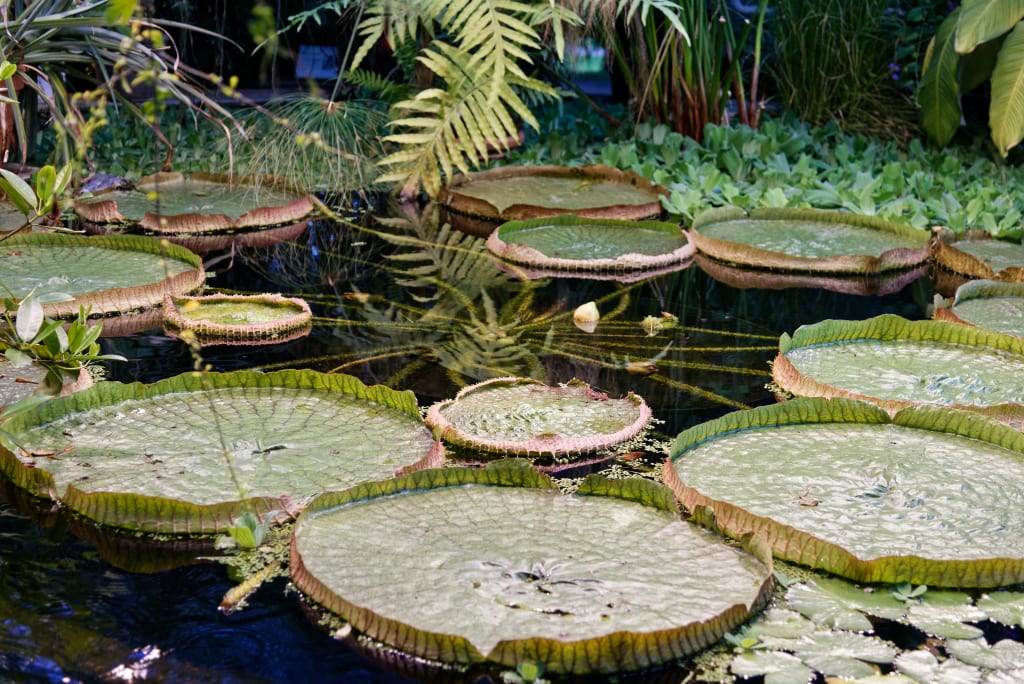
Our quest for Earth's largest plants leads us to Tainan, Taiwan, where farmers cultivate the monstrous water lily, Victoria Amazonica. These water lilies are renowned for their colossal leaves, which can reach a staggering three meters in diameter and weigh up to six kilograms.
Botanist Gen Lu has spent six years breeding these enormous water lilies. Astonishingly, these leaves can grow to their immense size in just two weeks, thanks to the favorable weather conditions. What's even more captivating is their flowers, which open for only two consecutive days, changing color from white to pink during this brief period. This adaptation ensures non-specialized pollination, where large beetles are lured in by the sweet nectar. The flower closes behind the beetles, covering them in pollen, which is then dispersed when they visit another flower.
In the vast water lily farms, tourists flock to witness these botanical wonders, and even children can be seen standing on the gigantic leaves. How do these leaves support their weight? The secret lies in air-filled chambers beneath the leaves, providing buoyancy even in heavy rainfall.
As we explore the remarkable flora of our planet, we discover that nature's giants, from the Rafflesia Arnoldii to coastal redwoods and colossal water lilies, continue to inspire awe and admiration. These magnificent plants are not only testaments to the wonders of evolution but also reminders of the importance of conservation efforts to protect their unique beauty for generations to come.
About the Creator
Keep reading
More stories from Anu Preethi Danila D and writers in Humans and other communities.
The Golden Harvest: Crafting Red Palm Oil in West Africa
In the heart of West Africa, a centuries-old tradition continues, yielding a golden treasure coveted across the globe. The production of red palm oil, characterized by its distinct flavor and rich texture, offers an artisanal journey into the heart of a vibrant industry. This article delves into the meticulous process of crafting red palm oil, its soaring market value, and the challenges faced by the dedicated workers who bring this cherished product to life.
By Anu Preethi Danila D2 years ago in Humans
Whiskey At Dusk
Guess the whiskey was more important to you in the end, wasn’t it? It was more than the well-being of your friends; more vital than showing up to the places you promised you would and could come to; more critical of a matter than fulfilling your damn responsibilities and getting the press off your back.
By Snarky Lisa5 days ago in Humans
Subtle Signs Your Body Responds to Emotional Energy.
Emotions influence more than thoughts. They shape how your body reacts in ways you might not notice. Understanding these signals helps you recognize emotional patterns and maintain better mental and physical health.
By Wilson Igbasi4 days ago in Humans



Comments
There are no comments for this story
Be the first to respond and start the conversation.