
Explore the Lifestyle of Cameroon with Satguru Tours and Travels
Satguru Tours and Travels
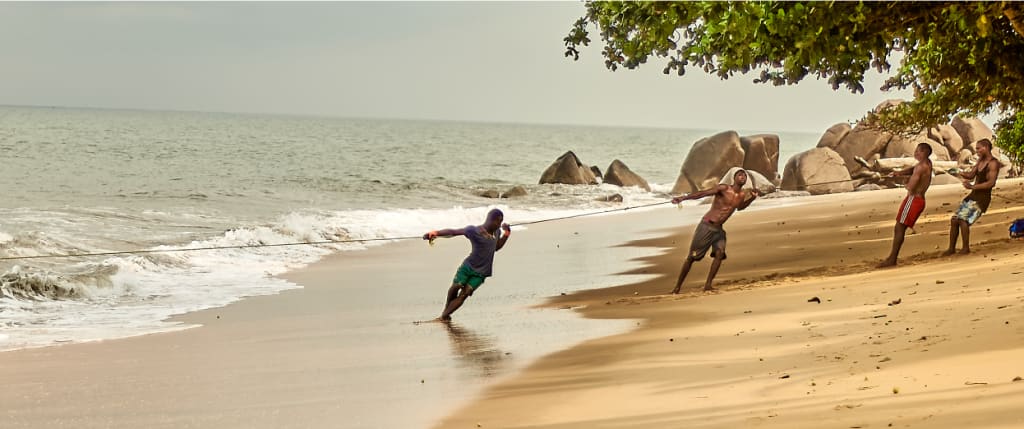
Do not miss an opportunity to explore the lifestyle of Cameroon with Satguru Tours and Travels along with understanding their ethnicity.
Cameroon is an ethnically diverse country located at the junction of western and central Africa. Popular among tourists all over the world because of its cultural heritage, the people here are very friendly and welcoming. While planning a trip to Cameroon, it would be great if you are aware of the ethnic composition, cultural life, and recent developments in the country.
Ethnic Composition
Popular with the name “ethnic crossroads” all over the world, Cameroon has more than 200 ethnic groups, of which derived three main linguistic compositions. The southern provinces primarily contain Bantu-speaking people while in the north you will find Sudanic-speaking locals. In the west, people often speak Semi-Bantu languages. Some primary Bantu groups include Ndjem, Maka, and Duala located here at the beginning of the 19th century.
The Sudanic-speaking community include the Sao, Kanuri, and Fulani; all of them living on the Adamawa Plateau. Coming from the Niger basin, the people of the Fulani community were Muslims who converted almost everyone in the Logone valley along with Kebi and Faro river valleys. Largely made up of small ethnic groups, the Semi-Bantu group lives between Mount Cameroon and the lower slopes of the Adamawa Plateau. Tikar is another Semi-Bantu-speaking community which largely resides in the western high plateau and Bamenda region. To witness the diverse yet united ethnicities, people often take business trips here with Cameroon corporate travel services.
Pygmies are the oldest inhabitants of Cameroon; they are called Baguielli and Babinga in local terms. This community reside in the southern forests in small hunting groups. These hunter-gatherers are living here for thousands of years, although they are gradually diminishing due to the decline of the forests where they have created their dwellings. People of Cameroon got introduced to the European languages during the colonial period. Earlier, German was the official language later replaced by French and English.
Culture of Cameroon
The diversity in the culture you will find in Cameroon can not be found anywhere else. Here, each major ethnic group has developed their own culture, resulting in a spectacular blend of ethnic heritages. The sound of drums from the southern forest region contrasts with the music of the flute coming from the northern areas. Check the website for flight booking in Cameroon and experience this lively culture.
The Muslim Fulani community of the Adamawa produces the best quality leather items and ornate calabashes, while the Matakam and Kirdi of the western mountains are famous all over the world for their distinctive pottery-making skills. The Tikar community embellishes brass pipes and makes them an item of decoration. Mask-making, especially two-faced is a famous practice done by the Ngoutou people, while the Bamum are known for their smiling masks.
Recent Developments
In the recent infrastructure development section, Cameroon has recently come up with the “Four Museums of Cameroon” Project in order to conserve the historical and cultural heritage of the country. This mission includes the museums of Baham and Bandjon from the Western part of the country and Mankon and Babungo from the North-Western region.
If you are visiting the highlands of the West and North-West regions of Cameroon which largely consist of grass fields, do not forget to explore these museums. This project led by the Italian NGO COE aims to stimulate cultural and economic dynamics in the concerned areas along with the general development of the country through the conservation of historical resources in this territory.
In these museums, you will find objects that represent the power and religiousness of the country, documents of the culture, ethnic history, and political and social organisation of people. Even the top corporate travel management companies in Cameroon often recommend their guests to visit such sites. One can witness the recent developments in Cameroon by including a trip to these places in their plan.
Each and every item kept here is valued by the authorities and locals ensuring the protection of the historical and cultural heritage. Another interesting fact is that the objects kept here can be taken by communities whenever they need them to perform any ritual or symbolic role. After the traditional activity is completed, people return such material back to the museum where it can be preserved properly.
About the Creator
Keep reading
More stories from Satguru Travel and writers in Humans and other communities.
Know about Gabon’s Religion, Culture, Sports, and Occupation with Satguru Holidays
Famous for its 13 national park systems, Gabon is a spectacular landscape full of history, culture, and diversified ethnicities. Once a French colony, this country still retains strong ties with the French language and culture. During your trip, you can understand more about Gabon’s religion, culture, sports, and occupations with Satguru Holidays. Geographically, it is a landlocked country, bordered by Equatorial Guinea, the Republic of the Congo, the Atlantic Ocean, and the islands of Principe and Sao Tome.
By Satguru Travel3 years ago in Wander
The Botox blues: how Botox changed the way I look at myself
“You look too young for Botox,” the practice owner said as I got up from the waiting room chair. The clinic was Scandi as ever, light wood, beige tones, Vitamin C serums with triple-digit price tags. There was a framed photo of a French Bulldog on the wall wearing a pink bow tie. His forehead folds looked like mine. The only difference was that he hadn’t spent £75 on a consultation to chat about having them frozen off.
By Chelsea Branch2 days ago in Humans
So You Decided To Become a Nurse Practitioner:
So you decided to become an "Advanced Practice" nurse. Congratulations!... is what I would say if this was a good idea. Grad school? In this economy? What were you thinking? Likely it was something along the lines of either 1) “I've seen these other chucklefucks do it— Why can't I?” or even 2) “I've got a nice career, I should shake it up. I miss feeling like I have no clue what I'm doing.”
By Sandor Szabo3 days ago in Fiction



Comments
There are no comments for this story
Be the first to respond and start the conversation.