
EXISTENTIALISM AND HUMAN PURPOSE
Freedom,Responsibility,and the Search for Authenticity

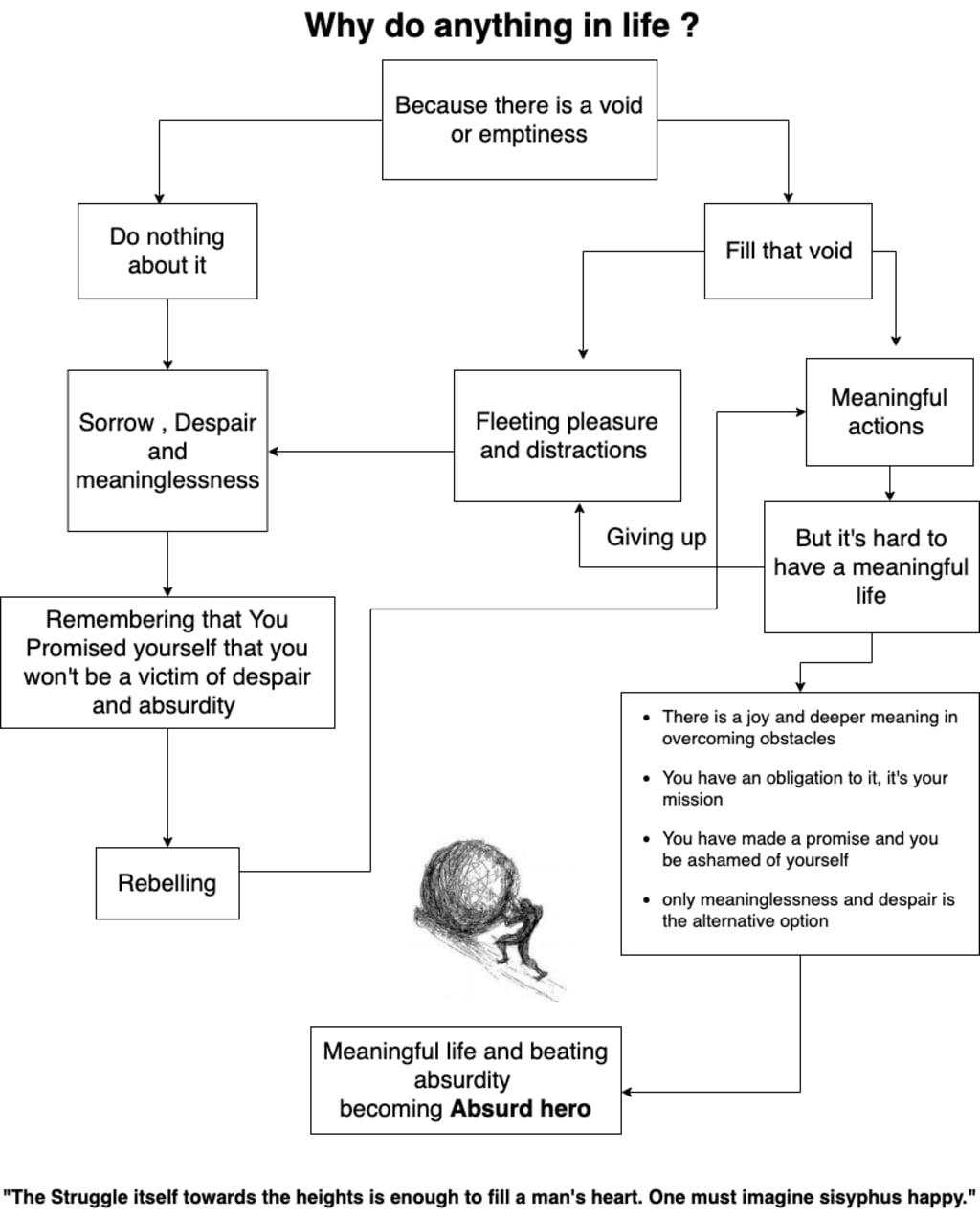
Existentialism, a philosophical movement that emphasizes individual freedom, choice, and subjective experience, challenges traditional notions of purpose and meaning in human life. Rooted in the works of thinkers such as Søren Kierkegaard, Friedrich Nietzsche, Jean-Paul Sartre, and Albert Camus, existentialism invites us to confront life's inherent uncertainties and create our own meaning.
The Roots of Existentialism
Existentialism emerged as a response to modernity, science, and the decline of religious authority in the 19th and 20th centuries. It questioned deterministic and essentialist views of human existence, proposing instead that individuals are not defined by any preordained essence but by their actions and choices.
Key Concepts of Existentialism
I)Freedom and Responsibility: Sartre famously declared that "existence precedes essence," suggesting that humans define themselves through their actions. This freedom, however, comes with the weight of responsibility for one’s choices.
II)Absurdity and Meaninglessness: Camus argued that life is inherently absurd—a tension between humans’ search for meaning and the universe’s indifference. This confrontation with absurdity requires either acceptance or rebellion.
III)Authenticity: Being authentic means living in alignment with one’s true self, free from societal pressures and external expectations. Kierkegaard emphasized the importance of individual faith and passion as tools for authenticity.
Human Purpose Through an Existential Lens
Existentialism challenges the idea of an external or universal purpose. Instead, it empowers individuals to define their own purpose, emphasizing subjective meaning over objective truths.
I)Self-Determined Meaning: Without a predefined blueprint, individuals are free to explore passions, relationships, and beliefs that resonate with their sense of purpose.
II)Overcoming Nihilism: Nietzsche’s concept of the Übermensch (or "overman") symbolizes the potential to transcend nihilism by creating new values and embracing life’s chaos.
Challenges of Existential Freedom
I)Anguish and Anxiety: Freedom can be overwhelming, leading to existential anxiety. This "dizziness of freedom" reflects the weight of making choices in a world without inherent guidance.
II)Alienation: The individual’s quest for meaning can result in alienation from society, which often imposes rigid norms and expectations.
III)Ethical Dilemmas: If meaning is subjective, existentialism raises questions about morality and communal values. How does one reconcile personal purpose with social responsibility?
Existentialism in Contemporary Contexts
I)Mental Health and Fulfillment: Existential ideas resonate in modern discussions of mental health, encouraging individuals to confront existential dread and embrace personal growth.
II)Creative Expression: Artists, writers, and thinkers draw inspiration from existential themes, using their craft to explore identity, freedom, and purpose.
III)Social Change: Existentialism’s focus on individual agency aligns with movements for human rights and self-determination, empowering people to resist oppressive structures.
Critiques of Existentialism
Existentialism has been critiqued for its emphasis on individualism, which some argue neglects the interconnectedness of human relationships and communities. Others criticize its apparent pessimism or the difficulty of sustaining purpose in the face of absurdity.
Existentialism delves into profound questions about life’s meaning, individuality, and freedom. It urges individuals to confront their existence, make authentic choices, and embrace responsibility for defining their purpose. Beyond philosophical circles, existentialism influences literature, psychology, and art, promoting themes of self-discovery and resilience. In a world often filled with societal pressures and uncertainties, existentialist ideas offer a framework for finding personal significance. They challenge individuals to transcend despair, recognize life’s fleeting nature, and create meaning in the present. While critics argue it can be overly individualistic, existentialism remains a powerful lens for understanding human purpose and navigating modern complexities.
Conclusion
Existentialism offers a profound framework for understanding human purpose in an uncertain world. By encouraging individuals to confront their freedom and create their own meaning, it empowers them to live authentically and embrace the complexities of existence. While the journey toward purpose may be fraught with challenges, existentialism celebrates the courage to face them head-on, reminding us that life’s meaning lies not in answers but in the search itself.
About the Creator
Badhan Sen
Myself Badhan, I am a professional writer.I like to share some stories with my friends.
Keep reading
More stories from Badhan Sen and writers in Humans and other communities.
PHILOSOPHY OF THE MIND
The philosophy of the mind is an intricate branch of philosophy that explores the nature, origin, and functioning of the mind. It examines questions about consciousness, perception, thought, and the relationship between the mind and the body. This essay delves into key topics, debates, and implications of studying the philosophy of the mind.
By Badhan Senabout a year ago in Humans
Minnesota and Illinois Invoke the 10th Amendment in Lawsuits to Block Federal Agents in Their Cities — Here’s Why That Matters
States Push Back Against Federal Enforcement Minnesota and Illinois have launched high-profile lawsuits invoking the 10th Amendment of the US Constitution in an effort to block or limit the actions of federal agents—particularly immigration enforcement officers—operating within their cities. The legal challenges mark a significant escalation in the long-running conflict between state governments and Washington over who has the authority to enforce immigration laws and how far federal power can reach.
By Aarif Lashariabout 22 hours ago in Humans
A Dart at Dusk
Seconds ago, the sullen sun set on the two of us… my exuberant furry companion and me. A fresh breeze embraces us, delivering welcome relief from the day’s oppressive heat. His typical stumbling and staggering along — apace with a sloth — has turned into trip-trapping, high-stepping, almost skipping along.
By Angie the Archivist 📚🪶2 days ago in Petlife


Comments (1)
This is quite the topic that has probably started many discussions on many fronts. To me it is interesting from the perspective for I am a creative person that sees things in a different light. Great work in explaining such an in depth subject.