
Entitlement in the Modern Age: A Product of Upbringing or a Societal Shift?
Exploring the Roots of Individualism, “Main Character Syndrome,” and the Potential Impact on Future Generations

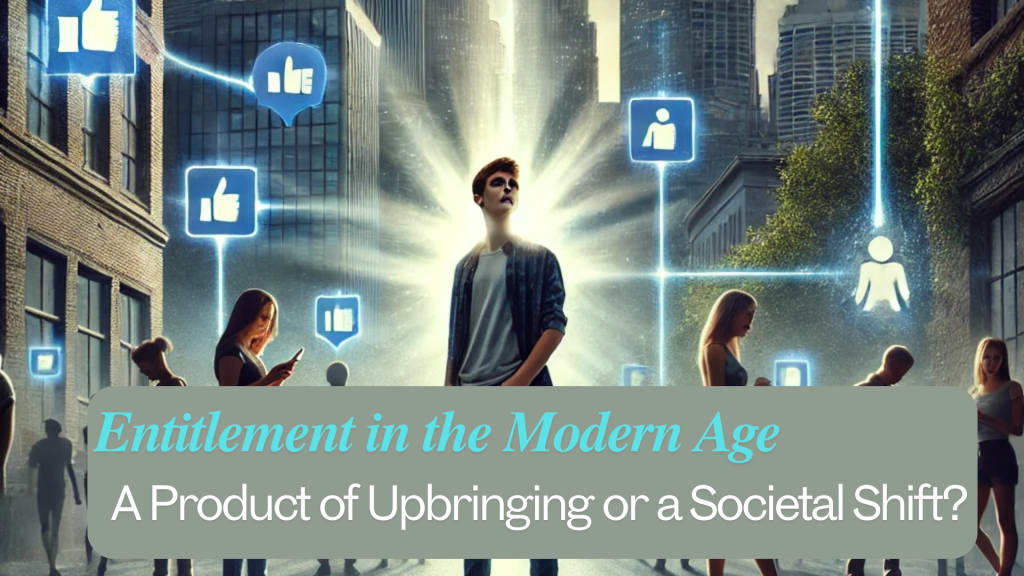
**Entitlement in the Modern Age: A Product of Upbringing or a Societal Shift?**
*Exploring the Roots of Individualism, “Main Character Syndrome,” and the Potential Impact on Future Generations*
---
### Introduction
Entitlement is a word often thrown around in modern discourse, used to describe individuals who seem to believe that the world owes them something—whether it be success, happiness, or admiration—without a corresponding effort or merit. It is a concept that is increasingly attributed to younger generations, particularly Millennials and Generation Z, leading to generational friction and debates about the values of society today. Is this entitlement an actual problem, or is it merely a byproduct of a modern upbringing shaped by unprecedented access to technology, wealth, and freedom? Moreover, is this perceived entitlement a symptom of a broader cultural emphasis on individualism and self-expression?
This essay explores what we call entitlement and whether it is generational in nature. We will examine how upbringing and societal values shape the behavior of different generations, focusing on the growing trend toward individualism and the psychological phenomenon known as "main character syndrome." We will also consider how the future may be affected if entitlement continues to rise and social cohesion deteriorates in favor of hyper-individualism.
### What Do We Mean by "Entitlement"?
At its core, entitlement is a belief that one deserves certain privileges or treatment simply because of who they are, without necessarily earning it. Psychologically, entitlement is often linked to narcissism, as those who feel entitled often exhibit a sense of superiority and a lack of empathy for others. Entitled individuals may expect special treatment or rewards regardless of their actions or qualifications.
In modern society, entitlement is frequently associated with a lack of personal responsibility. For instance, entitled individuals might blame external circumstances for their failures while taking personal credit for successes. They might also expect immediate gratification in all aspects of life—whether it's career advancement, social relationships, or material wealth—without putting in the corresponding work or time.
### Is Entitlement Generational?
One of the most hotly debated aspects of entitlement is whether it is generational. Many critics, particularly from older generations like the Baby Boomers (born 1946–1964) and Generation X (born 1965–1980), point to younger generations—Millennials (born 1981–1996) and Generation Z (born 1997–2012)—as being more entitled. But is this fair? Or is this simply the latest iteration of a timeless generational conflict where older people see younger people as self-centered or misguided?
While entitlement may exist across all generations, there are reasons to believe that younger generations today may exhibit it more openly. Millennials and Generation Z have grown up in an era of unprecedented prosperity, technological advancement, and social change. Many in these cohorts have been raised in environments that emphasize self-esteem, individual achievement, and personal fulfillment over collective responsibility. Parents of these generations, particularly in Western societies, often prioritized making their children feel special and unique, which may have inadvertently nurtured an entitlement mindset.
Moreover, the digital age has played a significant role in shaping how young people view the world. Social media platforms like Instagram, TikTok, and Twitter allow individuals to curate their lives and present themselves as the "main character" of their own narrative. This brings us to the concept of "main character syndrome," which is increasingly used to describe people who view themselves as the center of the universe, treating others as mere background characters in their story.
### "Main Character Syndrome" and the Emphasis on Individuality
"Main character syndrome" is a relatively new term, but it describes a longstanding phenomenon: the idea that we are the protagonists of our own lives. This mindset has been amplified in the modern era by social media, where users are encouraged to showcase their lives in carefully crafted ways, often highlighting personal achievements, aesthetics, or experiences as if they were in a movie or novel. This sense of "performing" for an audience can reinforce the belief that the world revolves around the individual.
While there’s nothing inherently wrong with seeing oneself as the protagonist of one’s own story—after all, self-empowerment and self-worth are important psychological needs—there is a danger when this mindset becomes too dominant. When someone embraces "main character syndrome" to the extreme, they may begin to neglect the reality that others also have complex lives, feelings, and struggles. The result can be a form of hyper-individualism that diminishes empathy and social cohesion.
Individualism is a defining characteristic of modern Western culture, where personal freedom and self-expression are highly valued. People are taught from a young age that they can "be anything they want to be" and that they should "follow their dreams." While these are positive messages in many ways, they can sometimes contribute to a sense of entitlement if not tempered with an understanding of personal responsibility and the needs of the collective. When someone believes that they are the "main character," they may begin to expect that others cater to their desires, leading to frustration and resentment when reality does not align with this expectation.
### The Role of Upbringing in Shaping Entitlement
Upbringing plays a critical role in shaping a person's sense of entitlement. Each generation has been raised with different values, priorities, and circumstances, which have influenced how they perceive their place in the world.
1. **Baby Boomers** – Raised in the post-World War II era, Baby Boomers experienced a time of economic prosperity and societal stability. This generation was often taught the value of hard work, discipline, and collective responsibility. Many Boomers were raised in large families where resources were shared, and personal sacrifice for the good of the family or community was a common value. However, Boomers also benefited from strong welfare states and the expansion of education, which helped them achieve higher levels of material success compared to previous generations.
2. **Generation X** – The generation that followed the Baby Boomers grew up during a time of significant cultural and economic shifts, including the rise of neoliberal economic policies, the collapse of traditional industries, and the growth of divorce rates. Generation X was often described as the "latchkey" generation, as many children were left to fend for themselves while both parents worked. This sense of independence and self-reliance may have fostered a more individualistic mindset, though Gen Xers are often characterized as skeptical and pragmatic, having learned from the economic struggles of the late 20th century.
3. **Millennials** – Millennials were raised during the digital revolution and the rise of a service-based economy. Many Millennials were taught that they were unique and capable of achieving great things if they simply worked hard and followed their passions. However, the reality they faced as adults—marked by economic recession, student debt, and stagnant wages—did not always align with these expectations. This mismatch between expectation and reality has led some to view Millennials as entitled, though many Millennials feel that they were given unrealistic expectations by their parents and society at large.
4. **Generation Z** – The youngest generation, Generation Z, has grown up fully immersed in digital technology and social media. This generation is often seen as tech-savvy, socially aware, and highly individualistic. However, they also face unprecedented challenges, including climate change, economic inequality, and political instability. Many Gen Zers are highly attuned to issues of social justice and personal identity, leading some to develop strong beliefs about their rights and entitlements. At the same time, they are deeply aware of the precariousness of their future, which may result in anxiety and a sense of urgency to assert their individuality.
### The Future of Society: Individualism vs. Social Cohesion
What happens if entitlement continues to rise, and future generations become more focused on individualism at the expense of social cohesion? One possible outcome is that society could become increasingly fragmented, with fewer people willing to work toward collective goals or contribute to the common good.
A society dominated by individualism might lead to greater social isolation and a breakdown of community bonds. Studies have shown that people who focus too much on individual achievement and self-interest tend to report lower levels of happiness and life satisfaction. This is because humans are inherently social creatures, and our well-being is closely tied to our relationships with others. If everyone is focused on being the "main character" in their own story, there is less room for empathy, cooperation, and mutual support.
In a future where entitlement and individualism reign supreme, we might also see a decline in social institutions that rely on collective action, such as voting, volunteering, and civic engagement. A generation that prioritizes personal fulfillment over community might be less inclined to participate in democratic processes or support policies that benefit the greater good. In such a scenario, societal problems like income inequality, environmental degradation, and political polarization could worsen, as fewer people are willing to make sacrifices or compromises for the sake of the collective.
### The Dangers of Hyper-Individualism and Entitlement
Hyper-individualism and entitlement pose several dangers to both individuals and society as a whole. One of the key risks is the erosion of social empathy. When people focus primarily on their own needs and desires, they may become less attuned to the struggles and hardships of others. This can lead to increased inequality, as those who are more privileged feel entitled to their success and may be less willing to support policies that promote social welfare or economic redistribution.
Moreover, entitlement can create unrealistic expectations, leading to frustration, disillusionment, and mental health issues when reality does not meet these expectations. A 2019 study published in *Personality and Individual Differences* found that individuals with high levels of entitlement tend to experience greater dissatisfaction with life, as they constantly feel that they are not getting what they deserve. This sense of perpetual dissatisfaction can contribute to feelings of resentment and anger, further fueling social division.
### A Dystopian Scenario: The Future of Entitlement
Imagine a future where entitlement and individualism have reached their zenith. In this dystopian world, everyone is so focused on their own success, happiness,
and self-expression that social institutions begin to crumble. The education system shifts from teaching collaboration and problem-solving to purely individual pursuits, with students encouraged to excel at all costs, even if it means undermining their peers.
In the workplace, employees prioritize personal recognition over teamwork, leading to cutthroat competition and widespread burnout. Government and community organizations struggle to function, as fewer people are willing to volunteer their time or contribute to causes that don’t directly benefit them. Social media platforms, once places for connection, become echo chambers where individuals relentlessly promote their own lives while ignoring the experiences and struggles of others.
The result is a society where empathy, compassion, and collective action are rare. People become increasingly isolated, trapped in their own personal narratives, unable or unwilling to connect with others. The pursuit of personal fulfillment becomes the dominant goal, but at the cost of social cohesion, political stability, and shared progress.
### Conclusion: Finding Balance Between Individualism and Collectivism
While individualism and personal empowerment are important aspects of modern life, they must be balanced with a sense of social responsibility and empathy for others. Entitlement, when left unchecked, can erode the foundations of community and cooperation, leading to greater social division and a loss of collective purpose.
As we look to the future, it will be crucial for society to find a balance between nurturing individuality and fostering social cohesion. If future generations grow up with a healthy understanding of both personal agency and collective responsibility, we may avoid the dystopian outcomes of hyper-individualism and entitlement. The key will be teaching young people not only to value their own achievements but also to recognize their interconnectedness with others, and the importance of contributing to the common good.
By fostering empathy, cooperation, and a sense of shared purpose, we can ensure that entitlement does not become a defining feature of future generations, but rather a challenge that we rise above in pursuit of a better, more cohesive society.
About the Creator
Sue Anne Kariuki
Thank you for visiting.
I have made video versions of some of what you read here.
www.youtube.com/@ABLAZEBLOGPODCAST-y5b
Check it out and please consider subscribing and leaving a like.
Thank you lovers of the written word :)
Keep reading
More stories from Sue Anne Kariuki and writers in Humans and other communities.
The Allure of Fear: Why We Love Horror and What It Says About Us
Introduction Why do people willingly choose to be scared? The horror genre, in both films and literature, has a massive and devoted following. From haunted houses and ghost stories to psychological thrillers and slasher films, the appetite for horror appears insatiable. But what drives this fascination? Why do we seek out experiences that make our hearts race, our palms sweat, and our minds spiral into fear and dread, even as we sit comfortably in our homes or movie theaters? Understanding the psychological and philosophical reasons behind this paradox can shed light on deeper aspects of human nature and the primal emotions that drive us.
By Sue Anne Kariukiabout a year ago in Humans
5 Things to Know About Intensive Outpatient Care and How It Works
Intensive outpatient care has become an important treatment option for individuals seeking support for substance use or mental health challenges without entering residential treatment. This level of care offers structured therapy while allowing people to maintain daily responsibilities such as work, school, and family life.
By Jordan Blake4 days ago in Humans



Comments
There are no comments for this story
Be the first to respond and start the conversation.