

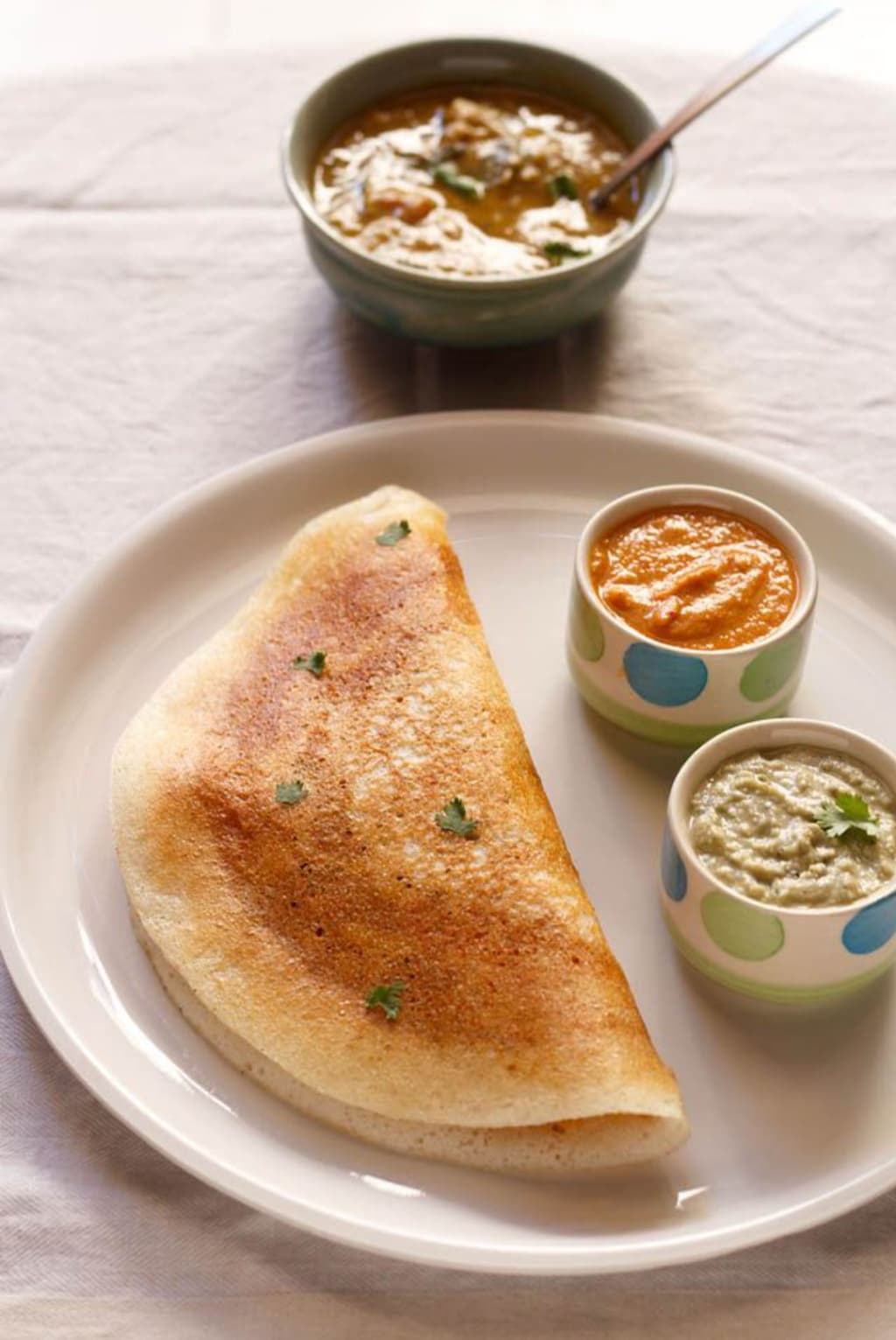
Dosa or Dosai is a popular South Indian dish that has a long and fascinating history. It is a thin, crispy, and savory pancake made from a batter of fermented rice and urad dal (split black gram) that is served with chutney and sambar (a lentil-based vegetable stew).
The exact origins of dosa are not clear, but it is believed to have originated in South India several centuries ago. It is mentioned in ancient Tamil literature, and there are references to a similar dish called dosai in the Sanskrit text Manasollasa, which dates back to the 12th century.
Dosas were traditionally made in households in Southern India and were considered a breakfast or snack item. They were often served with coconut chutney, tomato chutney, or sambar.
Over time, dosa has become a popular dish all over India and even internationally. Today, there are many different types of dosa, including masala dosa (filled with a spiced potato filling), paper dosa (a very thin and crispy version), and uthappam (a thicker version with vegetables cooked into the batter).
Dosas are now enjoyed by people all over the world and are often served in Indian restaurants and street food stalls. They are a delicious and nutritious dish that has a rich history and cultural significance in South India.
Types of Dosai
Dosai (also spelled Dosa) is a popular South Indian dish that is made from fermented batter made from rice and urad dal. There are many types of dosai that can be made by varying the ingredients and preparation methods. Here are some of the most common types of dosai:
1. Plain dosai: This is the most basic and commonly made dosai. It is made from the traditional batter of rice and urad dal and is cooked until crispy and golden brown.
2. Masala dosai: This dosai is filled with a spicy potato filling and is a popular breakfast dish in South India. The potato filling is usually made with boiled potatoes, onions, green chilies, and a blend of spices.
3. Onion dosai: This dosai is made by adding chopped onions to the dosa batter before cooking. The onions add a sweet flavor and a nice crunch to the dosai.
4. Rava dosai: This dosai is made with semolina (rava) instead of rice and urad dal batter. It is crispy and has a slightly grainy texture. It is usually served with coconut chutney or sambar.
5. Mysore masala dosai: This is a spicy version of the masala dosai, where a special spice blend called the Mysore masala is added to the potato filling.
6. Set dosai: This is a soft and spongy dosai that is thicker than the traditional dosai. It is usually served with coconut chutney and sambar.
7. Adai dosai: This dosai is made with a batter of mixed lentils and rice. It is usually thicker than regular dosai and is served with a variety of chutneys.
8. Pesarattu dosai: This dosai is made with green gram (moong dal) and rice. It is a popular breakfast dish in Andhra Pradesh and is served with ginger chutney or coconut chutney.
9. Neer dosai: This is a soft and thin dosai made with rice flour and coconut milk. It is a popular breakfast dish in the coastal regions of Karnataka and is usually served with coconut chutney and sambar.
These are just a few of the many types of dosai that are available in South India. Each type has its own unique flavor and texture, and is usually served with a variety of chutneys and sambar.
1. Regular Dosa: This is the standard size of dosa, which is about 10 to 12 inches in diameter.
2. Mini Dosa: As the name suggests, mini dosa is a smaller version of regular dosa, usually 5 to 6 inches in diameter.
3. Masala Dosa: Masala dosa is a larger version of regular dosa, usually about 14 to 16 inches in diameter, and filled with a spicy potato filling.
4. Paper Dosa: Paper dosa is an extremely thin and crispy dosa that can be up to 3 feet long.
5. Set Dosa: Set dosa is smaller than regular dosa, usually about 4 to 5 inches in diameter, and thicker than the regular dosa.
Note that these sizes may vary depending on the restaurant or the region where you are ordering dosa.
Dosa Ingredients and Facts.
Dosa is a popular Indian dish that is made from a fermented batter of rice and urad dal. It is a thin, crispy crepe-like dish that is typically served with sambar (a lentil-based soup), coconut chutney, and tomato chutney. Here are the main ingredients and some facts about dosa:
Ingredients:
• Rice: usually long-grain white rice or parboiled rice
• Urad dal: a type of lentil that is commonly used in Indian cooking
• Water: to soak and grind the rice and dal
• Salt: to enhance the flavor of the batter
• Oil or ghee: for cooking the dosa
Facts:
• Dosas are a great source of carbohydrates, which provide energy to the body.
• The fermentation process used to make the batter enhances the nutritional value of the dosa, as it breaks down the starches and increases the levels of vitamins and minerals.
• Urad dal, which is a key ingredient in dosa batter, is a good source of protein and dietary fiber.
• Dosas are naturally gluten-free and low in fat, making them a healthy option for people with celiac disease or those who are trying to watch their fat intake.
• Dosas are a staple food in many parts of India, especially in the southern regions, and are often eaten for breakfast or as a snack.
About the Creator
தளபதி Love
Startrit
Keep reading
More stories from தளபதி Love and writers in Humans and other communities.
Noorjahan Life
Noorjahan's historical impact. History of Noorjahan Noorjahan was an influential figure in the Mughal Empire of India during the 17th century. She was born in 1577 in Kandahar, Afghanistan, and was named Mehr-un-Nisa. Her father, a Persian nobleman, served in the court of Emperor Akbar and later became the governor of Bengal.
By தளபதி Love3 years ago in Humans
Whiskey At Dusk
Guess the whiskey was more important to you in the end, wasn’t it? It was more than the well-being of your friends; more vital than showing up to the places you promised you would and could come to; more critical of a matter than fulfilling your damn responsibilities and getting the press off your back.
By Snarky Lisa5 days ago in Humans




Comments
There are no comments for this story
Be the first to respond and start the conversation.