
Do People Really Die in Threes?
The Truth Behind the Myth

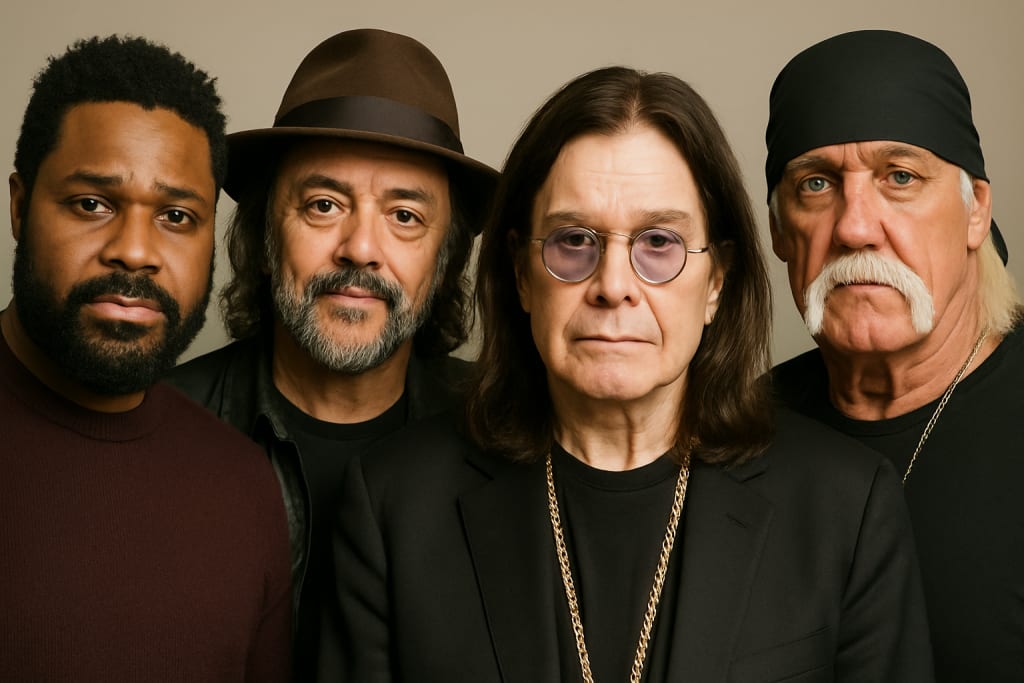
It's one of those phrases that keeps resurfacing—sometimes whispered, sometimes blurted with a weird mix of awe and resignation: “People always die in threes.”
Maybe you’ve said it. Or thought it. I know I have.
You hear about a celebrity death, and suddenly you’re on high alert for two more. When the second hits, it feels inevitable. The third feels like closure. A weird kind of closure, sure—but closure nonetheless.
- But is this pattern real?
- Or are we just really good at convincing ourselves that it is?
Let’s take it apart. Not with superstition or pop culture fluff, but with psychology, memory science, media behavior, and a pinch of forensic reasoning.
The Psychology Behind the Pattern
Humans are wired to recognize patterns—it's part survival instinct, part emotional processing. In the brain’s effort to reduce uncertainty, it starts clustering events to make the world feel more ordered and predictable. This is known as apophenia, the tendency to see patterns in randomness. When it’s emotionally charged, like death or disaster, our minds go into overdrive trying to find “meaning.”
Add in confirmation bias, and the illusion locks in even tighter. We remember the sets of three, but not the twos, the fours, or the dozens of isolated cases that didn’t line up with the story we already believe.
And let’s not forget the availability heuristic—a mental shortcut where people estimate the likelihood of an event based on how easily examples come to mind. If three high-profile people die in a short window, the shock and publicity cement it in memory. But thousands of deaths happen each day. The “trio” we fixate on is usually cherry-picked from the stream of high-visibility names.
This isn’t just theory. The human brain actually lights up when it identifies symmetry or perceived connection. Neuroimaging studies show the brain’s reward center gets activated when we “solve” a pattern, even if it’s meaningless. So it’s not just cultural.
It’s chemical.
Celebrity Death Clusters: Real or Reframed?
Let’s be fair—sometimes people do die close together. It's happened in my own family when my grandmother died two weeks after my grandfather. The doctor said she died of loneliness because they were married 63 years. That’s just statistics. But the idea that they die in thematically bundled trios is where things get questionable.
This "threes" idea keeps getting reinforced because, when the people are high-profile or nostalgic enough, that’s all it takes for the brain to lock in the belief—whether it’s grounded in reality or not.
The media helps this along. Death sells headlines, and the human brain gravitates toward groupings. So whether intentional or not, media coverage tends to link deaths—“Another celebrity death shocks the world,” “Third loss in one week.” It shapes our recall. It reinforces the narrative. And it happens over and over.
Let’s not pretend this is just about death either. We do this with plane crashes, earthquakes, mass shootings, even political scandals. The moment one event hits, we start mentally bracing for “the other two.” We don’t always get them. But when we do, we act like the pattern caused the outcome, rather than our perception filtering reality to match expectation.
Real-World Trios That Fueled the Belief
Not every example holds up under scrutiny, but some clusters have been undeniably close. Here are a few examples of those that locked it in:
🔹 June 2009
- Ed McMahon – June 23
- Farrah Fawcett – June 25 (morning)
- Michael Jackson – June 25 (afternoon)
🡪 All within 48 hours
🔹 May–June 2010
- Gary Coleman – May 28
- Dennis Hopper – May 29
- Rue McClanahan – June 3
🡪 All within 6 days
🔹 August 2014
- Robin Williams – August 11
- Lauren Bacall – August 12
- Jay Adams – August 15
🡪 All within 4 days
🔹 January 2016
- David Bowie – January 10
- Alan Rickman – January 14
- Glenn Frey – January 18
🡪 All within 8 days
🔹 April 2016
- Merle Haggard – April 6
- Chyna – April 20
- Prince – April 21
🡪 Haggard was 15 days earlier; Chyna and Prince died within 24 hours
🔹 January 2021
- Hank Aaron – January 22
- Larry King – January 23
- Cloris Leachman – January 27
🡪 All within 5 days
These are just a few trios that people point to because they actually did happen close together. Whether by random alignment or not, they hit the public hard, got media coverage in sync, and locked into collective memory.
So What About This Week?
Ozzy Osbourne, Hulk Hogan, and Malcolm-Jamal Warner were all confirmed dead. It felt like the “rule of threes” had punched its timecard again. Until Chuck Mangione died. And just like that, the neat trio became a loose cluster of four.
The pattern broke. Or maybe it never really existed.
Psychologists call this illusory correlation: the tendency to see a connection between events that aren’t actually linked.
Our brains are wired to impose structure on chaos—especially when grief is involved. That’s why we think we “remember” exactly when our favorite celebrity died, even if the timeline’s off. Emotion messes with memory. We don’t archive grief chronologically. We arrange it symbolically—into clusters that feel right, even when the facts don’t support them.
Can Science Say Anything Definitive?
Actually, yes. Statistically speaking, with thousands of deaths per day globally—including among high-profile people—it’s not only possible but likely that you’ll see three notable names die within a short span.
But that doesn’t mean it’s meaningful.
In 2015, a research group from the University of California published findings on pattern completion behavior in the human brain. When subjects were shown emotionally relevant data points (like faces, names, or events), they were more likely to create meaningful links—even when no actual pattern existed. This tendency increases when the events trigger fear, grief, or collective emotion. In other words, death. Especially when it’s someone famous, nostalgic, or iconic.
The brain doesn’t like ambiguity. So it clusters or groups. Even if the connections are flimsy, the act of mentally completing the pattern soothes the sense of randomness.
It gives tragedy a container.
Final Thoughts: The Power (and Trap) of Pattern-Making
Let’s be clear. There’s nothing wrong with noticing patterns. Personally, I love patterns. It’s how we make sense of the world. But not all patterns are real—and some, like the “celebrity death trios,” are just artifacts of our emotional processing layered over media cycles.
We tend to confuse coincidence with fate, familiarity with truth, and sequence with cause. That’s not stupidity. That’s human nature. But it’s worth pausing and asking why we need the pattern in the first place. Why does clustering celebrity deaths into a trio make us feel more in control of something so uncontrollable?
Maybe the problem isn’t the threes. Maybe the problem is we hate loose ends. We hate feeling like we’re floating in chaos. And pretending death has a rhythm—even an ominous one—lets us pretend we’re a little less alone in the randomness.
Still… when two celebrities die and someone mutters, “There’s always a third,” it’s okay to pause. Check your facts. Check your sources.
Remember, not every pattern is a prophecy. Sometimes it’s just grief trying to tie up its own loose threads.
Sources That Don’t Suck:
- Leman, P. J., & Cinnirella, M. (2007). Social Psychological Review
- Shermer, M. (2008). Scientific American: The Pattern Behind Self-Deception
- Tversky, A., & Kahneman, D. (1974). Science: Judgment under Uncertainty
- PubMed – Pattern Recognition & Emotional Memory Studies
- University of California – Cognitive Neuroscience Research on Pattern Completion
- APA – Reports on Apophenia and Collective Grief
- CDC – National Vital Statistics Reports
- Memory & Cognition Journal (2021): “Misremembered Mortalities and the Mandela Effect”
- New York Times/BBC obituary archives (2009–2023 timeline crosscheck)
About the Creator
Dr. Mozelle Martin
Behavioral analyst and investigative writer examining how people, institutions, and narratives behave under pressure—and what remains when systems fail.
Keep reading
More stories from Dr. Mozelle Martin and writers in Humans and other communities.
Cruel & Unusual Punishment in the Digital Age:
In today’s hyper-connected world, public shaming has evolved far beyond the confines of the town square. Online platforms now host modern-day equivalents of mob justice, where digital hate campaigns target individuals with relentless harassment, slander, and character assassination. As these attacks intensify, an important question emerges:
By Dr. Mozelle Martin12 months ago in Humans
Why Didn't Anyone Tell Us
Men, move along. This is not for you. This is for the women. I was forty-five when I began menopause. It is pretty young for that to be going on in a woman’s life, but I had undiagnosed PCOS, my entire life. Thank you to all the gynecologists I had seen my entire life. That in itself should encourage women to keep seeking second opinions, especially when you are not getting correct answers or any at all.
By Alexandra Granta day ago in Humans
10 Brutal Truths About the Twin Flame Journey No One Talks About.
The twin flame concept has exploded in popularity, promising an epic, soul-shattering love that transcends ordinary relationships. It's sold as the ultimate spiritual partnership—one soul split into two, destined to reunite in profound harmony. Yet beneath the glossy narratives of destiny, unconditional love, and "sacred union" lies a far harsher reality. The twin flame journey is often excruciating, disorienting, and far from the fairy-tale romance many expect. Here are 10 brutal truths rarely discussed openly in spiritual communities, drawn from countless personal accounts, expert critiques, and lived experiences.
By Wilson Igbasi4 days ago in Humans


Comments