
Developing Emotional Intelligence
Key Skills for Better Self-awareness and Relationships


Emotional intelligence is a crucial aspect of personal growth and establishing meaningful connections with others. It involves understanding and managing our emotions effectively, as well as empathizing with others. In this article, we will explore key skills for developing emotional intelligence, supported by real-life examples. By honing these skills, you can enhance your self-awareness, improve your relationships, and navigate the complexities of emotions with greater ease.
Self-Awareness:
Self-awareness serves as the foundation of emotional intelligence. It involves recognizing and understanding our own emotions, strengths, weaknesses, and values. For example, Sarah, a young professional, developed self-awareness by regularly reflecting on her emotions and reactions. She acknowledged her triggers, observed her patterns of behavior, and questioned the underlying causes. This self-reflection allowed her to gain a deeper understanding of herself, leading to greater emotional control and improved decision-making. By cultivating self-awareness, we can develop a stronger sense of authenticity and align our actions with our core values.
Emotional Regulation:
Emotional regulation is the ability to manage and express emotions in a healthy and appropriate manner. John, a manager, exemplified this skill by practicing emotional regulation in challenging situations. He learned to identify and understand his emotions, allowing himself time to process them before engaging in discussions. This practice enabled him to respond with empathy and find constructive solutions, fostering a positive work environment and building stronger relationships with his team. By honing emotional regulation, we can avoid impulsive reactions, handle stress more effectively, and create a harmonious atmosphere in both personal and professional settings.
Empathy:
Empathy is the ability to understand and share the feelings of others. It is a key skill in emotional intelligence. For instance, Emily, a teacher, cultivated empathy by actively listening to her students' concerns and challenges. She took the time to understand their perspectives and validated their emotions. By demonstrating empathy, she created a safe and supportive classroom environment, fostering trust and encouraging open communication. Developing empathy allows us to connect on a deeper level with others, cultivate compassion, and nurture stronger relationships.
Effective Communication:
Effective communication is essential for developing emotional intelligence. It involves expressing oneself clearly and actively listening to others. Mark, a team leader, improved his communication skills by focusing on active listening. He made a conscious effort to fully engage with his team members during conversations, giving them his undivided attention. This practice helped him understand their needs, concerns, and emotions, allowing for more meaningful and productive interactions. By mastering effective communication, we can build rapport, resolve conflicts more effectively, and foster a culture of open and honest communication in all areas of life.
Conflict Resolution:
Conflict is inevitable in relationships, but emotional intelligence plays a vital role in resolving conflicts effectively. Jane, a mediator, utilized emotional intelligence to facilitate peaceful resolutions. She encouraged open dialogue, validated the emotions of both parties involved, and helped them find common ground. Through her empathetic approach, she enabled individuals to better understand each other's perspectives, leading to mutually satisfying resolutions. Developing conflict resolution skills allows us to approach disagreements with empathy, respect, and a willingness to find collaborative solutions.
Developing emotional intelligence is a transformative journey that enhances self-awareness and improves relationships. By honing skills such as self-awareness, emotional regulation, empathy, effective communication, and conflict resolution, we can cultivate stronger connections and lead more fulfilling lives. Real-life examples demonstrate how these skills can be applied in various contexts, from the workplace to personal relationships. So, commit to developing your emotional intelligence, and embrace the transformative power it holds. By doing so, you will navigate emotions with greater ease, foster deeper connections, and thrive in both your personal and professional life.
About the Creator
Nesou
📓🌌✨ Dive into poetry, stories, and thoughts. 📚✍️ Unveil the universe's mysteries through words. 🌌✒️ Share emotions, experiences, and magic. ✨🖋️ Explore a boundless world of expression. 🌟📝
Send Me Tips🍀,insights and❤️if you'd like😍✨
A Historic Declaration
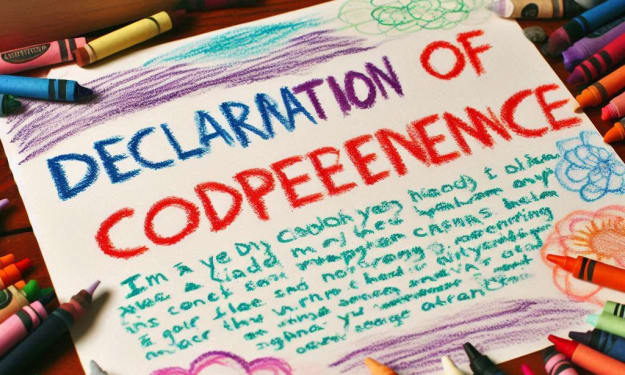
We the People of the Husbands of the United States of America, in Order to form a more perfect Union, and I mean you...with me...establish Justice, insure domestic Tranquility, provide for the common defence, promote the general Welfare, and secure the Blessings of Liberty to ourselves, after Puberty, do ordain and establish this Declaration of Co-Dependence.
By Gerard DiLeo5 days ago in Humans


Comments
There are no comments for this story
Be the first to respond and start the conversation.