
Decode Life: A Fast-Track Guide to DNA Structure & Replication - Crash Course Biology
Unravel the Mysteries of Genetics and Reproduction in a Flash!
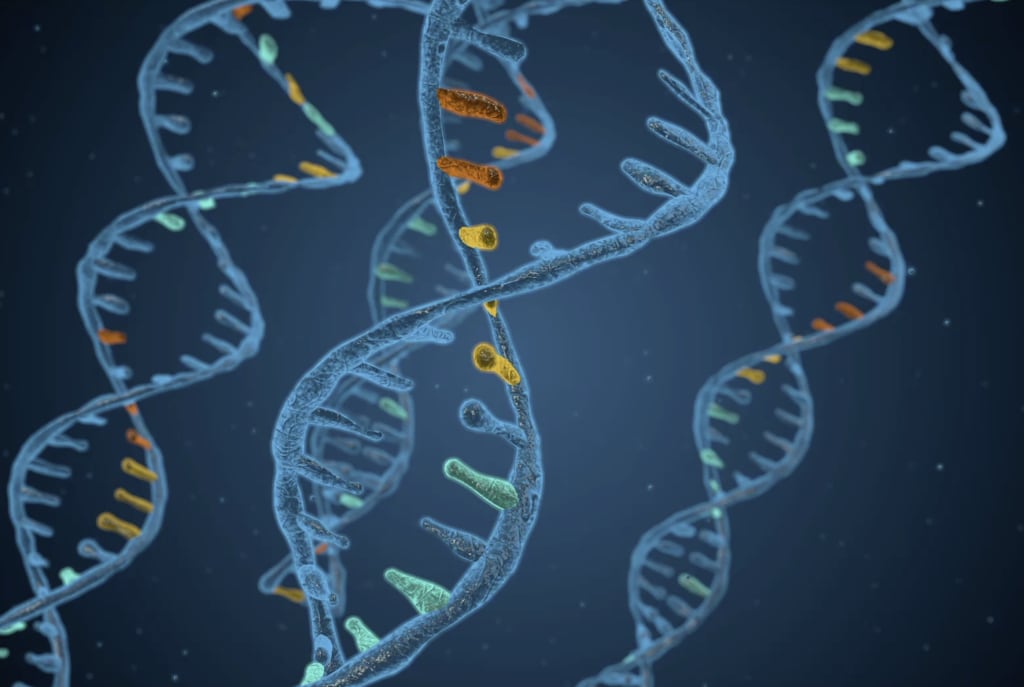
DNA serves as the ultimate blueprint for creating and maintaining the human body. It holds all the necessary information for the functioning of every living organism. Within each organism are trillions of cells, each requiring its own copy of this extensive manual. Printing out the 3 billion letters of genetic code within DNA would result in hundreds of thousands of pages. The recent completion of sequencing the human genome in 2022 marks a significant milestone in scientific history. This breakthrough could lead to a better understanding of various aspects, such as human similarities and differences with other species, individual responses to medications, and more effective treatments for diseases like cancer. Let's delve into the composition of DNA, made up of nucleotides containing a sugar molecule, a phosphate group, and one of four nitrogen-containing bases. These nucleotides combine to form the iconic double helix structure of DNA, resembling a twisted ladder. The sugar-phosphate backbones and nucleotide bases play crucial roles in DNA's structure and function. The pairing of adenine with thymine and guanine with cytosine, connected by hydrogen bonds, is essential in maintaining a healthy DNA strand. These four bases, A, T, C, and G, make up the genetic code's alphabet, determining individual characteristics and traits. The specific sequence of these bases in DNA distinguishes one organism from another. The genetic information stored in DNA is organized into chromosomes, coiled around proteins within the cell nucleus. Virtually every cell in the human body contains a complete set of chromosomes with the genetic blueprint encoded in DNA.
When new cells are created in your body, DNA replication occurs to ensure that they receive a copy of the necessary genetic information. This process showcases the remarkable structure of DNA, including its base pairs and twisting ladder, which fit together precisely to enable replication. DNA replication starts with an enzyme splitting the DNA ladder in half, separating the two strands by breaking the hydrogen bonds between the base pairs. DNA polymerase, the primary enzyme responsible for DNA replication, identifies specific bases on the half-strands and adds the complementary bases to create two complete DNA strands. This enzyme moves along the strands, adding missing bases and sugar-phosphate backbones to complete the structure. The end result is two full DNA strands, one newly constructed and one derived from the original molecule, following a semiconservative replication process. This efficient replication method allows cells to duplicate DNA molecules accurately. During replication, the DNA unwinds in sections, forming a replication bubble with two replication forks. DNA polymerase works on each strand, with one enzyme handling the leading strand and the other managing the lagging strand in the opposite direction. The lagging strand's polymerase moves backward intermittently to synthesize DNA in short fragments, which are later connected into a continuous string by another enzyme. Despite its complexity, DNA replication typically proceeds flawlessly, ensuring the accurate transmission of genetic information during cell division. Occasionally, errors may occur, such as incorrect base attachments by DNA polymerase, leading to mismatches in the DNA sequence.
Growing an apple on a car is not a feasible idea, no matter how it is approached. Environmental damage, such as exposure to chemicals or intense sunlight, can lead to merging base pairs or the shifting of large sections of bases, disrupting DNA replication. Fortunately, cells have mechanisms in place to address these issues. Enzymes closely monitor DNA replication, ensuring the accuracy of base addition and correcting any errors that may arise. Despite these safeguards, some errors may slip through unnoticed and become incorporated into new DNA strands. These errors can be passed on to future cells or an organism's offspring, resulting in a mutation. Mutations are not always negative and do not typically confer superhuman abilities. Some mutations can lead to health problems like cancer, while others have no significant impact, such as the mutation responsible for blue eyes in humans. Certain mutations can even be advantageous, like the one enabling many adults to digest milk and cheese. The effects of mutations depend on which parts of the genetic code are altered. Every living organism, including humans, accumulates mutations throughout their lifetimes. Despite this, our bodies are adept at combating these mutations, with DNA replication errors occurring at a low frequency. The meticulous proofreading by cells significantly reduces the error rate, highlighting the remarkable precision of DNA replication. The intricacies of DNA replication are a testament to the collaborative efforts of countless scientists, including the pioneering work of Dr. Tsuneko and Dr. Reiji Okazaki. Through their research, the concept of Okazaki fragments on the lagging strand was introduced, revolutionizing our understanding of DNA replication. The structure of DNA serves as the blueprint for life on Earth, containing all the necessary information to build diverse organisms. Despite the complexity of life, DNA replication is a remarkably straightforward process, facilitated by complementary base pairing. The ability of DNA to accurately replicate itself is essential for the perpetuation of life on our planet.
About the Creator
Keep reading
More stories from writers in Humans and other communities.
Cabin Fever Because of Snow, Sleet, and Freezing Rain That Turned to Icy Roads
What Is Cabin Fever? The short answer is that cabin fever is restlessness from being in a confined area. Cabin fever is the distressing irritability or restlessness experienced when a person or group is stuck at an isolated location or in confined quarters for an extended time. Research shows that prolonged cold, gray skies, and being stuck indoors can trigger mood shifts similar to “winter blues.”
By Margaret Minnicksabout 24 hours ago in Humans
How Emotional Release Affects Physical Balance.
Emotions are powerful forces that shape how we think, act, and experience life. While their psychological impact is widely acknowledged, their effect on the body is equally profound. Unprocessed emotions can manifest physically, altering posture, movement, and overall balance. Understanding this connection offers a path to improved health, coordination, and wellbeing.
By Wilson Igbasiabout 6 hours ago in Humans
One Hard Thing
Stop me if you’ve heard this one before: You have the number, you know your schedule- you’ve even picked out the perfect day and time to make this appointment. Shoot, you’ve even picked out alternative days and times just in case their schedules can’t accommodate you!
By Taylor Rigsby7 days ago in Motivation



Comments
There are no comments for this story
Be the first to respond and start the conversation.