
Cynthia Lennon: A Life Beyond the Beatle
Artist. Mother. Memoirist. Survivor.

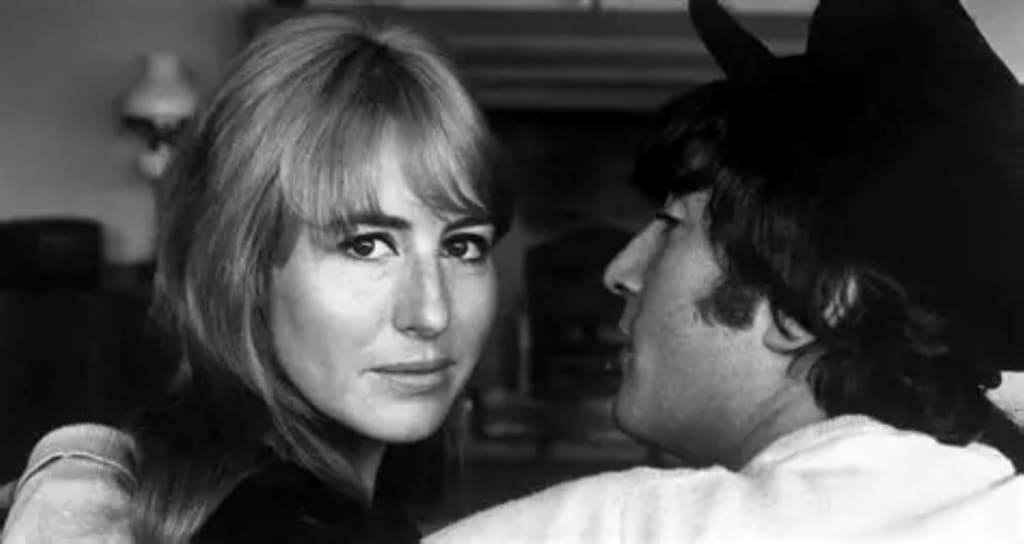
Cynthia Lennon, born Cynthia Powell, lived a life shaped by love, betrayal, reinvention, and quiet resilience. As the first wife of John Lennon, she was thrust into the whirlwind of Beatlemania, only to be cast aside as the band evolved and her husband’s fame eclipsed their shared past. But Cynthia’s story is not merely a footnote in rock history—it is a compelling narrative of a woman who found her voice, raised a son in the shadow of a legend, and forged a legacy of her own.
Early Life and Artistic Beginnings
Born on September 10, 1939, in Blackpool, England, Cynthia was the youngest of three children. Her parents, Charles Powell, an employee at General Electric, and Lillian Roby Powell, were Liverpool natives. Like many wartime families, they relocated to Blackpool to escape German air raids, eventually settling in Hoylake on the Wirral Peninsula, a middle-class suburb considered “posh” by Liverpudlian standards.
From a young age, Cynthia showed artistic promise. At age 11, she won an art prize in a competition organized by the Liverpool Echo. A year later, she was accepted into Liverpool’s Junior Art School, where she studied alongside future creatives like Bill Harry, founder of Mersey Beat magazine. Her father’s death from lung cancer when she was 16 nearly derailed her education, but her mother insisted she continue. Cynthia rented out rooms in their home to support the family and eventually enrolled at Liverpool College of Art in 1957.
Meeting John Lennon
It was at Liverpool College of Art that Cynthia met John Lennon. They were both enrolled in a calligraphy class. Cynthia, a disciplined and traditional student, was initially wary of John’s rebellious nature. But his charisma, wit, and musical ambition drew her in. Their relationship began in 1958 and deepened as John’s band, The Quarrymen, evolved into The Beatles.
Cynthia supported John through his early gigs and growing fame. When she became pregnant in 1962, the couple married in a modest ceremony on August 23, 1962, at the Mount Pleasant Register Office in Liverpool. Their son, Julian Lennon, was born on April 8, 1963.
During the height of Beatlemania, Cynthia lived a paradoxical life—surrounded by fame but hidden from public view. The Beatles’ manager, Brian Epstein, feared that John’s image as a heartthrob would be tarnished by the revelation of his marriage. Cynthia was often kept out of the spotlight, raising Julian and maintaining their home in Kenwood, a mansion in Weybridge, Surrey.
The Cracks Beneath the Surface
By the mid-1960s, John’s behavior changed. He became increasingly involved in drugs, spiritual experimentation, and avant-garde art. In 1966, he met Yoko Ono at the Indica Gallery in London. Their affair began in 1968 while Cynthia was away on holiday. Upon returning, she found Yoko in her home, wearing Cynthia’s robe and drinking tea with John.
The betrayal was devastating. Cynthia filed for divorce on the grounds of adultery, and it was finalized in November 1968. She was granted custody of Julian, but the emotional toll was immense. In her memoir A Twist of Lennon (1978), she described the pain of being discarded and publicly erased from John’s life.
John’s relationship with Julian became strained. Cynthia bore the brunt of single motherhood, often shielding Julian from the chaos of fame. She later said, “I was the only one who was there for Julian. I was the only one who cared.” The trauma of the divorce was compounded by the media’s portrayal of her as a footnote in John’s story.
Raising Julian Lennon
Cynthia’s greatest accomplishment was raising Julian Lennon, who would go on to become a successful musician and philanthropist. She nurtured his artistic talents and provided emotional stability. Despite financial challenges and emotional wounds, Cynthia remained a devoted mother.
Julian’s relationship with his father remained complicated. John was largely absent during Julian’s childhood, and Cynthia often had to explain his absence. In interviews, Julian has credited his mother with being his emotional anchor and moral compass.
Cynthia supported Julian’s music career and later joined him in philanthropic efforts, including environmental and humanitarian causes. Their bond was a testament to Cynthia’s strength and unconditional love.
Yoko Ono and the Battle for Legacy
Cynthia’s relationship with Yoko Ono was fraught with tension. After John’s death in 1980, Cynthia felt excluded from memorials and legacy projects. She believed Yoko had deliberately erased her from John’s narrative and denied Julian access to his father’s estate.
In her second memoir, John (2005), Cynthia wrote candidly about her feelings toward Yoko, describing her as controlling and manipulative. However, she also acknowledged Yoko’s artistic brilliance and her deep bond with John.
Over time, the animosity softened. Cynthia and Yoko occasionally appeared together at Beatles-related events, though their interactions remained formal. Cynthia’s primary concern was Julian’s well-being and recognition, and she continued to advocate for his place in John’s legacy.
Reinvention and Creative Pursuits
After her divorce from John, Cynthia pursued her own creative passions. She worked as an artist, exhibiting her paintings and illustrations in galleries across Europe. Her style was whimsical and reflective, often inspired by nature and personal memories.
She also became a writer. Her first memoir, A Twist of Lennon, offered a humorous and poignant look at her life with John. Her second book, John, was more introspective and critical, aiming to reclaim her voice and correct public misconceptions.
Cynthia married three more times: to Italian hotelier Roberto Bassanini (1970–1973), British engineer John Twist (1978–1982), and nightclub owner Noel Charles (2002–2013). She also had a long-term relationship with Jim Christie from 1981 to 1998. Though these relationships brought companionship, none matched the intensity or public scrutiny of her marriage to John.
She also ran a bistro in Wales and designed home goods, embracing entrepreneurship and independence.
Philanthropy and Later Life
In her later years, Cynthia became involved in charitable work, particularly through Julian’s foundation, The White Feather Foundation, which supports environmental and humanitarian causes. She also participated in auctions of Beatles memorabilia, donating proceeds to various charities.
Cynthia lived in Palma Nova, Mallorca, where she enjoyed a quieter life surrounded by art and family. She remained active in Beatles fan communities and occasionally gave interviews, always emphasizing the importance of truth, healing, and personal growth.
She died on April 1, 2015, at age 75, after a battle with cancer. Julian was by her side. In a public tribute, he wrote, “She was a great mother who had unconditional love. She was my best friend.”
Epilogue: A Life of Grace and Grit
Cynthia Lennon’s life was shaped by love, loss, and reinvention. She endured betrayal, public invisibility, and emotional trauma, yet she emerged with dignity and purpose. Her story is not just about being John Lennon’s wife—it’s about being a woman who found her voice in the shadows of fame.
She was an artist, a mother, a writer, and a survivor. Her legacy lives on through Julian, through her books and paintings, and through the quiet strength she embodied. Cynthia Lennon reminds us that behind every legend is a life worth remembering.
About the Creator
Julie O'Hara - Author, Poet and Spiritual Warrior
Thank you for reading my work. Feel free to contact me with your thoughts or if you want to chat. [email protected]
Keep reading
More stories from Julie O'Hara - Author, Poet and Spiritual Warrior and writers in Humans and other communities.
Linda McCartney: A Life in Focus
By the time Linda McCartney passed away in 1998, she had reshaped the cultural landscape in ways that extended far beyond her marriage to Paul McCartney. She was a groundbreaking photographer, a passionate advocate for animal rights, a successful entrepreneur, and a creative collaborator whose influence helped define the post-Beatles era. Her life was a quiet revolution—one framed in compassion, creativity, and conviction.
By Julie O'Hara - Author, Poet and Spiritual Warrior3 months ago in Humans




Comments
There are no comments for this story
Be the first to respond and start the conversation.