
Creative thinking
How to get out of the box and start thinking


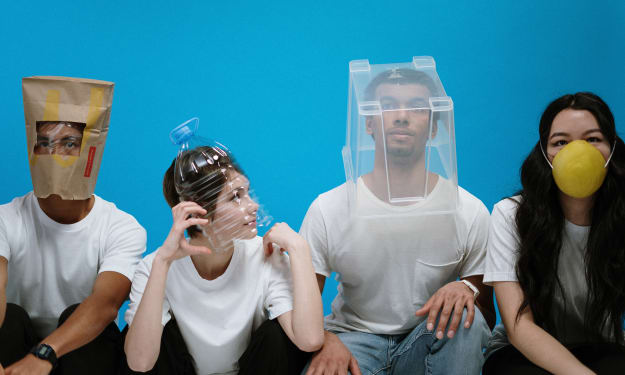
Sometimes, what seems easy can be the most difficult of tasks. Have you ever been assigned a task that seemed straightforward, yet was incredibly difficult to complete? That is when you experience frustration. I recently encountered this while taking singing lessons, when my teacher told me to breathe with my diaphragm. It's our natural breath, but it's actually very hard to do, and it's a secret of the great singers. It's similar to what happens when a boss comes into a meeting and tells you to think out of the box. It's easy to say, but difficult to actually do. You need to practice. You need to know how to get out of the box, where to go, and how to come back inside the box, because that's where we live. We actually live inside our boxes.
So why should we go out of the box? Inside the box, we feel safe. We agree with everybody else. And when we go out, we risk our reputation. We worked so hard for a lifetime to build it up, why should we risk it? But it's not a luxury, it's a necessity. In today's world, we are a part of a network. We share information in real time, and we all possess the same information. That's the end of it, and that is a scary thought. If we all possess the same information, what makes a difference between ourselves? Where does our dignity as human beings lie? It really depends on what we generate with that common shared information. To think creatively, to go out of the box, is not a luxury. It's a necessity for us, and for our dignity as human beings.
But how do we go out of the box? We must have a clear definition, so that we are really talking about something specific. It's not our mind; we cannot think out of our minds. It's a boundary within our minds. The boundary between what we know, and what we haven't yet thought about. What is our mind? What is our knowledge structure? It's an emergent phenomenon out of the complex mechanism, which is the brain. We start with initial conditions, our genetic heritage. We have boundary conditions, the environment. We have indirect experience, years and years spent in school and University to learn what other people have thought, what other people have discovered, what other people have created. Then, we have our own direct experience, our successes, our failures that really make what we are. All of this builds the anthill within which we live, and we live very well in that.
To think creatively and go out of the box is a necessity for us and our dignity as human beings. We have to be brave and risk our reputation. We must have a clear definition of the box and understand our minds and knowledge structures. We must understand our initial conditions, boundary conditions, and our direct and indirect experiences. Only then can we be brave and think out of the box, add something more, a little spice, something which goes beyond the convergent information. Something wrong, something absurd, something which apparently is not relevant, something which takes us far.
Divergent information is a powerful tool that can take us to unknown places within our minds, to places that we never thought of before. It's like a game of chess. We are out of the box, and have no idea where to go. We can be tempted to go back to the safety of the box, but we must resist this urge and value long thinking. This means that we should not judge single words or notes, but instead focus on the entire ensemble and how it makes us feel. We should be open-minded and fluid, looking for alternatives and not the correct answer. Creativity does not have a single correct answer, but instead many possible alternatives.
When we find a new idea, it can be difficult to assess its value because it is something we have never seen before. We may feel as if we are on an undiscovered planet. We must resist the urge to kill our own ideas, and instead look for the match between the new idea and our initial focus. We must also be aware that introducing new ideas can challenge our environment. Therefore, it is important to create an environment that is open to divergent information, mixing and matching different disciplines, and using metaphors to stimulate creativity.
To end, let's try an experiment.
Let's step outside the box and explore the possibilities that TEDx Conferences can offer. What if we had a TEDx Conference with a theme that was completely different from anything that's been done before? What if we had speakers from all around the world, speaking in multiple languages and using innovative technologies to bridge the gap? What if we had a TEDx Conference that focused on creating a truly interactive experience for the audience? What if we had a TEDx Conference that focused on creating a safe space for people to share their ideas and opinions? These are just a few ideas, but the possibilities are endless. Let's explore the boundaries of what a TEDx Conference can be and create something extraordinary.
I'm inside the box. Now I want to go out, so I apply a divergent modifier to any of these convergent elements. Start from the last one for example, the grand setting. A divergent modifier, for example, is to exaggerate. Bring it to the limit. Instead of thinking of a TEDx conferences in a theater, think of a TEDx Conference in a stadium. Does this make any sense, in a stadium? Very difficult to organize, even more difficult than in a theater, and how do you fill the place? How do you fill the stadium? It's too difficult. It doesn't make any sense. I'm tempted to reject that idea. But then I move, and I say, ok, maybe the stadium is already filled with people. From that, you can get the idea of having a TEDx Conference at half-time of football matches, a network of speeches which happens at half-time of football matches. Good idea, bad idea? I leave it for you to assess. Take another element: good speakers, brilliant speakers. That's the most fundamental element of a TEDx Conference. Let's take that away. We eliminate the good, brilliant speakers. Does this make any sense? No, we're out of the box. Does this lead to anything useful? I could say that, OK, I don't need the speakers, but I need the speeches, the talks, the scripts. From this comes the idea of one speaker delivering the speech of somebody else. We exchange speakers. So it's a cooperative TEDx Conference. Maybe we have duets on stage, instead of a single element, or we have people that speak about, somebody has this topic. In that way we have one advantage at least. We take away the element of the ego. There's no ego anymore, if you're speaking with somebody else's script. These are just examples, just examples, to show you that it's possible and not too hard, actually, to think out of the box. I hope this journey, in a way, was interesting for you, and now you want to do more of that.
About the Creator
Jude Cipher
Passionate about writing fascinating things on life, nature and how to explore a lot in everyday.
Keep reading
More stories from Jude Cipher and writers in Humans and other communities.
How about been able to breath in space?
Picture yourself floating through space during a casual spacewalk when suddenly your trusty helmet decides to take a vacation. Instead of freaking out and gasping for your last breath, you take in a lung full of fresh cosmic air. Now let's dive into the mind-boggling consequences of a breathable outer space on our cozy planet Earth.
By Jude Cipher3 years ago in Education
Whiskey At Dusk
Guess the whiskey was more important to you in the end, wasn’t it? It was more than the well-being of your friends; more vital than showing up to the places you promised you would and could come to; more critical of a matter than fulfilling your damn responsibilities and getting the press off your back.
By Snarky Lisaa day ago in Humans


Comments
There are no comments for this story
Be the first to respond and start the conversation.