
City of Broken Light Faith Unbroken
A Story of Resilience Sincerity, and Hope in Karachi

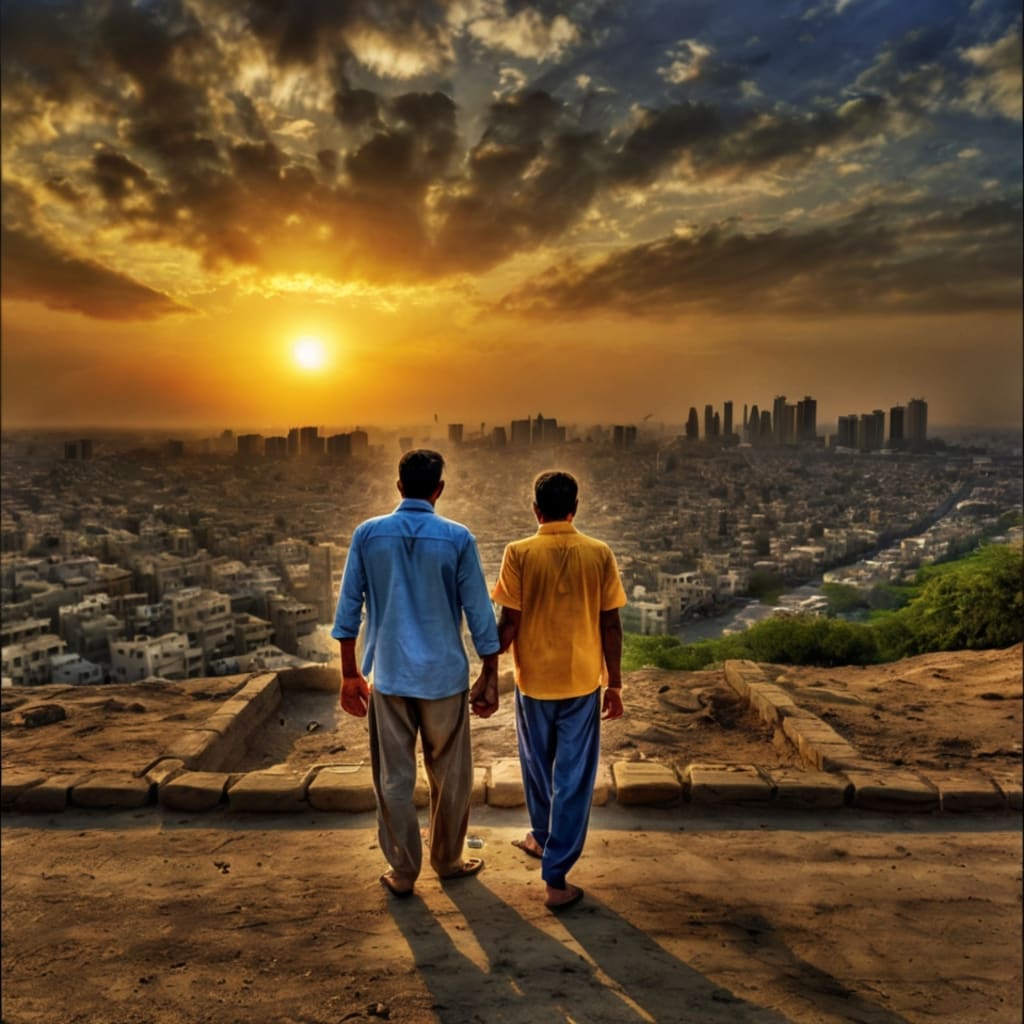
The Light Beyond Darkness
BY:Khan
Human beings cannot live without genuine relationships. When those relationships are built on sincerity and love, they become one of life’s greatest blessings. But when greed and selfishness take root, those same ties can turn into unbearable burdens.
Abid was a well-educated, hardworking, and self-made man. His parents had passed away long ago, and he lived with his elder siblings. Yet, he was never a burden on them. On the contrary, his successful business brought great benefits to his brother and sister-in-law. To them, Abid was like a golden bird, a source of comfort and financial security. And who would want to let such a treasure slip away?
His sister-in-law, driven by ambition, hatched a plan to ensure that Abid would remain tied to her family. She proposed that Abid marry her younger sister. On the surface, the girl was presentable, and the family seemed suitable. There appeared to be no reason to reject the proposal. But Abid was a man of insight. He understood that the foundation of this marriage was not affection but greed. He knew that a bond rooted in selfish intentions could never bring lasting happiness. So, he refused.
When family pressure mounted, Abid took a bold step. He married a widow who worked for him. He admired her honesty, strength, and dignity. She was a woman who labored tirelessly, not for wealth or luxury, but simply to feed her children and keep them clothed. She had no desire for Abid’s money or property. This sincerity touched him deeply.
But this decision turned Abid’s world upside down. His family, who once relied on him, became his fiercest critics. They mocked him, rejected him, and made his life unbearable. Tired of the constant conflict, Abid made a life-altering decision. He closed his business, gathered his little family, and moved to Karachi, trusting entirely in God.
When he arrived, Karachi welcomed him with open arms. To Abid, it felt like stepping into the embrace of a kind and nurturing mother. This city, known as “Mini Pakistan,” was home to people of every background—Pashtuns, Punjabis, Sindhis, Baloch, Saraikis, Kashmiris, and Muhajirs from both India and Bangladesh. Sunnis, Shias, Deobandis, and Barelvis all lived here, side by side. Abid marveled at this diversity, where everyone seemed to carve out their space without unnecessary interference in others’ lives.
He poured his energy into rebuilding his business. Soon, it began to flourish. To him, Karachi was a generous city: a place where, as he often said, “Even if you sit with a handful of dust in the morning, by evening you will have sold it.” The city gave opportunities to countless people, and Abid was one of them. He roamed freely from the shrine of Quaid-e-Azam to the tomb of Abdullah Shah Ghazi, inspired by the city’s resilience and charm.
For a while, life seemed peaceful again. Abid was content, his family was happy, and his work was thriving. But fate was not done testing him.
Slowly, the city’s face began to change. Karachi, once a place of dreams, became gripped by nightmares. Extortion demands surfaced, followed by threats and forced payments. Then came bomb blasts, target killings,
About the Creator
The BAFTA Awards
By now, in a stunning departure from recent years, most of the world is aware of what happened at the BAFTA film awards. Social Media Headlines will tell you the bare bones: that John Davidson, a Tourette's Syndrome advocate, shouted a racial slur at two Actors of Colour, Michael B Jordan and Delroy Lindo.
By Natasja Rose2 days ago in Psyche


Comments
There are no comments for this story
Be the first to respond and start the conversation.