
Cinderella’s Psychological Complex
Independence Can Be Scary!

The discrepancy between what she has and what she wants is too great, which is why the Cinderella woman feels unhappy. The Cinderella woman is sure that by herself she cannot live up to these expectations. She wants to metamorphose his life, she wants to transform it, she wants something to change in his life.
But she is satisfied with the dream, with the desire, with an irrational passive attitude… In a concrete, material, and palpable sense, she does nothing …
We are strong and I do not say it to hear laughter and giggles behind the monitor. We were born to be victorious. And I don't say it so that the losers can report it. We've been taking independence lessons since we were in my mother's womb.
Then we learned to know what we want. We have learned to fight for what we want. We face the world with open eyelids. We have had a fighting attitude since childhood. We are not afraid of anything. We rarely cry even then in exceptional situations in which a man would also pour saltwater. We are not weak and we do not know how to wail. We act and we get it. Castigam.
We do not change as others change. We are becoming. We are not transformed. Evolved. We are not stopping a crisis. We are re-evaluating our priorities. We are not reinventing ourselves. And finally, sooner or later, we get where we want to go.
We love, but we do not become addicted. We love a lot, but in extreme cases, we can go further and loveless. That's how we women are, the modern women of today's modern society. With or without a partner, with or without a husband, with or without a child, we are independent of head to toe.
The ashes that hide in each of us are on the verge of extinction. Their numbers are dwindling day by day. The Cinderella complex seems to have been annihilated and reduced to absolute silence. Is that so? Some psychologists have a completely different opinion. And what does the Cinderella complex mean in psychology?
In 1981, Colette Dowling, in her book "The Cinderella Complex - The Hidden Fear of Independence Women" debated this topic extensively. The fear of independence is an amalgam of feelings, attitudes, and fears that cause women to deny, suppress, or lack confidence in their abilities.
The Cinderella woman is perfectly aware of the expectations that society has of her, but her vision of life is slightly unrealistic and far from normal. The discrepancy between what she has and what she wants is too great, which is why the Cinderella woman feels unhappy.
She has the certainty that by herself she cannot live up to these expectations. He wants the metamorphosis of his life, he wants its profound transformation, he wants something to change in his life. But he is content with dreaming, with desiring, with an irrationally passive attitude.
In a concrete, material, and tangible sense, it does nothing. And the climax… as in the fairy tale of Cinderella, in which many negative characters drastically hinder her path to true happiness, by minimizing the value of her person, many of those around her do nothing to help her. But the real solution exists in itself. But this is the longest path
Cinderella is on the verge of extinction. Save Cinderella! Or not ... let her die!? ...
According to psychotherapist Colette Dowling, at the subconscious and individual level, every woman needs to be or become addicted. Someone who not only helps her but takes over all her tasks and worries, someone who supports her and lifts her from the state of victimhood who loves the process of self-pity, this "someone" becomes a desideratum.
All your dreams are transferred to the image of a strong and more capable person, usually male. "No matter how intelligent, successful, educated, sophisticated, and complex a woman may be," says Colette Dowling on her blog, "subconsciously, every woman wants to be saved from real or imaginary hardships."
Fear has always been considered a natural component of femininity and status as a woman, says psychotherapist Colette Dowling. Women, more than men, want to be approved and accepted by those around them. From childhood, girls are more cuddly and protected than boys. She thus learns that to survive, she must receive additional protection from someone stronger than her.
Boys are educated in the spirit of freedom and non-addiction. Boys are encouraged to be bold, to explore the world and the outdoors, to take risks, to be aggressive, to defend their little universe and the toys of other children who want to destroy them. Many of their games take place outside the home.
Girls, on the other hand, are encouraged to adopt a passive attitude - "girls are good in their place", to play in their space, not to do things out of place, to avoid conflicts with others, and to take into account the opinion of those around.
Generations in a row, women have been taught the lesson of their vulnerability. We have been taught that for some things we are not strong enough, determined, and capable… On the contrary. That we are strong enough, determined, and capable. But only if we can seduce and conquer a man who will induce this trust in us, who will protect and defend us.
Cinderella's psychological complex is closely related to the feeling of inferiority that the child-future adult often develops during childhood, a feeling cultivated and encouraged by the family and those around them. It also has to do with the bovarism complex. The Cinderella woman feels bound in her condition.
His only salvation and hope come from that man who can change his constant state of dissatisfaction with himself. Beauty, although it retains all the strengths of success, is not self-sufficient for success. She does not have enough confidence in herself to act in the sense of self-fulfillment.
Someone on the outside, usually the person of the opposite sex, must play the role of the savior, therefore, to save her from herself, from unhappiness, dissatisfaction, from what she lacks.
You will say that everything that has been said above and everything that Colette Dowling has said is an aberration, perhaps not at all applicable to the times when the idea of independence is being cultivated more and more.
That we are without exception and may be independent. But how many of us modern women today, women who live, work, and exist, do not love beyond measure? And how many of us have not been in toxic and destructive relationships just for the sake of fear of independence and loneliness, just because it was hard for us to get back on our feet? How many of us have not felt that without love we cannot go on?
How many of us have not thought that there is nothing worse in this world than that weekend spent away from our loved ones? How many of us are willing to give up our emotional “savior,” even if he is not exactly the prince in the story? Women long for sentimental independence but are still terrified of what it might mean. Total independence - still scary - isn't it?
About the Creator
Keep reading
More stories from Klaudia McGregor and writers in Humans and other communities.
The Portrait of the Narcissistic Mother
The narcissistic mother is capricious and inconsistent in what she does and says, seeking to train her children to satisfy her whims. Psychologists call her an "emotional vampire" because she beautifully manipulates the feelings of those around her and absorbs those of her child, causing her to perceive herself as an extension of her own.
By Klaudia McGregor4 years ago in Humans
The CEO of Everything
They say "jack of all trades, master of none," but they forgot to mention the part where the jack of all trades is also the camera woman, the makeup artist, and the person currently yelling at a tangled Wii microphone cable in a her own bathroom while recording herself singing and trying to make it look realistic and professional. (As professional as you can make it with nothing but a cell phone camera and a mic that doesn't work)
By Sara Wilson7 days ago in Humans
Pet-Safe Paradise: AI Curates Your Non-Toxic Indoor Jungle
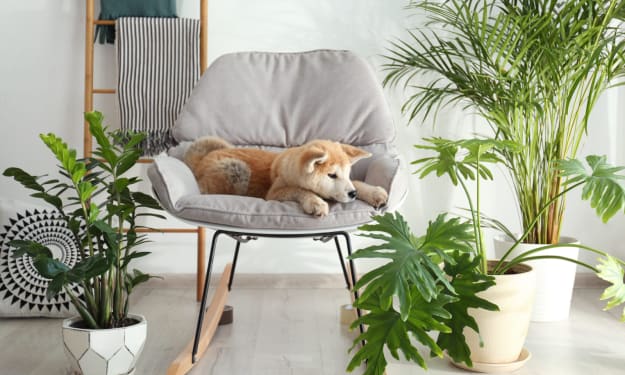
For those of us who share our homes with both thriving plants and curious pets, a moment of panic is never far away. A chewed leaf, a dug-up root ball, and we’re left frantically searching online: “Is this plant toxic?” This tension between our love for lush greenery and our duty to keep our furry family members safe can stifle the joy of creating an indoor oasis. In my work at AI Plant Finder, I’ve processed countless queries where heartbreak could have been prevented with the right information upfront. This guide is designed to replace that fear with empowerment. By choosing from a verified list of non-toxic plants and employing smart strategies, you can cultivate a vibrant, pet-safe paradise where both your greenery and your companions can flourish together.
By Emma Wallace2 days ago in Humans



Comments
There are no comments for this story
Be the first to respond and start the conversation.