
Censorship vs. Free Speech
Navigating the Fine Line in the Digital Age

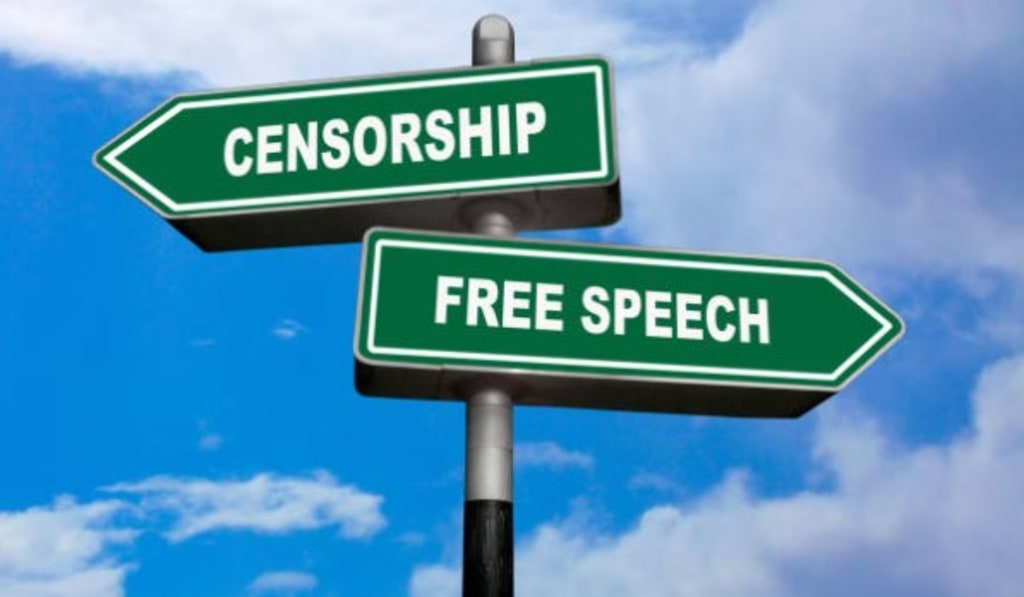
In the digital age, the balance between censorship and free speech has become a contentious issue. With the rise of social media platforms and online communication, the power to control and regulate content has shifted to both governments and private companies. While censorship aims to protect individuals from harmful or offensive material, it often raises concerns about the suppression of free expression. In this article, we explore the complex dynamics of censorship and free speech in the digital landscape, examining the challenges, implications, and the ongoing debate surrounding this delicate balance.
Defining Censorship: Protection or Suppression?
Censorship is the practice of controlling or restricting the dissemination of information or expression deemed objectionable, offensive, or harmful. It can be imposed by governments, private entities, or online platforms. Proponents argue that censorship is necessary to maintain social order, protect public morality, and prevent the spread of harmful content. However, critics argue that it can stifle creativity, limit freedom of expression, and silence dissenting voices. The challenge lies in finding a balance that protects individuals without unduly infringing upon their fundamental right to free speech.
The Digital Landscape: New Challenges and Opportunities
The advent of the internet and social media has transformed the landscape of communication, presenting both new challenges and opportunities regarding censorship and free speech. On one hand, the digital space provides a platform for diverse voices, enabling individuals to express their opinions and share information globally. On the other hand, the sheer volume of content, including misinformation, hate speech, and harmful content, has prompted calls for increased regulation to protect users from potential harm.
Government Regulation: Striking a Delicate Balance
Governments around the world face the challenging task of regulating online content while upholding the principles of free speech. While it is crucial to protect individuals from harmful content, excessive government control can lead to censorship that curtails fundamental freedoms. Transparent and accountable frameworks that consider human rights principles, the rule of law, and democratic processes are essential to strike the delicate balance between regulating harmful content and preserving free expression.
Private Companies: The Gatekeepers of Online Speech
In the digital era, private companies, particularly social media platforms, have become powerful gatekeepers of online speech. These platforms often develop community guidelines and content policies to regulate user-generated content. While they play a significant role in combating misinformation, hate speech, and harassment, concerns have been raised about their immense influence and potential biases. Striking the right balance requires transparency, accountability, and ensuring that these platforms do not disproportionately silence marginalized voices or enforce arbitrary restrictions.
The Threat of Misinformation: Navigating the Challenges
Misinformation and disinformation pose a significant challenge in the realm of censorship and free speech. The rapid spread of false information can have real-world consequences, from impacting elections to endangering public health. While combating misinformation is necessary, the approach must be balanced, avoiding the suppression of alternative viewpoints or infringing upon free expression rights. A comprehensive strategy involving media literacy education, fact-checking initiatives, and responsible content moderation can help mitigate the impact of misinformation while preserving free speech.
Protecting Human Rights: Balancing Priorities
When navigating the delicate line between censorship and free speech, it is essential to prioritize the protection of human rights. Any restriction on free expression should be narrowly tailored, proportionate, and necessary to achieve a legitimate aim, such as preventing harm or protecting vulnerable populations. Upholding principles of inclusivity, diversity, and respecting the rights of individuals from marginalized communities is crucial to strike a balance that safeguards free speech while preventing the dissemination of harmful content.
The Role of Society: Fostering Dialogue and Critical Thinking
Society plays a vital role in shaping the discourse around censorship and free speech. Fostering an environment of dialogue, critical thinking, and media literacy can empower individuals to navigate the digital landscape responsibly. Engaging in open conversations, advocating for transparency and accountability from governments and private entities, and challenging oppressive or discriminatory practices can contribute to the ongoing discussion and help shape more inclusive and democratic approaches to censorship.
The question of censorship versus free speech in the digital age is a complex and multifaceted issue. Striking a balance that protects individuals from harm while preserving their right to free expression is an ongoing challenge. It requires transparent frameworks, accountable governance, responsible moderation practices, and an engaged and informed society. By navigating this fine line with careful consideration, we can create a digital landscape that respects diversity, promotes critical thinking, and upholds the principles of free speech.
About the Creator
Gilbert Mutongoi Ashiku
Like Informative articles on trends and tech? you are at the right place, welcome on board and enjoy my fascinating articles.
Keep reading
More stories from Gilbert Mutongoi Ashiku and writers in Humans and other communities.
GMOs: Savior or Scourge?
Genetically Modified Organisms (GMOs) have become a contentious topic, evoking passionate debates about their potential benefits and risks. Amidst the polarizing opinions and conflicting information, it is crucial to navigate through the hype and misinformation and seek a balanced understanding of GMOs. In this article, we embark on an enlightening journey, exploring the fascinating world of GMOs, dissecting the arguments for and against their use, and separating fact from fiction in the GMO debate. Get ready to unravel the complexities and uncover the truth behind the controversy!
By Gilbert Mutongoi Ashiku3 years ago in Humans
Real-World Strategies Couples Use To Balance Privacy And Romantic Connection
Just like any healthy relationship, there must be clear or individual boundaries so that individuality and emotional health is not lost. Situations where couples talk about their privacy properly save misunderstanding and bitterness. Boundaries can be the personal space, time to oneself, or restriction of sharing of personal devices. Trust and mutual respect are strengthened by the partners as they respect each other. Boundaries do not build distance but they serve to define a structure of safe connected intimacy. Once the two partners comprehend and respect these boundaries, they feel appreciated and have a chance to extend their self and eventually, to strengthen their love relationship and make sure that the proximity is not coerced.
By Mark Hipster4 days ago in Humans


Comments
There are no comments for this story
Be the first to respond and start the conversation.