
Bridge of Hope
With Hope, Any Chasm Can Be Bridged, If We Only Try
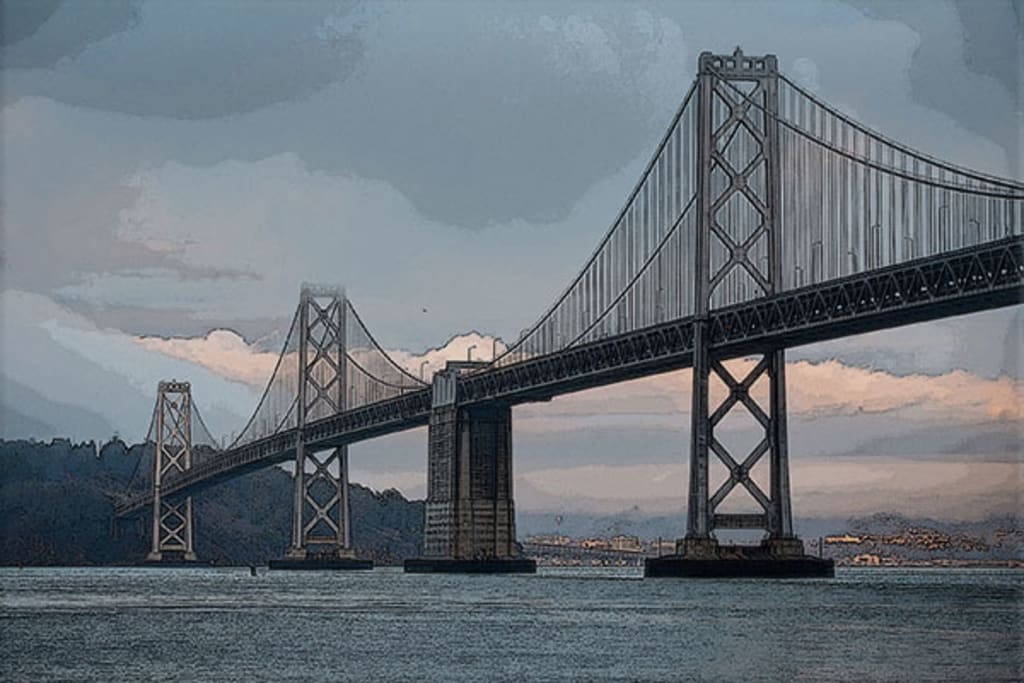
He was 120 years and 104 days old, and in his third century, on the first day of August 2002, a Thursday. He was also the oldest living resident of San Francisco, sitting on a bench along the Embarcadero, the boulevard that ran along the bay, looking towards the bridge. His name, Benjamin Brooks. The bridge before him, the San Francisco–Oakland Bay Bridge, his bridge, the bridge he had looked upon every day since its construction began in 1933 and had fallen in love with at its completion. When it was completed, a few years later, he celebrated. The Golden Gate Bridge, The Other Bridge, as he called it, opened six months later, and despite becoming world-renowned, the bridge before him, the Bay Bridge, he felt a connection to. He had worked near and eventually would come to live by its western half, the San Francisco side, for most of his life. The Other Bridge he rarely saw. On this day, he was out early, embracing the quiet. The break of dawn was his favorite time of day. Where he sat, his bench, also a favorite. The sun across the bay was just starting to peek over the East Bay hills, rising, its rays landing on his aged face, warming him with both the expectations and the potential of an undetermined new day. He had crossed the Embarcadero this early Sunday morning, after leaving his apartment in the nearby old Hills Brothers building, alone, with a walker and a paper bag in its basket containing his breakfast, a banana, a hard-boiled egg, and a small mug of hot coffee. Also, in the basket, an incredibly old and warned leather satchel. A satchel that represented who he had become shortly after the bridge’s completion.
As a youthful 51-year-old, Benjamin had worked where he would eventually come to live, in the big coffee roasting and canning operations of Hills Brothers. Back then, at the end of a long shift of roasting and grinding coffee beans, he would joke that he lived where he worked, never imagining that the plant building would one day become his actual home. All of this, across from the bridge that was just starting to be constructed. Every day, seeing this monolith of ingenuity and engineering growing from the depths of the bay with towers that sliced through the fog and touched the sky, rivaling any nearby skyscraper of the time, filled him with a sense of hope for the future. It was this hope that allowed him to let go of the past. It was this hope that manifested into drawings done on shift breaks, documenting each day the bridge’s progress. It became an obsession, at the very least, an eager hobby. Before work, at lunch, on 10-minute breaks, and at the end of each day’s shift, he found himself staring at the growing majesty before him, and in turn, felt the need to capture both the monumental and subtle changes to the bridge as they occurred, in each of his drawings. Three years later, at age 54, when the bridge was completed, he was no less consumed and captivated, and in awe of the bridge’s steel and concrete grandeur. He attended the chain cutting ceremony where dignitaries past and present, including President Herbert Hoover, were in attendance as pageant queens held a ceremonial chain. $2.50 got him a ticket to two opening parades, with a seat in the reserved grandstand. For five days both San Francisco and Oakland celebrated, reveling with boat parades, ship races, air shows, football games, and more, including elegant formal balls held on both sides of the bay. He tried attending it all, and always he had with him, his little black sketch notebook. When the celebrations ended, his love for capturing the bridge and its many moods, continued. Morning, noon, and night and in all the bay’s weather, his perspective of the magnificent span went from hand to paper. Three years after that, at the spry age of 57, he hopped on a bus that took him onto the bridge, to its midway point, and then onto the newly created Treasure Island, halfway between San Francisco and Oakland, in the middle of the bay to attend the Golden Gate International Exposition, a World’s Fair, that in part celebrated the two new bridges. There he drew every attraction and exhibit, every aspect of the exposition in all its splendor and eclectic blending of cultures from around the world, past and present, with a nod to the future with towers that glowed in flooded colored lights that painted their surfaces like canvases. And of course, he drew the bridge, both halves, east, and west, from the spectacular new vantage point, with a skewed emphasis on the double suspension bridge leading to San Francisco.
On the last day of the exposition, with dusk’s approach, Benjamin made one last stroke to his latest composition as the sun’s last rays slipped over the City’s skyline and paved a shimmering path onto the bay towards him where he sat on the island’s edge.
Gathering his pencils, pens, and sketch notebook, in preparation to catch the last bus back into the city, a voice asked him, “Do you sell your drawings?”
Benjamin looked up with a slightly surprised and confused expression and asked back, “excuse me?”
A tall thin man with dark hair wearing a very standard brown fedora and a plain brown suit stood looking down at the notebook Benjamin had just closed, squinting his eyes as the last of the day’s sunlight bounced off the water.
“Do you ever sell any of your work?”
“No, it’s just a hobby” Benjamin answered back.
“Would you consider it? I think you have some real talent.”
“I never thought about it. Who are you?” Benjamin asked abruptly.
The tall thin man reached into his inner jacket pocket and pulled out a press pass for the exposition that showed him to be a reporter for the Bay Area Times, the oldest and largest circulated newspaper serving the Bay Area.
“I’ve been here throughout the exposition off and on along with my photographer friend over there.” The man gestured with his head towards another man wearing a plain brown suit and fedora along with a large camera around his neck. “We’ve been doing featurettes each week about the various sites and attractions. After today, we’re going to put together a feature story for next weekend’s Sunday morning edition, summing up the entirety of the expo, a kind of thank you for the good times these many months. I think your drawings catch something that the camera lens doesn’t pick up. If you are interested in letting us look a little bit more at your work, maybe we can work something out, possibly get some of your drawings into that feature story. Publish your work.”
Benjamin’s previous confusion was quickly overtaken with a feeling of being overwhelmed and a little lightheaded.
“So, what do you say?” the reporter asked, “Can you come down to the paper in the morning, say 9:00 a.m.?”
“Umm yeah, sure, I’ll come in,” Benjamin answered, sounding a little unsure, but mainly surprised. “Well, I’ll try, I have work in the morning.”
“Good deal,” The reporter said as he handed Benjamin his card. “When you get there, just ask for me. I’ll let the front desk know you are coming. What’s your name?”
“Benjamin… Benjamin Brooks”
“See you bright and early, Benjamin Brooks.” The reporter said as he simultaneously gestured to his photographer that they were leaving.
“Bright and early. I’ll be there.” Benjamin said excitedly, momentarily forgetting where he was or the fact that his bus, the last bus back into the city, was about to leave. He looked over his shoulder and took one last panoramic gaze at the final moments of the exposition, as lights began to go out. Then looking back at his bridge, he dashed for the bus and boarded with the notebook, pencils, and pens in hand.
Early the next morning, stopping first at the coffee plant, Benjamin found a friend working an overnight shift willing to extend his shift a couple of hours to cover the time Benjamin needed to visit the newspaper. As he exited the plant, he found himself unable to resist a quick sketch of his bridge across the way. As he drew, he felt that same hopefulness that he had felt when the bridge had been completed. At that moment he realized that not only did his drawings reflect what he called the moods of the bridge, but also his own emotions and sense of being had always been infused. In finishing his drawing, he quickly glanced at his watch, then hastily hopped onto a streetcar with notebooks secured under his arm.
At the newspaper, Benjamin handed the receptionist the reporter’s card, and soon found himself being escorted through a world he had never experienced before, eventually arriving in a large office where articles framed on its walls, many floors above the city.
“Benjamin, this is impressive work.” an assignment editor, the reporter’s editor said, thumbing through page after page of drawings in one of Benjamin’s sketch notebooks. “I think we can use some of these, actually a lot of these in Sunday’s feature. And you say you have no formal training?”
“Nope, no training, just the pure inspiration of whatever is before me. That’s always been enough, I guess,” Benjamin said.
“Speaking of which, what is it about the bridge?” the editor asked. “Except for the expo drawings, some of which include the bridge, everything else in all your books is just the bridge. I’m not saying they aren’t incredible, and somehow there are no two that are the same, but why just the bridge?”
“Well, that bridge is both beautiful and comforting to me. It made everything better. When it was being built, it gave a lot of men jobs. When it was done, it connected two big cities, bringing with it more opportunity. It brought hope and continues to do that with its functionality but also in its grand design, a real testament to what we can achieve. That’s inspiring to me. It is an actual tangible symbol of endless possibilities, which makes me look forward to each day when I see it, which in turn makes me feel alive. The bridge tells you to keep moving forward. That bridge helped me at a time when I needed to feel hope, to see possibilities. It gives me life. So, for all that, and more, I pay tribute to it each day.”
“Okay…that is an answer. Thank you for that. You sound almost religious about it,” the editor replied.
“I guess,” Benjamin responded. “I never really thought of it like that before.”
“So, what do you say, can we use your drawings for the Expo wrap-up feature on Sunday?” the editor asked. “I think our readers are going to enjoy them. I think your drawings will evoke more nostalgia than just our photos. You have an eye for capturing the feel of what you see.”
Benjamin looked down at the desktop where many of his sketch notebooks were spread about, then he looked out the large window behind the desk at the city below. His lips were nearly pulled into his mouth as he contemplated all that was happening. Then, slowly prying his lips apart he said, “If you think people will enjoy seeing them, then, I think I have to say, yes.”
“That’s great Benjamin,” the editor said, “we’ll get the paperwork going right now and cut you a check for use of your work. Five dollars per drawing good with you? It is our best rate. I’m going to take ten of your drawings, just in case, so fifty dollars.”
“Yeah, that’s fine.” Benjamin barely pushed out, hardly hearing what he was responding to. He had not equated this experience with money. Fifty dollars? That was nothing to sneeze at, especially these days.
“You are going to be published, Benjamin, and see your drawings in print, a true professional. What do you think about that?” the editor asked with a smile.
Benjamin considered his answer to this question, and then said, in a slightly dazed and unsure manner, “Unexpected, but good.”
That Sunday morning, Benjamin woke early, despite still being tired from a restless night. He knew what time the newspaper was delivered to the corner store, and because of this, his internal clock woke him up at 5:00 a.m. He quickly put-on clothes, guzzled down a cup of coffee, burning his tongue and the roof of his mouth, and then ate a hardboiled egg in four bites, before exiting his apartment building to walk down to the corner store and wait.
Headlights broke the early morning fog as a truck with The Bay Area Times spelled across its side approached the corner store where he waited. Slowing down, a stack of newspapers was tossed from the back of its cab onto the sidewalk before the store’s entrance. Within moments, Benjamin had persuaded the shop owner to sell him a paper despite the store not opening for another hour. A moment later, he was rifling through the large Sunday edition of the Bay Area Times. Then he saw it, the multipage feature on the Expo, and his drawings, now considered illustrations, accompanied the story. On every page, his work the focal point, highlighting the surrounding words, drawing the reader in. The final illustration in the feature, his beloved Bay Bridge, in front of the city he loved, from the perspective of a visitor of the Expo on the island. Seeing his work on these pages, his name, Benjamin Brooks, under each drawing, filled him with pride unlike any he had ever known. Seeing the last page of the feature adorned by his drawing of the bridge, touched his soul, made it vibrate with life, and filled it with hope.
Within a week, Benjamin was back at the newspaper.
“Benjamin, we need to talk about your drawings,” the editor said speaking from behind his desk. He had sent a message to Benjamin to come back to the paper to meet with him again. “Your work, more than any other part of the feature, got the attention of our reader. Frankly, more than anything else we have ever put out. See that pile of letters on that table. Those are all about your work, and that is just a small sample of what has come in so far. Your drawings have stirred up something in the people of the Bay Area. They want more. The funny thing, so many of the letters point out specifically, the bridge illustration. Whatever you see when you draw that bridge, it’s coming through to our readers and connecting with them.
Benjamin smiled. Everything he had felt when he first saw his work in the paper was still there and growing.
“The question now, Benjamin, what are we going to do?” The editor looked at Benjamin with almost astonished eyes. “I can’t let you leave without working something out to get more of your work in the paper. I just don’t know for what or where in the paper. What do you think Benjamin?”
“Can I draw the bridge again, for the paper?” Benjamin asked still smiling, but unsure how that would work. “You said the paper’s readers called out my bridge drawing more than anything else.”
“Why would we need another illustration of the Bay Bridge? asked the editor. What would we do with it?”
Benjamin, suddenly feeling more self-assured than he had ever felt before said, “the why is because people can see what I see in the bridge when I put pen and pencil to paper, hope and possibilities. Where to put it? Why not in the same section that the Sunday feature was in, Arts and Leisure?” Benjamin suggested.
The Bay Area Times’ Arts and Leisure section was published daily with an events calendar, interviews from locals in the community, trends and general coverage of the arts, and entertainment in the Bay. The Sunday edition, where his work had been featured in the Exposition story, was three times bigger than the daily version.
“But where? The editor asked.
“Make it the cover artwork for Arts and Leisure,” Benjamin said sounding more confident than at any other time the two had spoken.
“The cover art for Arts and Leisure. Okay, that might work. But why should the Bay Bridge represent the Bay Area Times’s Arts and Leisure section of the paper? Would we use your same illustration every day?
“The Bay Bridge, because it connects so many more people than any of the other bridges, bringing so many people together. The same drawing all the time? No, I can give you something new every day. The bridge is not the same every single day, so it shouldn’t be represented in that way,” Benjamin said sounding very sure of each word he spoke.
The editor stood up from behind his desk, walked to Benjamin, extended his hand, and said, “I like it, at least enough to try it out. I’ll also add a tagline under Arts and Leisure, ‘Your connection to everyone and everything going on in the Bay Area.’” Then the two shook hands.
The following Sunday, Benjamin’s debut cover illustration, featuring his Bay Bridge, for the Arts and Leisure section of the paper, hit the newsstands. The next day, his second cover, the third day, his third cover, and so on. Within days of the debut cover, letters to the editor again began pouring in, all admiring Benjamin’s work and thanking the paper for bringing his art to the paper. Each day more letters came in, and every day, Benjamin continued to make time in his day, before going to work at the coffee plant, at lunch, or right after work, to create his latest illustrated interpretation of the bridge; and every day he met his deadline. As the months went by and the popularity of what Benjamin was doing grew, the newspaper’s readers continued writing in expressing how much they looked forward each day to seeing Benjamin’s latest rendition of the bridge. It made them happy. With this new-found popularity, the newspaper’s circulation grew to record heights which in-turn allowed the paper to thank Benjamin properly for what he had done and what he was doing.
“Benjamin, I personally, and the paper can’t, thank you enough for sharing your talents with our readers throughout these last months. You have brought the hope that you see in the bridge to the people who see your illustration each day. The readers love you. You have done more for this paper and the people it serves than anyone in recent memory. The more people who pick up the paper because of you, the more informed they become about their world. Not to mention the additional ad revenue coming in for Arts and Leisure, more than any other part of the paper, combined. Because of all that and more, the Bay Area Times is extending a permanent salaried staff position for you. We want to know that you will always be here with us, doing what you are meant to do. What do you say, Benjamin? Will you join the team permanently?” asked the editor as he handed Benjamin an employment contract.
At that moment, a surge of emotions swelled, fueling a vast spectrum of feelings that left Benjamin both lightheaded and joyful. He opened the contract and looked with amazement at what was being offered. It was more than he had ever imagined, more than he would ever need. He looked back at the editor and said, “This is more than generous. I feel a little guilty being offered so much for something I did before anyone paid me.”
“That’s the beauty of it, Benjamin. You get to do what you love,” said the editor, looking at Benjamin with sincerity. “So, what do you say? Will you join our team going forward permanently?”
Benjamin, with a giant smile he tried to rein in, extended his hand out, shook his editor’s hand, then immediately took a pen and signed his contract.
“Oh, I have one more thing for you,” his editor said as he pulled out from behind his desk a leather satchel, with Benjamin’s initials engraved deep into the flap’s leather that read, B.B. for Benjamin Brooks, his initials. Inside the satchel were several plain paper little black notebooks, the kind Benjamin always used for drawing along with a new set of pencils and pens. “This truly makes you a professional.”
Benjamin knew right then that his life was never going to be the same, and he was ready and eager to embrace all that the future had in store for him, as he thanked his editor.
Soon after, Benjamin would leave his job at the coffee plant, no longer in need of its wages, allowing him to spend more time drawing his bridge every day, and at times not constrained by the need to be somewhere else. His daily deadline, though never previously missed, was now assured to never be an issue. Benjamin was happy, and his love for what he did, and the bridge never waned. As time passed, the popularity of his daily Bay Bridge depiction continued to grow, and for many, it became a mandatory routine each day to pick up the paper if only to see what the Bridge looked like that day as drawn by Benjamin. A year after signing his contract with the Bay Area Times, a feature story of Benjamin and his popular illustrations appeared under his own latest work in the Sunday Arts and Leisure section of the paper, finally giving the paper’s readers a glimpse into the man behind the paper’s most endearing attribute. Not long after, Benjamin began to get recognized, a fixture along the Embarcadero. Random people would call out his name, and often associate it with the Bay Bridge as they passed him. “Bay Bridge Benjamin Brooks, how are you? What’s the bridge going to look like today?” Then there was “Bay Bridge Brooks”, until eventually everyone called him, and knew him simply as “B.B.”, his initials, and for many, B.B for the Bay Bridge as Benjamin and the bridge became synonymous. B.B. became his public identity, and he relished it. Each new day was a cause to rejoice, seeing the bridge he loved and being able to share the hope he got from it with so many people. His only grievance, one that he internalized, was the guilt he still felt for how well he was being compensated for his work when he knew so many others were just scraping by. Yes, his depiction of the bridge each day, seemingly brought joy and hope to many, but he now felt he was obligated to do more. In talking to his editor, he asked if there was anything the paper could do.
“The paper can take part of my salary and give it to people who are having a hard time, and maybe write something about their day-to-day struggles, and spotlight local hardships” Benjamin suggested. “Get the community thinking about helping each other out.”
“I don’t know B.B.” his editor answered back. “We aren’t a charity, we distribute information, not money. Besides, how would we decide who receives and who does not? This can get complicated fast, and it’s just not something that we do. Yes, we can talk about hardship issues, and we do, but what you are asking is beyond what we know.”
Feeling a little frustrated, Benjamin began sifting through the latest letters stacked on a table, from fans of his bridge depictions. He had noticed, over time, something reoccurring, prevalent in so many of the letters. Beyond their appreciation for his work, and the hope they recognized in his depictions of the bridge, readers told the paper what Benjamin’s bridge illustrations looked like to them, sometimes seeing exactly what Benjamin saw when he drew the bridge, and sometimes seeing something more, or different. Some readers wrote a single descriptive word, and some a sentence. “Today the bridge is proud.” (Dustin Jones). “The bridge is contemplating today.” (Sarah Fitzpatrick). “Optimistic” (Joel Conan).
“I have an idea. We can do something with the letters. We can ask the readers to do what they have already been doing, sending in their thoughts of what the bridge looks like on each cover, and pick a winner each day and then reprint that cover art, maybe a smaller version, with their caption on a different page along with their name and the date of the original cover. That’s how we send money to people. We can also ask them to write, not for print, what they are going through and how they would be helped with the prize money. This might also lead to stories the paper should be covering.”
Benjamin’s editor picked up a letter, then looking at Benjamin said, “I think you have something here B.B., I think we can get everyone on board with this. I think this can be big for the paper,” sounding both excited and a little moved by Benjamin’s idea. “And forget about using your salary, I’ll find the budget for this.”
The caption contest was up and running within a week and an instant success. Every day a new winner was picked, and their caption printed. Every day someone received a modest amount of prize money, which over time became bigger as the paper’s circulation grew, and sponsorship of the contest became the most demanded section of the paper to would-be advertisers. The community embraced the giving, and suddenly stories of random acts of giving became commonplace. The paper printed as many of these stories as it could, and eventually, with the permission of past caption winners, started telling their stories.
In time, Benjamin would be featured several more times in articles throughout the years, bringing with it, further celebrity. He became San Francisco’s favorite son. People looked for him along the Embarcadero. Upon meeting him, knowing what they knew from the articles about him, they were overjoyed, but also amazed, specifically about his age. They were astonished at how young he appeared as if time had seen him worthy of a slow aging. Benjamin would simply say, “That bridge, seeing that glorious structure each day, gives me life, it has given me everything I have and helped me to help so many others. I wouldn’t be here if not for that bridge.” As time moved on, it became mythos that if Benjamin met his deadline each day, submitting a new depiction of the bridge, that he would live forever. Eventually, mythos became more of an adamant belief, not only among colleagues but by everyone who knew his story and loved him in the Bay Area. Benjamin would have many editors over the years. With every year that passed, his legend grew, and everyday people continued to open the paper and immediately flip to the page with his bridge, and then read the latest caption winner. Eventually, Benjamin came to experiment with different styles of capturing the bridge, expressing what he was feeling with his pencils and pens in ways he hadn’t before, something his fans embraced. Decades would pass and he continued doing what he loved to do, drawing his bridge and helping people by giving them hope. And even after all that time, he was still amazed at his life, and always grateful.
On the first day of August 2002, a Thursday, with the sun on his face and a heart filled with both exhilaration and a peaceful calmness, his hands, one holding a pencil the other holding onto an opened little black notebook, slowly fell to his sides, their grips gradually releasing both the pencil and notebook, each falling and meeting the sidewalk beneath his bench, a bench adorned with a plaque in his honor which read, Benjamin Brooks (B.B) “With hope, any chasm can be bridged, if we only try.” His eyes still open, looked at his bridge, grateful; then slowly they closed as a small smile gradually took shape. Soon after, his head lowered for one last time.
As the early morning grew later, joggers with headphones in their ears ran by Benjamin, some unaware of who he was and all unaware that he had passed on. Eventually, one of the many people who each morning wished B.B. a good day as they made their way to work, would notice and called 911, alerting the operator of the situation. EMTs came as did police, and eventually the media, including his own Bay Area Times. In the commotion, as Benjamin was taken away and his satchel and walker packed up, the little black notebook that had fallen to the sidewalk was kicked back beneath the bench and up against the concrete structure that the bench rested against. None of the emergency responders or anyone in the media noticed. Later, after the responders were gone, crowds began to gather at Benjamin’s bench, which now had barricade tape draped across it. They brought with them candles and flowers and laid them at the foot of the bench, obscuring anything beneath it. Eventually, children visited with their parents and taped all along the sidewalk around Benjamin’s bench, drawings of the Bay Bridge that they had drawn, with captions that read, “The bridge misses you, B.B.” Local authorities allowed the trinkets and drawings in honor of Benjamin to grow in number and exist around his bench for a few days well past a large impromptu and informal memorial that occurred the night of his passing. In attendance amongst the crowd at the nighttime memorial, a young lady, wearing clothes that were slightly tattered, with sleeve ends that were frayed, stood starring with a focus at Benjamin’s bench. She had been near the bench all day and the entire previous night, having slept nearby on another bench in eyesight of Benjamin’s bench. She had been awakened that early morning by the sun’s early rays as Benjamin sat on his bench feeling those same rays on his face. She had watched him and his peaceful happy manner and had felt a calmness grow in her, a calmness she had not known for a long while. When Benjamin passed, she did not know. She was unaware of who he was or that he was doing anything other than sleeping when his head lowered. She did not want to disturb his or her newfound restful serenity. Eventually, that night, after the crowds had gone, and the hour was late, she tiptoed through the gifts, flowers, and drawings around Benjamin’s bench, squatted down and reached through the paraphernalia and found Benjamin’s little black notebook, his last notebook. She immediately put it in her backpack and quickly left Benjamin’s bench, walking a few blocks until she found a decent enough spot to rest for the rest of that night.
Early the next morning she gathered herself together in an effort to be one of the first in line at a nearby soup kitchen, having forgone a meal the previous day with all that had happened. She pulled out Benjamin’s notebook and began looking at and examining all the drawings of the bridge as she walked. At that moment she realized what she possessed. Each drawing had a date Benjamin had written at the bottom of a page. The last drawing in the notebook had the previous day’s date, it was Benjamin’s last depiction of the bridge, a depiction no one else in the world had seen, an illustration that had never gone to press, an illustration that had missed its deadline. Even she knew of Benjamin’s legend and now looked upon this final drawing, with wonderment and slight fear, as if it possessed an unnatural power that no one could ever understand. Unsure of what to do, she placed the notebook back into her backpack and then continued to walk. She walked for hours in a near daze, thinking about the drawing and whether she should turn the little black notebook in or keep it. The notebook reminded her of the calmness Benjamin had given her the previous morning, a calmness that had made her feel hopeful. Passing a newsstand, she saw the headline, “Bay Area Mourns the Loss of Its Heart and Soul, B.B.” the top story of that morning’s Bay Area Times. Picking up the paper, she read another headline, below the main story, “B.B.’s Final Notebook Missing” a story that would surely grow in the coming days. This immediately scared her, fearing anyone who might learn of what she had in her possession, Benjamin’s last notebook. Some might blame Benjamin’s missed deadline and ultimately his passing on her. Still holding the paper, she began to hear and then feel her heartbeat, as beads of perspiration formed above her brow while her eyes remained fixated on that last headline, frozen on its words, unable to read the ensuing article below it. Peripherally she became aware of the newsstand vendor eyeing her with discontent. He knew she had no intention of buying anything, let alone the paper she held like a vise, adding to the discomfort she was feeling. She quickly placed the newspaper back in the stand, never reading the article to the headline that had panicked her. Then she left.
All along the streets, as she walked, she heard a populous in mourning, speaking sadly of Benjamin’s passing. Listening further, as she continued her trek through the city, she also began to notice the delight in their voices when they spoke of encounters with B.B along the Embarcadero and the long conversations he, more than willingly, had with them. He loved this city and everyone who lived in it or near it. To him, everyone was family.
When finally, she felt she could no longer walk another step, still having not eaten, and still very much feeling the nerves from everything she carried with her, she looked up to find that she was standing in front of the Bay Area Times building. It had not been her intention to come here, her walk had become aimless. She frankly had not been sure of its address, and yet here she stood, somehow guided to this place that had helped share Benjamin Brooks and his vision with the entire Bay Area and beyond. As scared as she was, feeling she might be perceived as somehow in the wrong, based on what she looked like and what she was in possession of, she decided that she had been brought to this building for a reason. Soon enough, she gathered up the courage to walk up the large stone stairs in front of the building’s plaza, and then she walked into the building.
“Excuse me,” she said to a female security guard sitting behind a large desk in the lobby. “I need to speak to someone about B.B.”
“Ma'am, I know you are incredibly sad, like the rest of, and The Bay Area Times sympathizes with the loss you must be feeling. B.B. was like family to us all. We invite you to sign the book we have placed just over there and write down whatever you are feeling,” the security guard said trying to appear sympathetic while feeling tired, pointing to a book at the other end of the lobby where a significant line had formed.
“No, I mean thank you, but that is not why I am here. I need to see someone about something that belonged to B.B.” she said.
“What is that ma'am?”
“I have B.B.’s last notebook,” she said, “I need to give it to someone who worked directly with B.B. to make sure it’s taken care of and safe. Also, I think there is one more new bridge drawing, on the last page.”
The security guard looking surprised, immediately picked up a phone to place a call. “Ma’am give me a moment,” the security guard said back to her. “And what is your name?”
“Bree Baker,” she said sounding a little timid.
Within moments another security guard appeared and gestured for her to meet him at the elevators. A moment later she was passing floor after floor, going up higher and higher, while her nerves and heartbeat compounded with each new floor number reached. Finally, the elevator stopped, and the security guard gestured for her to step into another lobby. This was the Bay Area Times lobby. Mahogany wall paneling was adorned with large golden letters that spelled out the Bay Area Times. From this high up, the view from a nearby large window, seemingly allowed one to see the entire Bay Area, including the Bay Bridge. Bree began questioning her decision to come here.
“Ms. Baker,” said a tall mid-forties man with a hint of grey in his hair, who had entered the lobby and began addressing her. “It’s genuinely nice to meet you” and extended a hand to Bree. “I was B.B.’s editor. Well, his last editor. I worked with B.B. over the last five years. It sounds like you have something that we have been looking for.”
“Yes, I think so,” Bree answered shaking the editor’s hand.
“Great, why don’t you follow me to the big conference room.”
Walking through the office, Bree saw old articles framed on the walls, awards, photos of staff past and present, and of course photos and articles about B.B. could be seen throughout the newspaper’s office. Bree then followed the editor into a large glass-enclosed conference room, where on a near equally large table, little black sketch notebooks covered every inch of the tabletop, stacked on one another.
“That, Ms. Baker represents all sixty-three years of B.B.’s work, his art that the paper printed, nearly 23,000 illustrations, well, almost. Apparently, Ms. Baker, you have B.B.’s last little black notebook, the final part of the collection. It means a lot, not only to this newspaper but to everyone in the Bay Area, to know that none of B.B.’s work was lost. May I see it?”
Bree took off her backpack, opened it up, and pulled out a little black notebook that matched all the other little black notebooks stacked on top of the conference room table. She handed it to the editor who quickly began to browse and then examine each page, finally arriving at one last illustration, on a page dated, 08/01/2002, the previous day’s date. This was the last drawing of the bridge by Benjamin, and the only one he had ever failed to get to the newspaper by his deadline. Now the paper would have one more brand-new original bridge depiction by B.B to print.
“Ms. Baker, can I call you Bree?” the editor asked.
“Yes, that’s fine,” Bree answered.
“Bree, may I ask how you came to be in possession of B.B.’s last notebook?”
Bree feeling anxious, softly explained her circumstances, and how she came to be near Benjamin that morning. She explained what she had observed watching B.B, and what she had noticed when the first responders left. She had seen the little black notebook fall to the ground in the early morning and then get kicked back accidentally under the bench when the responders arrived. She then told the editor that she went back and retrieved it later last night, wanting to remember her early morning experience with B.B., the peaceful calm she had experienced, and the hopeful feeling that it had evoked.
“Well Bree, everyone is grateful that you decided to bring B.B.’s notebook in today. We are planning an exhibit of his drawings at the SFMOMA, highlighting his works from the last six and half decades. And now with the discovery of one last B.B bridge drawing, thanks to you, we will be printing that in Sunday’s paper, on the front page along with the story of B.B.’s life, over the last sixty-three years. You are now a part of that story. We will be holding an official public memorial service in front of his bench, in view of his bridge, this coming Sunday morning, revealing B.B.’s front page cover. If you can make it, I think that would be incredibly special. I think B.B. would want you there. After all, you were the last to see him doing what he loved. Also, I would like to present you with the reward money, a check, for bringing in B’B’s notebook, at the memorial, if you do not mind." the editor said. "Honestly, what kind of a news organization would we be if we did not take advantage of our own story? I’m not apologetic about that at all,” he said with a grin.
Bree was confused and a bit overwhelmed. What the editor said, she didn’t expect, and because of that, she was unsure if she understood what had been said, or if she had even heard correctly.
“So, can we count on seeing you there on Sunday?” He asked. “It all starts at 10 a.m. sharp.”
“I guess I can be there. I want to be there, but what was that about a reward?” Bree asked sounding confused and embarrassed.
“You did see our story about B.B.’s missing last notebook, right? the editor asked.
“I saw the headline at a newsstand, but that was it, I never got the chance to read it,” Bree said, again sounding embarrassed.
The editor looked at Bree, slightly astonished, and said, “then you should really make sure to be at B.B.’s memorial on Sunday, at 10 a.m. sharp.”
Bree agreed and promised she would be there, though still feeling a bit uneasy. Then the editor said, “Hey, before you go, since you took time out of your day to help us out, and it’s already past noon, let the newspaper treat you to lunch. You obviously haven’t had lunch because you‘ve been here with me. If you would like, I can ask security to set you up with a guest pass that will get you into the cafeteria. Security will direct you. Can I call down to security and set that up for you?”
Bree said, “sure, thank you, that would be nice,” smiling in appreciation. Then she left.
Sunday was a crisp, clear, and calm day, and by 10 a.m., a crowd much larger than anticipated showed up for B.B.’s memorial. Also, in attendance, local and state dignitaries from both past and present along with local celebrities and of course, his newspaper friends from many different decades. One by one, standing in front of the Bay Bridge, stories of Benjamin were told. People laughed and they cried, but they mostly felt connected to him and each other. Bree was also there, off to the side, feeling self-conscious. She was wearing her best combination of least worm clothes, what she considered her most presentable, but genuinely felt embarrassed to be there. Eventually, the editor that Bree had met two days earlier, made his way to the stage. Behind him, concealed from view, that Sunday’s edition of the Bay Area Times, blown up, with Benjamin’s last illustration of the bridge along with his story on the front page. The editor spoke of Benjamin’s chance meeting with a reporter in 1939, that began his storied career with the paper. He talked about the happiness B.B. had found on the lower deck of the bridge riding on the old Key System train. It was there that he met his beloved second wife, Elsie. She lived in Oakland, and while courting, they crossed the bridge routinely, on the train, to see each other, until they married. They spent 35 years together, until her passing 25 years ago. He talked about all the changes B.B. had seen and experienced over his long life in San Francisco and the Bay Area, and how B.B in turn had also changed the area, forever. Then the time came for the reveal.
“Friends, it’s my honor and privilege at this moment to present to you and the entire Bay Area, B.B.’s very last cover illustration of that spectacular bridge behind me. For B.B, the bridge represented the endless possibilities of a better life and future for us all, when we help one another. The bridge was hope to B.B, and hope gave him life. The hope he felt, he gave back to us for an exceptionally long time. At times we believed that he would live forever. And though, today, we reveal the last of his work, his work will live on. The Bay Area Times knows that nothing could ever replace what B.B. did, and lucky for us, we have 63 years of B.B.’s bridge depictions. So, after today, we will begin reprinting his illustrations and continue the fabled caption submissions contest.” The crowd immediately responded in cheers and applause, “But today, we needed one last caption for one last new B.B. bridge illustration, and we have it. It comes to us from a young woman I met just two days ago. She is the person who found and returned to us B.B.’s last little black notebook and did so with no expectations. When I talked to her, she spoke of the peaceful calmness she felt watching B.B. in his last moments and how that gave her hope. I like to think that what she felt was what B.B was feeling as he looked upon his bridge one last time.”
At that moment B.B.’s last Bay Bridge depiction was revealed, along with its caption, “Hopeful, peaceful, calmness” (Bree Baker).
“I think that caption captures very well the mood of the bridge in this last illustration by B.B,” said the editor, “and If you ever talked to B.B, you know that he was a man who had long ago found peace and serenity, while never losing his sense of hope.”
Then gesturing to Bree to come up on stage, the editor said, “folks let me introduce to you the young woman who helped to make all this possible today, Bree Baker”
The crowd immediately clapped and stood up, welcoming Bree, trying to make her feel both comfortable and appreciated.
“To show Bree our appreciation for saving B.B.’s last notebook, and for winning today’s caption contest, I am proud to present Ms. Bree Baker with a check for $20,000,” the editor said as he handed Bree a check. “Thank you, and Congratulations.”
Bree, absolutely dumbfounded, grabbed onto the editor’s arm, having become lightheaded from shock. Then, mustering up enough focus to look up at the editor, and only the editor, for fear of passing out, she pushed out a soft whisper asking, “why?” while feeling the eyes of an appreciative crowd.
The editor, off-mike, whispered into Bree’s ear, “because you are deserving, and this is what B.B. would want. Remember, ‘With hope, any chasm can be bridged, if we only try.’”
Bree’s grip on the editor’s arm tightened as she tried to hold back tears. Then, slowly she looked out at the crowd, and said softly, “thank you, I deeply appreciate this.” then taking a deep breath, continued. “B.B always saw the good in others and the potential in us all to make positive changes for the greater good. With this generous gift, I promise not to let him, or myself down, and to find a way to give back, for that greater good. Thank you again.”
“Well done, Bree,” the editor whispered into her ear.
Soon after B.B.’s memorial, Bree, with the mentorship of the editor, was enrolled in college. Her choice of study, journalism. She found low-cost student housing near the university, took a part-time job on campus and began volunteering at the university newspaper. Bree flourished and soon was interning at the Bay Area Times. Within five years, she went from intern to editorial assistant to eventually becoming a reporter, a journalist covering community affairs, trying to bring about positive change to the people of the Bay Area that needed help, highlighting their struggles and giving them a voice. Over time, Bree Baker’s career and her life became a symbol of hope for countless others. Years later, as both her co-workers and readers began to call her by her initials, she reluctantly accepted B.B. as her moniker, honoring its original owner.
About the Creator
Keep reading
More stories from David Rich and writers in Humans and other communities.
Ethereal Beauty
I tossed and turned as the clock’s glowing display somehow penetrated my closed eyelids, never letting me forget that time was the opponent in my attempt to sleep. I had gone upstate in an attempt to escape the everyday madness that was my everyday world; a reprieve from what I called my life. The nonstop voices, a constant disturbance of my sanity from vibrations and chimes that alerted me to conversations that came in flurries of unimportant attempts at humor and reactions built on one another, pulled at me, and stretched me from within, tight with unease. All of this and more had brought me to the bungalow, far from the bustle of my usual surroundings.
By David Rich4 years ago in Fiction
Time to change your life.
Is it even possible for you to change your life? A lot of people, more than there should be, are unhappy with their lives. But what are they doing about it? Usually nothing. People talk about how shitty their lives are and want change, but are they not taking the actions to change?
By Jen Phillips3 days ago in Humans
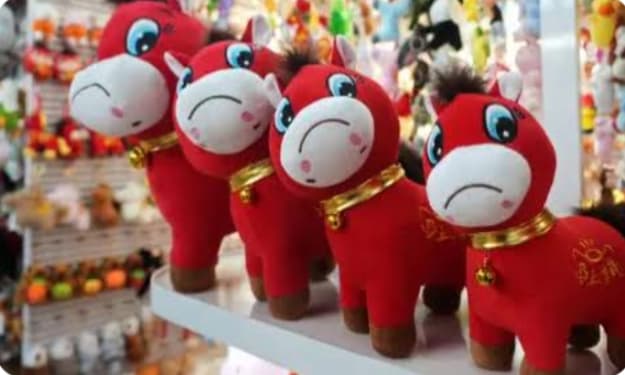
“Crying Horse” Toys Go Viral in China Ahead of Lunar New Year
Just a few weeks before the 2026 Lunar New Year, a new star has emerged in Chinese households — but it’s not your typical festive mascot. Meet the “crying horse”, a plush toy whose sad, downturned face has captured the hearts of shoppers and social media users alike.
By Sajida Sikandar6 days ago in Humans
Dead and Wearing Green
She was wearing that green dress when I first saw her, five years ago to the day. Flowing meadow fabric draped over long legs, thick auburn hair flowing down her back. That smile. Of course, she is still beautiful now. But now she is no longer alive.
By Karen Cave6 days ago in Fiction



Comments
There are no comments for this story
Be the first to respond and start the conversation.