
Breaking Stereotypes
The Role of Cultural and Ethnic Stereotypes and Their Influence on Society

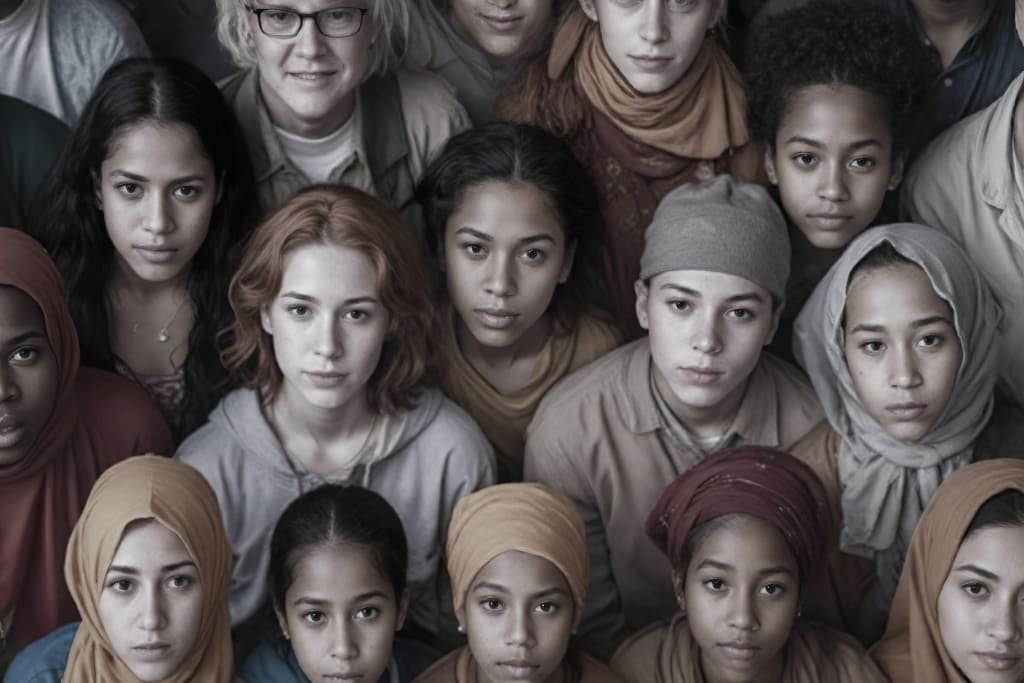
In the social exposure process news, entertainment, and advertisement messages have a significant impact on perceptions and expectations. This therefore goes to prove that the representation of groups of people, how the depicted groups are portrayed or the omission of certain groups in media all have ripple effects on the treatment of the depicted or omitted groups in society. It is thus relevant that there should be efforts toward building a richer, more complex, and more representative narrative in media.
And if in some media societies some people of a certain race, ethnic background, gender, sexual orientation, disability, or any other marginalized criterion are missing or barely represented, this gives rise to the notion that they and their voice, do not matter. They also repeat the stereotypical way of depicting these groups when they appear in media and the recurring images are hardly new to present the diversity of these groups or individuals’ essence. For instance, actors from the racial minority have been depicted in roles that are more or less stereotypical and have limited or no dimensions.
These concerns about representation become even more worrisome when one thinks about the advancement of even more polarized partisan media outlets. The representations that groups receive vary across different media platforms and certain platforms depict groups that are outside the target market as subordinate. Unemployment can expand such divisions and can foment more confusion between different groups in society.
As much as it is possible to have stereotypical, narrow, or no images it has severe repercussions. Another factor that seems to take biases deeper is when everyday audiences are fed with messages that make them believe that some people are useless or can only be hired to perform extremely restricted tasks. The use of stereotypes is thus made easier where one group is portrayed as the other in a most simplified way.
It is also these misperceptions that are very detrimental to the self-esteem, drive, and social acceptance of members within misrepresented groups themselves. This means that children listen to the messages that are relayed by the media that they consume and can accept the few body-positive images of such individuals. Stereotype threat is also discussed when the stigmatized subgroup begins to focus on the stereotype.
Given the capacity of media portrayals to re-enforce/reproduce inequality discrimination violence and social divisions in the real world, it becomes an ethical imperative and social justice issue to ensure that all media portrayals are accurate and diverse not just a question of quality.
Due to the potential for media portrayals to re-enforce/reproduce inequality discrimination violence and social divisions in the real world, it becomes an ethical and Social Justice concern whether all portrayals in media are correct and represent all groups and not merely a quality matter.
However, it continues to be necessary to eliminate inadequate or stereotyped representations of gender in the different mass media news, entertainment, and advertising to transform the population's attitudes and beliefs.
Media producers owe it, to depict all people of identity groups not by mere representation; to write dimensional characters from such groups who have different angles, professions, lifestyles, and attitudes as compared to stereotypes; to incorporate such characters naturally in the plots of the show or the movie, as leads, heroes; to cast different talent, including those of writers and producers behind the scenes to get rid of stereotype cliché where the groups can no longer
The positive depictions and portrayals across all the media forms can go a long way in eradicating the marginalization of people with differences, eradicating prejudice and discrimination where they exist in society, giving the suppressed the freedom of speaking out, bringing more diversely talented people to positions that have hitherto been offered to them based on bias, and uniting different social groups through the medium of storytelling that helps the reader see the reality
Although Black Panther and Pose set the bar for the industry as representative of change, there is a very long journey ahead to achieve it. Such parameters include and are not limited to race, gender, sexual orientation, disability status, and the combination of those parameters. Thus, what goes on behind the scenes for progressive change for diverse writers’ rooms, showrunner curation, and creative leadership are as equally a cause for cheer as an on-camera representation of diverse casts and crews.
The audience should demand Diversity from media creators and should also mark the lack of some groups; the audience should also appreciate the attempts to include Diverse representation in films, TV shows, and news. This means that the media makers must watch not only numerators and denominators of diversity but the actual substantive representation in terms of how proportionately opportunities for screen time, characterization, decision-makers, positive images, etc. are distributed.
As the need for representation rises, media makers will need to avoid moments where they are simply making token content that will fit naturally. The general public should accept new different cast and developed characters, not as ‘woke’ attempts but as the world that has been left unnoticed for so long. For change to occur more emphasis has to be placed on empathy, patience, and moral scores from all the stakeholders. The rewards that accurate representation of diversity in the media brings to society, of course, when done correctly, are far more than the effort required to carry on the struggle.
About the Creator
Maher Asaad Baker
🇸🇾 Syrian Author, Journalist, and Musician.
Keep reading
More stories from Maher Asaad Baker and writers in Humans and other communities.
The Intrinsic Power of Presence
In the timeless dance of human interaction, an ancient and inscrutable mechanism stirs within us - the capacity to formulate rapid judgments, assessments so primal and intrinsic that they occur before the vaporous mists of conscious thought can even coalesce. Within three ticking seconds, we have already rendered a profoundly consequential verdict upon the stranger before us, an indelible impression forged from the crucible of their appearance, bodily emanations, temperament, and sartorial demeanor.
By Maher Asaad Baker2 years ago in Motivation
Autonomy Is The Real Privilege
Good morning, freedom-seekers! Today we’re gonna be looking at autonomy. A strange word, I know; one many would probably look at blankly and run away from on sight. We’re gonna figure out what it actually means, consider how it’s achieved, and decipher just how deeply most of us are tangled up in dependence without realising it.
By That ‘Freedom’ Guyabout 7 hours ago in Humans




Comments
There are no comments for this story
Be the first to respond and start the conversation.