
Black Immigrants in America Who Can't Understand Issues of Race But Only Surround Themselves With White Americans
My entire time living in Ghana was filled with Ghanaians showing their ignorance on diversity of people

Saturday, 6 July 2024
By: TB Obwoge
When Black Americans flooded Ghana for their sham 'Year of Return' when Akufo-Addo decided he was going to use Black Americans to build the tourism industry in Ghana they never mention diversity. Ghana is not diverse unless you are speaking on the wealthy foreigners that come to Ghana for work, or because it was once a very cheap place to live.
The U.S. Ambassador to Ghana Virginia Palmer continues to call Ghana a diverse country, a typical white American who thinks that tribes of people who are all the same skin color makes Ghana diverse.
She often mentions that they speak over 60 plus languages in Ghana, that in her mind means diversity.
In an African country because of tribes many speak different languages that is lingustic diversity is what she means and is what she should say. There are some 48-50% of Ghanaians who are within the same ethnic group, they all however share the same race.
Despite the fact that some 17 to 18 million people speak Twi in Ghana and those from smaller tribes and Northern Ghana are often mocked and called "not real Ghanaians" by the hateful people of the country.
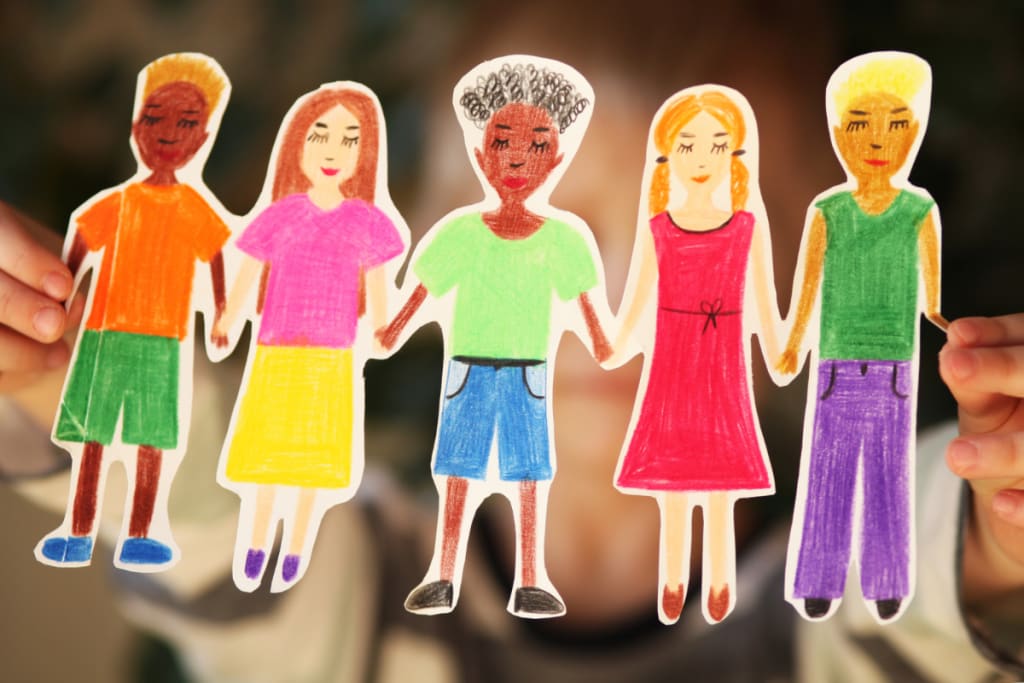
In Ghana many Ghanaians think nationalies have a race or set skin color. I can only assume because they think Ghana and all of Africa means Black people. This is why bullying, mocking, colorism and insults are common towards people who look different.
This is why I have heard such stupity in Ghana where they are calling all Americans white because they were born in the United States. Even claiming that Black Americans are actually white people.
Some claim there is no difference in culture from white Americans & Black Americans yet they are choosing to only surround themselves with white people. Shows you how much skin color matter to many Africans, especially Ghanaians.
Again colorism and race are a conversation that all of Africa needs to have, but until then they will continue to do things like call people not real Ghanaians if they aren't dark skin and speak Twi.
There is a large Lebanese community in Ghana and of course many of them have citizenship but you wouldn't think so according to Ghanaians. In the news recently a man with a Ghana card was beaten severely, they called him an white man but he wasn't.
Ghanaians also don't seem to understand that even those with a residency permit has to have a Ghana card if they want to have a normal life in Ghana. To register a Sim card, or open a bank account in Ghana you need a Ghana card.
There have been so many social media posts of Ghanaians attacking "foreigners" with a Ghana card. Not one of them seems to care that the cards will have citizen or noncitizen on them.
Again this is an example of how Ghana lacks diversity in race. If they were used to people of different skin colors and shades, there wouldn't be so many people insulting my skin color. But it was so common in Ghana it became exhausting and frustrating.
I happened to read an article about a Ghanaians first time experiencing an American independance day. It is also a testiment that a Ghanaian had no idea that the US was once colonized, who in the world doesn't know this? Well apparently a person educated in Ghana. Here are portions of that article below.

His first Independence Day in the U.S. blew his mind. It wasn't just the fireworks
On my first Fourth of July in the United States, I woke up in the morning, stretched and realized that my wife was still in bed.
I asked if she was going to work. She said, "Oh, don't you know today is July Fourth?"
I looked through our window. Just about everybody in Fernley, Nevada, the town where we lived, was on their way to Main Street with chairs, umbrellas, drinks and snacks.
I was confused. What were they going to celebrate? I was curious, too, so I got our camp chairs and headed out to join our neighbors. That's when my wife told me what was going on: "July Fourth is America's Independence Day."
I jumped out of my seat! This couldn't be true. Who could have colonized a great country like America?
I thought colonization only occurred in Africa, where I grew up. I didn't believe her.
That was in 2014 — the year I found out that America was once a British colony, just like my native Ghana.
I have had the privilege of seeing two ways of celebrating independence — and along the way have given a lot of thought to what independence really means.
Ghana's celebration: Stress and soda
In Ghana, independence was, at least for us kids, a stressful time but also a time for fun. Our independence came not that long ago – on March 6, 1957. The three weeks prior to the celebration, students at my school — and at schools across the country — would practice our marching. A drummer played the drums loudly to set the marching rhythm, and we kids would line up to start marching, repeating the words "left," "right," "benkum," "nifa," [in the local Twi language].
Teachers made sure we all raised our left and right legs at the same time so we marched in unison – and yelled at us and sometimes caned us if we didn't. This training would go on for about 3 weeks; the best student marchers were selected to represent the school in the Independence Day marching competition in the district capital, Kwame Danso.
In 2002, when I was 14, I was selected to represent my school in the march but only if I could get a school uniform. My family couldn't afford to buy me one. Thankfully, a friend lent me his. With excitement, I washed the uniform, and the evening before the march, joined my other friends on the marching team. Sharing one iron, we pressed our school uniforms. I could not sleep for the anticipation I felt.
Imagine being an immigrant in the United States of America and having no idea that it was colonized? This article made me think about how people in Ghana think and behave, then claim they are the best behaved people in the world, especially in Africa. It says a lot about his education and it is an embarassement to Ghana.
However he spoke and described the variety of people he saw and sadly I know I am assuming but his wife was more than likely not a Black woman. His experience shows how you learn from what you are around and many Black immigrants mostly those from African countries seem to want nothing to do with Black people in America.
Forever shaping his way of life and thoughts about the country, when I wrote about he several dozen Black Africans in Pennsylvania that refused to associate with Black Americans. You can read that here.
A group of Africans want nothing to do with Black Americans, they even sit with white people and discuss how much they hate them thinking this makes them look good for white Americans.
According to PEW research here is some information on Black immigrants in America;
One-in-ten Black people in the U.S. are immigrants. The number of Black immigrants living in the country reached 4.6 million in 2019, up from roughly 800,000 in 1980. This increase accounted for 19% of the growth in the overall Black population, which increased by 20 million during the same period. The Black immigrant population is projected to account for roughly a third of the U.S. Black population’s growth through 2060.
A sizable share of Black Americans have recent immigrant connections. In addition to the 12% of Black people who were born in a foreign country themselves, roughly 9% are second-generation Americans, meaning they were born in the U.S. and have at least one foreign-born parent. Combined, these two groups account for 21% of the overall Black population – comparable to the share among Americans overall, but lower than the share among Hispanics or Asian Americans and Pacific Islanders.
More than half of Black immigrants (58%) arrived in the U.S. after 2000. Roughly three-in-ten (31%) came to the U.S. between 2010 and 2019, and a little over a quarter (27%) immigrated between 2000 and 2009. Among all U.S. immigrants, by comparison, about half have immigrated to the country since 2o00, including a quarter who did so between 2010 and 2019 and another quarter who did so between 2000 and 2009.
PEW is calling these people Black Americans, while many refuse to identify with Black Americans. I once read articles from a Black woman, she was born and raised in the US. Her mother a Black American woman and her absent father a Nigerian.
She had no idea who her father was but she refused to identify as a Black American, she was raised by her mother with her mother's family and culture yet refused to identify as an African-America or Black American. In her writings she was always insulting to Black Americans and without caring she simply didn't have any interactions with Black America.
This is something that is rarely talked about and she was infuriated when I read something she had written. She claimed that Black American actors had no rights to acting as Africans. All her thoughts were negative about Black Americans and she had never in her life been to an African country.
About the Creator
IwriteMywrongs
I'm the president of a nonprofit. I've lived in 3 countries, I love to travel, take photos and help children and women around the world! One day I pray an end to Child Marriages, Rape and a start to equal Education for ALL children 🙏🏽
Keep reading
More stories from IwriteMywrongs and writers in Humans and other communities.
Protests in Kenya Shows Kenyans the Real Cousins of Black America Wish I Never Moved to Ghana
Tuesday, 25 June 2024 By: TB Obwoge I lived in Kenya and left rather abrubtly, moving to Ghana in less than 3 months after leaving Kenya. When I was in Ghana I regreted it often though I had only a few people I could count on. Most saw me an ATM machine.
By IwriteMywrongs2 years ago in Humans
5 Things to Know About Intensive Outpatient Care and How It Works
Intensive outpatient care has become an important treatment option for individuals seeking support for substance use or mental health challenges without entering residential treatment. This level of care offers structured therapy while allowing people to maintain daily responsibilities such as work, school, and family life.
By Jordan Blake5 days ago in Humans



Comments
There are no comments for this story
Be the first to respond and start the conversation.