
Beyond Visibility: The Power of True Representation in Film, Music, Politics, and Art.
Why Seeing Ourselves Authentically Matters.

Introduction: Seeing Myself in a World That Doesn’t See Me.
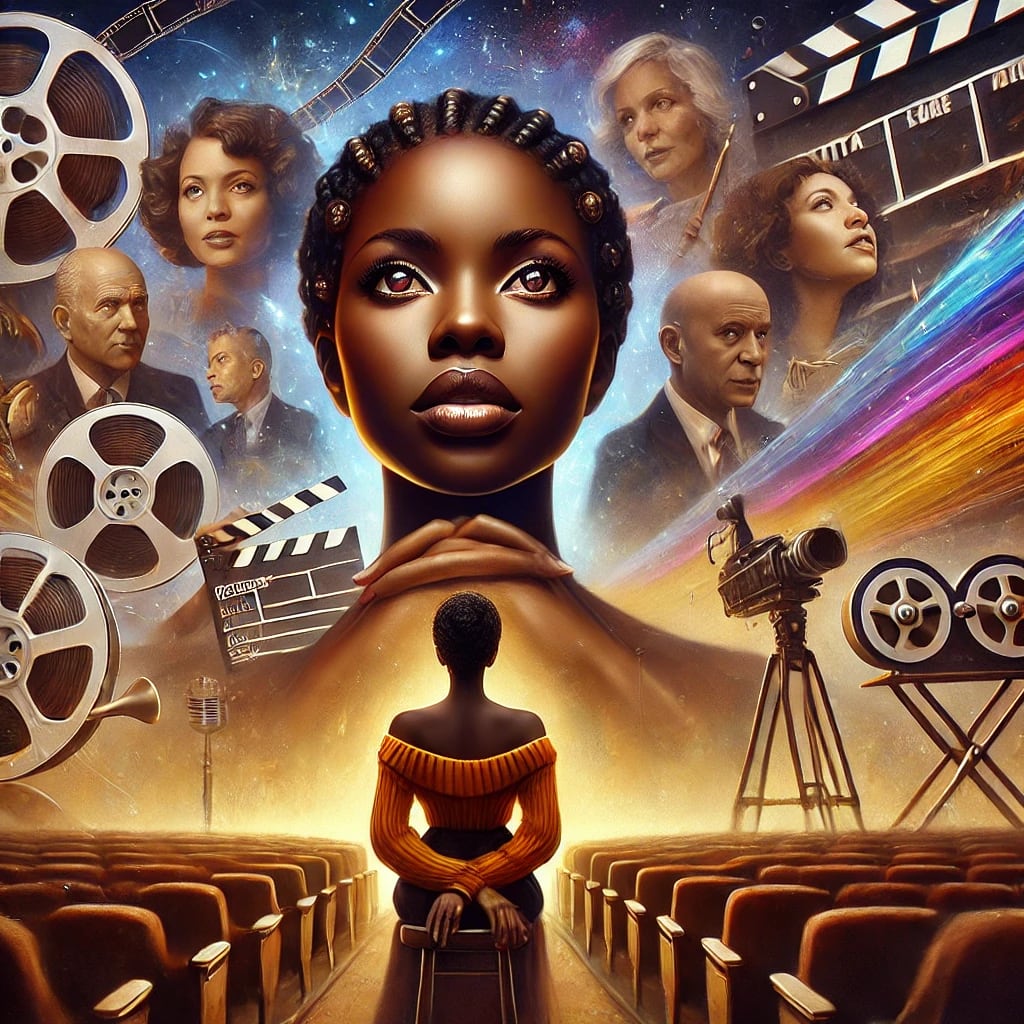
Growing up, I loved movies, music, and art. But there was always something missing—me. As a Black woman with strong African features, I rarely saw myself reflected in leading roles, album covers, or political spaces shaping the world. The women presented as desirable, powerful, or worthy of love never looked like me. And when dark-skinned Black women did appear, we were often cast in roles of struggle, strength, or servitude—rarely as soft, cherished, or central to the story.
Representation isn’t just about being visible. It’s about being valued. It shapes how we see ourselves and how the world sees us. Without it, we are forced to exist in a space where our beauty, intelligence, and worth are constantly questioned. That’s why true representation matters—not just token appearances, but real, nuanced, and intentional inclusion.
Movies: Love and Beauty Through a Narrow Lens.
Hollywood has long dictated what love, beauty, and desirability look like, and too often, that image excludes dark-skinned Black women with African features. Romantic leads are typically lighter-skinned, with Eurocentric beauty standards—small noses, loose curls, delicate features. Meanwhile, Black women who don’t fit this mold are placed on the sidelines, typecast as the "strong best friend," the "sassy sidekick," or the "angry Black woman."
This matters because media shapes perception. If Black women are only portrayed as tough, independent, and unbreakable, but never as tender, loved, and protected, what message does that send? When a generation of young Black girls grows up seeing only one version of themselves in film, they begin to internalize that love and desirability are reserved for others.
Music: Who Gets to Be the Face of Beauty?
The music industry has long benefited from Black women’s talent while pushing a narrow standard of beauty. Dark-skinned women have influenced and shaped every genre, yet those who achieve the most mainstream success often fit a specific look—light-skinned, racially ambiguous, or possessing features closer to the Eurocentric ideal.
Colorism in music is real. It determines who gets record deals, who graces magazine covers, and who is celebrated as the "face" of Black beauty. The industry often elevates a certain type of Black woman while sidelining those with darker skin, coarser hair, and broader features. But our beauty is not a trend. Our voices, skin, and hair deserve to be celebrated—not just when it’s fashionable, but always.
Politics: Representation Beyond Tokenism.
In politics, representation goes beyond just having Black faces in high places—it’s about whose voices are truly heard. When we see Black women in leadership, it challenges stereotypes and reshapes power dynamics. But too often, Black women in politics are expected to be the "saviors" without being supported.
Real representation means power with agency, not just presence. It means electing leaders who advocate for policies that uplift Black communities, protect Black women, and address systemic inequalities. It means ensuring that Black women’s voices aren’t just included in the conversation but are leading it.
Art: Reclaiming Our Image.
Historically, Black women have been painted, sculpted, and photographed—but often through the gaze of others rather than our own. Too often, our image has been distorted, either erased or exoticized. Today, more Black artists are reclaiming our narrative, creating works that honor our beauty, culture, and experiences in ways that feel true and affirming.
Supporting Black artists means supporting authentic representation. It means making sure our image isn’t just present but honored on our own terms.
Conclusion: The Right to Be Seen, The Right to Be Loved.
Representation is about more than visibility—it’s about belonging. It’s about knowing that we are worthy of being seen in all our fullness, not just as supporting characters in someone else’s story.
When we demand better representation in film, music, politics, and art, we are not just asking for inclusion. We are asking for a world that acknowledges our beauty, our complexity, and our worth without condition. Because we deserve to be seen—not just in the background, but at the center, where we have always belonged.
About the Creator
Cathy (Christine Acheini) Ben-Ameh.
https://linktr.ee/cathybenameh
Passionate blogger sharing insights on lifestyle, music and personal growth.
⭐Shortlisted on The Creative Future Writers Awards 2025.
Keep reading
More stories from Cathy (Christine Acheini) Ben-Ameh. and writers in Humans and other communities.
The Lies We Live By: Challenging the Myths We’ve Been Conditioned to Accept.
Introduction. We like to believe that the world operates on fundamental truths, but what if some of the “facts” we accept as reality are actually constructs designed for convenience, control, or even deception? Over time, many aspects of our daily lives have been shaped not by necessity or natural law but by human intervention. Two seemingly unrelated examples—orange carrots and the standard birthing position—offer a glimpse into how deeply ingrained some of these misconceptions are.
By Cathy (Christine Acheini) Ben-Ameh.11 months ago in Humans
Minnesota and Illinois Invoke the 10th Amendment in Lawsuits to Block Federal Agents in Their Cities — Here’s Why That Matters
States Push Back Against Federal Enforcement Minnesota and Illinois have launched high-profile lawsuits invoking the 10th Amendment of the US Constitution in an effort to block or limit the actions of federal agents—particularly immigration enforcement officers—operating within their cities. The legal challenges mark a significant escalation in the long-running conflict between state governments and Washington over who has the authority to enforce immigration laws and how far federal power can reach.
By Aarif Lashari4 days ago in Humans
How to Succeed at the Benson Directory®
Congratulations and welcome to the Benson Directory® employee #22391! As our newest call handler, you will have the privilege of speaking with dozens of unique and interesting people on a daily basis as well as the opportunity to earn bonuses for high performance. Contained within this handbook you will find a set of ease to follow instructions designed to help you settle in to your new role and begin paving the way to success.
By S. A. Crawford2 days ago in Fiction



Comments
There are no comments for this story
Be the first to respond and start the conversation.