
The Lies We Live By: Challenging the Myths We’ve Been Conditioned to Accept.
From Orange Carrots to Lying Down for Childbirth—How Society Shapes Our Realities.

Introduction.
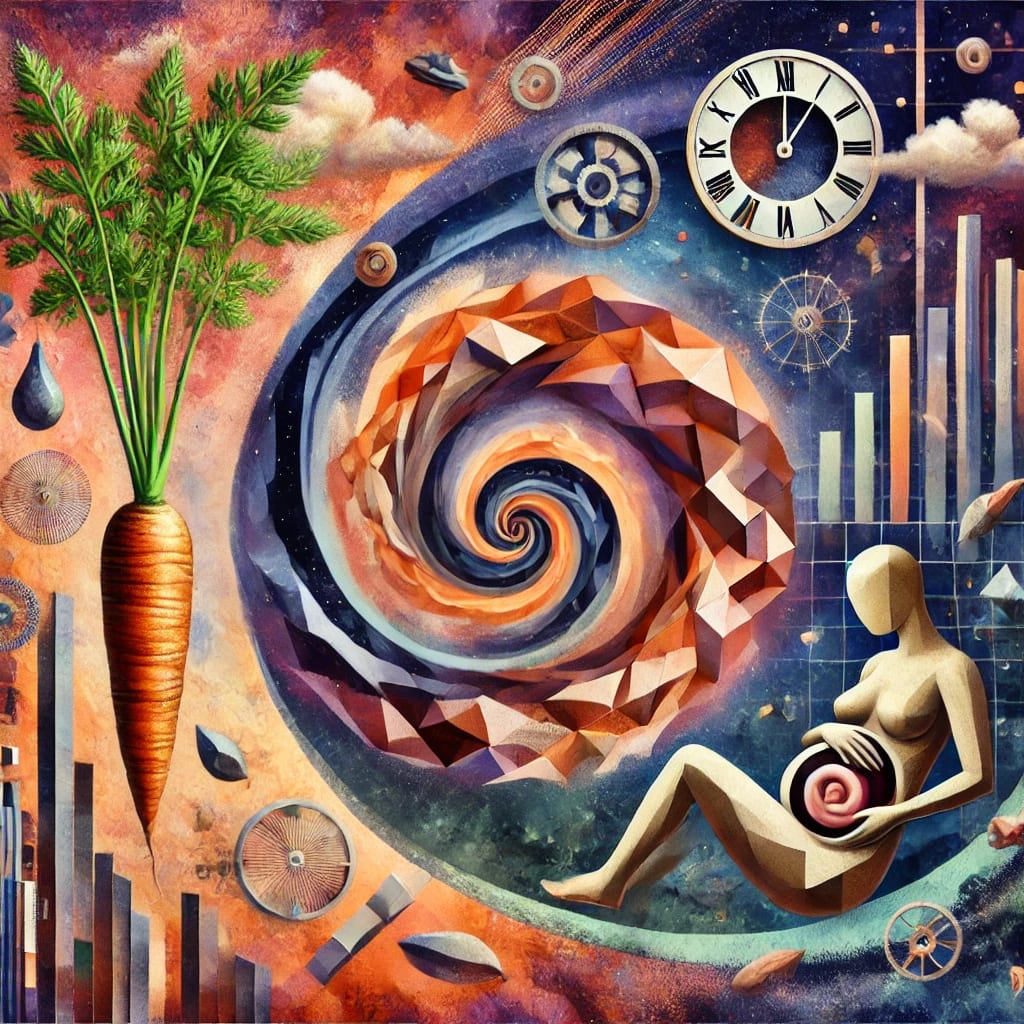
We like to believe that the world operates on fundamental truths, but what if some of the “facts” we accept as reality are actually constructs designed for convenience, control, or even deception? Over time, many aspects of our daily lives have been shaped not by necessity or natural law but by human intervention. Two seemingly unrelated examples—orange carrots and the standard birthing position—offer a glimpse into how deeply ingrained some of these misconceptions are.
The Carrot Conundrum: A Manufactured Reality.
If you ask someone to picture a carrot, they will likely envision a bright orange vegetable with a tapered shape. But carrots were not always orange. In fact, their original colors included purple, white, and yellow. The vibrant orange carrot we now associate with good vision and nutrition was actually the result of selective breeding by Dutch farmers in the 16th and 17th centuries.
Why? Some speculate it was to honor the ruling House of Orange, while others believe it was simply a result of favoring sweeter and more uniform varieties. Regardless, this shift was so effective that most people today are unaware that carrots were once anything but orange. This is a clear example of how human intervention can reshape reality, influencing not only our perceptions but also our preferences and expectations.
The Childbirth Myth: Convenience Over Nature.
For centuries, women gave birth in a variety of positions—standing, squatting, kneeling, or even on hands and knees. These positions naturally allow gravity to assist in labor, help open the pelvis, and reduce pressure on the lower back. Yet, in modern hospitals, the vast majority of women give birth lying on their backs.
This position is not the most effective for labor; rather, it became standard practice due to medical convenience. In the 17th century, King Louis XIV of France reportedly preferred to watch his mistresses give birth lying down, leading to the popularization of this position among European aristocracy. Later, as childbirth became more medicalized, doctors found it easier to control laboring women in this supine position, particularly with the rise of forceps-assisted deliveries.
Unfortunately, this practice persists despite research showing that upright positions can shorten labor, reduce the need for interventions, and decrease the risk of severe tearing. The fact that many women still believe lying down is the “right” way to give birth speaks to how deeply entrenched societal norms can become, even when they go against our own biology.
How Many Other “Truths” Are Actually Lies?
These two examples raise a broader question: What else have we been conditioned to accept without question? How many of our daily habits, cultural norms, and beliefs are simply the result of human engineering rather than natural evolution?
Consider:
The idea that breakfast is the “most important meal of the day” was largely popularized by cereal companies in the early 20th century.
The notion that humans need to drink eight glasses of water daily is not backed by scientific consensus but rather by arbitrary recommendations.
The belief that success requires a college degree is a modern construct, despite countless examples of self-made individuals who thrived without formal education.
Breaking Free from Conditioned Thinking.
Recognizing these societal constructs is the first step toward challenging them. We owe it to ourselves to question what we’ve been taught and to seek knowledge beyond what is widely accepted. Just because something is “common knowledge” does not make it an ultimate truth.
Whether it’s the color of our carrots, the way we give birth, or the way we structure our lives, we should always ask: Who benefits from this belief, and does it truly serve us? The truth is often more complex than we realize, and the power to reshape it lies in our willingness to question, learn, and evolve.
Conclusion.
The world is filled with convenient myths—some harmless, others deeply impactful. By exploring how these ideas came to be, we can better understand the forces that shape our lives and make more informed choices. The next time you see an orange carrot or hear about a woman giving birth lying down, remember that not everything we accept as “normal” is truly natural. It’s time to reclaim our narratives and redefine our truths.
Stay Connected.
If you enjoyed this content and want to explore more insights like this, consider subscribing to my page. Your support helps me continue creating meaningful content. If you feel led to, you can also leave a tip as a token of appreciation. Thank you for being part of this journey!
About the Creator
Cathy (Christine Acheini) Ben-Ameh.
https://linktr.ee/cathybenameh
Passionate blogger sharing insights on lifestyle, music and personal growth.
⭐Shortlisted on The Creative Future Writers Awards 2025.
Keep reading
More stories from Cathy (Christine Acheini) Ben-Ameh. and writers in Humans and other communities.
The Fear of Solitude: Understanding Why Being Alone Scares Us.
Imagine the last time you felt lonely. Maybe it was during a quiet evening at home, or perhaps in the middle of a crowd where everyone seemed connected except you. Loneliness is a feeling that can creep up on anyone, unexpectedly and persistently. But why do we fear it so much? What is it about being alone that stirs such anxiety within us?
By Cathy (Christine Acheini) Ben-Ameh.12 months ago in Humans



Comments
There are no comments for this story
Be the first to respond and start the conversation.