
Asher sat fingering the check. Twenty-thousand dollars was more money than he had ever made at once as a landscaper. And certainly more than he had ever made as an artist, although he hoped that might change one day. But he was wracked with guilt over whether or not to cash it. He didn’t think his Mom would have wanted him to. He knew his Dad would have told him to “go for it”. His expenses had been minor. More time than anything. It was such a strange sequence of coincidences that lead him here. He reflected on what had put the check in his hand.
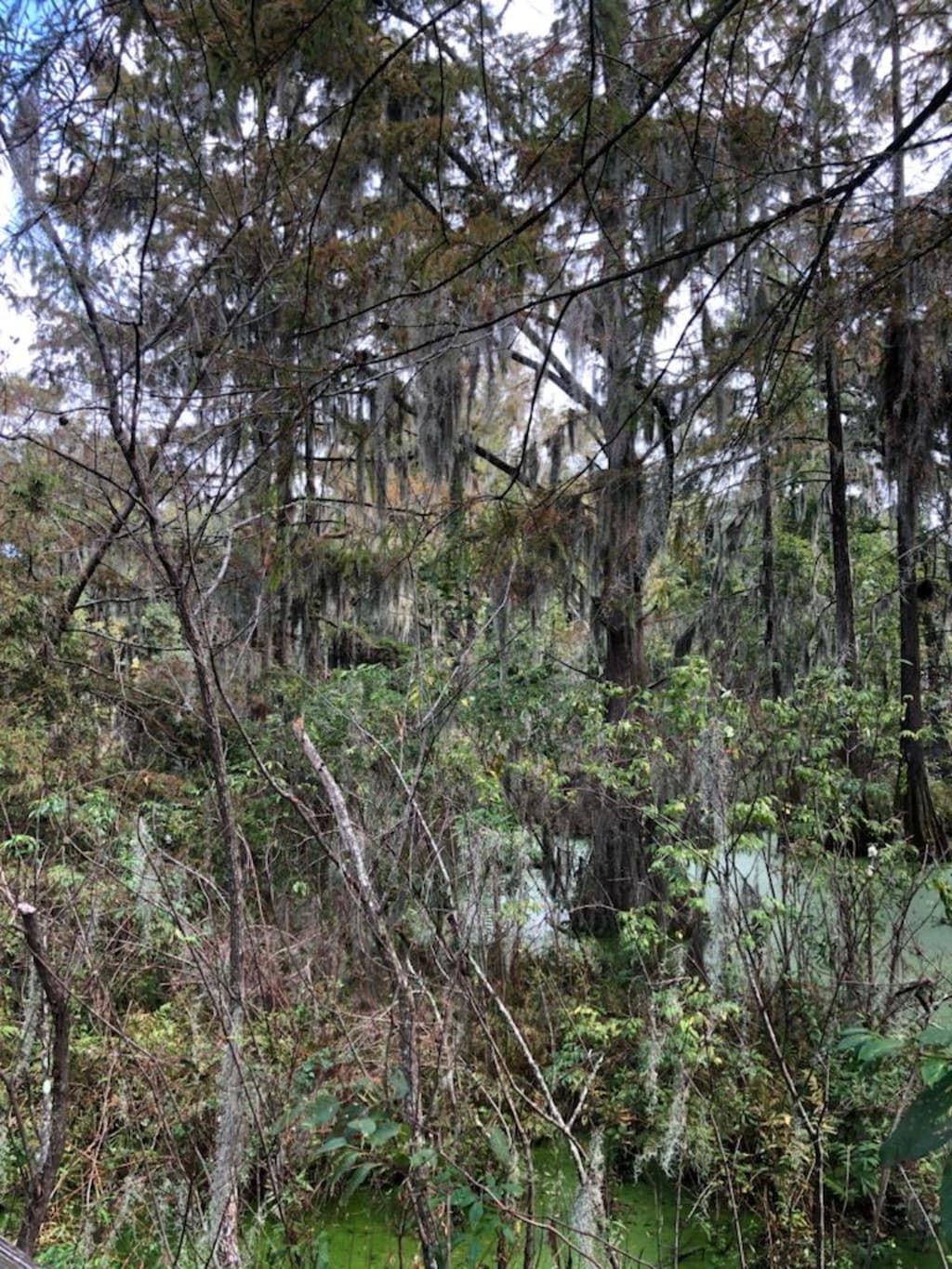
He was a practicing Jew. He had attended the same synagogue all his life. Some of his classmates thought it was funny that he was a black Jew, but they never really gave him a hard time about it. His best friend Orlando was a mixed race Jew also, and was so well liked by everyone that Asher figured he got immunity through association. He and Orlando both loved their town. Beaufort was the second oldest city in South Carolina. It was the best kind of place to grow up. They had the low country and the ocean. Asher loved to fish, to catch blue crabs, and to explore in the sand near the lighthouse. He felt as natural there as the Spanish moss that draped itself so indulgently across the landscape. He particularly loved the live oak trees. Visitors from the North were always surprised to learn that there was an evergreen oak that didn’t drop its leaves in the fall. His parents, always budget minded, used to take him to see one not too far away called: “The Angel Oak”. That single tree occupied a full acre, with massive branches that came down and snaked across the ground only to shoot up again toward the heavens.
His parents had moved to Beaufort sometime after World War 2 to make a fresh start for both of them. They had met during the war. His mother had been in a concentration camp as a young woman. Not everyone is able to discuss true atrocity, but his mother always could. She said it was important that everyone remember. That he remember. “Memory keeps us mensch”, she would say. She had remembered her grandfather when she named her son. Asher was his namesake. She had only known one set of her grandparents, and being too old to travel, they had perished in the ghetto, she was told. Her mother and father, young and healthy, were both scholars. When the Nazis came for them, they were taken to Buchenwald. There, she and her mother were separated from her father, and they never saw him again. Later, the two of them were moved to a sub-camp called Ohrdruf.
They could not be called happy, but they were grateful to have each other. They always stayed as close as they could to one another without trying to be so obvious that a guard might try and separate them out of spite. It is just the kind of thing a guard might have done. There were two, known to her, that took special pleasure in being mean. To most, you were as inconsequential as vermin. But there was one named “Hans”, and one they knew only as “Grausi”, who went out of their way to torture. The youngest girls took special pains to shy away when they were around and to not make eye contact. Her mother cautioned her against fixing her hair, and always mixed spit and dirt to apply to her cheeks so that the guards might be reminded how beneath them she was. Mother and daughter were worked beyond hard every day. But they were determined to hold on, convinced that someone would come when they learned what was happening to them behind the Reich’s facade. Her mother very nearly made it to liberation.
One day, while following the work wagon, a large stone rolled off the back of the wagon and crushed her mother’s foot. She dropped in terror beside her, trying to heave the dead weight from off the mangled appendage. Grausi cursed, and approached with a look of consternation, clearly agitated that her mother was blocking the gravel road. He lifted his rifle and shot her once in the head. Aghast and in anguish, Asher’s mother spat at the guard, only to have 4 of her upper teeth from the left side of her jaw knocked out by the butt of the gun. Not only were her teeth missing, but her jaw was broken as well, and she was certain that she had just received her own death sentence. But, two days later, on April 04, 1945, the United States 89th Infantry Division liberated the prison.
Asher, years later, would record some of her memories. “When I saw the patch on the soldier’s arms from a distance, I thought I was seeing the letter ‘SHIN’ for ‘Shaddai’. I thought they were the soldiers of God. When I was taken to the food tent, I first met your father. I had never seen a colored person before. He was so young. Only a few years older than me. He made it his personal mission to make sure I was fed, and fed slowly. Because of my broken jaw, and so I didn’t eat too much, too fast. His eyes were so warm, and so concerned. I didn’t know for a couple of days that his name was ‘Shadrach’. Somebody called him by his nickname ‘Shaddy’, and I thought that sounded close enough to ‘Shaddai’ that God must have sent him especially for me”. Asher always loved to hear about his father, having lost him while still a young man. He had died in a one-car automobile accident. Police thought he must have been dodging an animal.
Asher carried their stories with him. He painted to ease the burden when it grew too heavy. He had always admired the work of Marc Chagall, a fellow Jew, and sensed in him a kindred spirit. About 4 years ago, Asher had seen a listing for an estate sale in Charleston that advertised a lot of art supplies. When he arrived at the sale, he was surprised upon entering to see multiple black and white photos of pre-war and war-time Germany. The hollow eyes of Hitler and Goering, and the snow capped peaks of the Berchtesgaden stared back at him. The Berchtesgaden photo was slightly crooked, and impulsively he reached out to straighten it. A small, black book fell from behind the photo onto the table below. Asher picked it up and thumbed through the little book, whose pages were yellowing with age, as oblivious to the other shoppers as they were to him. “Dietrich”, “Franz”… and then he saw it. A single word that made his stomach feel like it had dropped out of him and gushed all over the floor. “Grausi”. Was that the name his mother had said? “Grausi”. And a phone number.
He wanted to throw up. Guiltily he slid the little black book into his back pocket. He bumped the checkout table hard with his hip as he made his way out the door, never buying any of the art supplies he had come for. He sat in his car trembling, staring at the page. There was a “1” in front of the phone number. The hour and a half drive home was a blur. He didn’t even realize he was driving until he was sitting beside his own mailbox. Inside, shakily, he dialed the numbers. “Your call cannot be completed as dialed”, a voice returned. He hung up and called the operator to ask if the number had been disconnected. It had not. It was a Canadian phone number and his service did not have international calling. He sat down on his couch and lifted this morning’s remaining lemonade to his lips. He grabbed for his keys and got back in his car.
At his mother’s house, Asher wasn’t sure how to start the conversation. His mother was older now, and frail. “Mom, I’m sorry to bring up the war” he started, “but I have some questions for you”. He discovered that Grausi’s fate was a mystery. She knew what happened to Hans. A week after the liberation, Dwight D. Eisenhower, Omar Bradley, and the great George Patton came to tour Ohrdruf and see the atrocities firsthand. Though battle-hardened, Patton vomited. He refused to go in to some of the buildings. The seemingly healthy prisoner who was acting as their guide was recognized by some of the other prisoners. Hans, who had been pretending he was one of the liberated, was beaten to death by the walking corpses he had tormented. But she did not know what happened to Grausi.
Asher had never seen water like Niagara Falls. He had always wanted to make the trip, but could never have dreamed he would be seeing it under such circumstances. He was surprised how pristine the Toronto side of the falls could look, while the New York side looked like a slum. He did not feel like he had the time to park, or to watch the Maid of the Mist make her curtsy. He continued on, until he was parked on a clean, quiet street in front of an unassuming house with no special adornment. He had sat there for nearly two hours, when a little, old man came out pushing a walker to get to the mailbox. He was frail, slightly hunched, with age spots on his arms. He did possess an impressive shock of snow-white hair though, thick and wavy around an otherwise plain, spectacled face. Asher took his good quality camera, something he used often to assist in his painting, and took a few photographs.
When he got back to Beaufort, Asher had the film developed and took the photographs over to his mother. “That’s him’, she said without hesitation. “Are you sure?” Asher said. “His face has never let me go”, she said, “I see it in my sleep”.
It had been 4 years since that conversation with his mother. She now lay in the cemetery next to her beloved “Shaddy”. Asher did not follow all the particulars following his discovery. He was surprised one day, to find a letter with a check enclosed for $20,000 made out to him. It was postmarked from Israel, and explained that it was a long offered bounty put up by the Stern family for information on the guard nicknamed “Grausi”. Asher could think of a great deal he could do with the money. He even debated donating it to his synagogue. When he went by there to visit the graves of his parents, Asher placed a pebble on top of each grave, and then dug a small hole out with his hand between their stones. He buried the check between them, and made a point of remembering their story. He climbed in his car, intent on landing something from the ocean that was too lovely to paint.
Eugene Evans- 2021
About the Creator
Keep reading
More stories from Eugene Evans and writers in Humans and other communities.
Autonomy Is The Real Privilege
Good morning, freedom-seekers! Today we’re gonna be looking at autonomy. A strange word, I know; one many would probably look at blankly and run away from on sight. We’re gonna figure out what it actually means, consider how it’s achieved, and decipher just how deeply most of us are tangled up in dependence without realising it.
By That ‘Freedom’ Guy3 days ago in Humans
Emotional Intimacy in the Digital Age:
Emotional Intimacy in the Digital Age: Why Connection Feels Harder Than Ever In an era of constant connectivity, emotional intimacy is quietly declining. People are more reachable than ever, yet many adults report feeling emotionally distant, misunderstood, or lonely.
By Artical Media6 days ago in Humans




Comments
There are no comments for this story
Be the first to respond and start the conversation.