
Artificial intelligence
Beyond Human Minds: The Impending Era of AI Supremacy
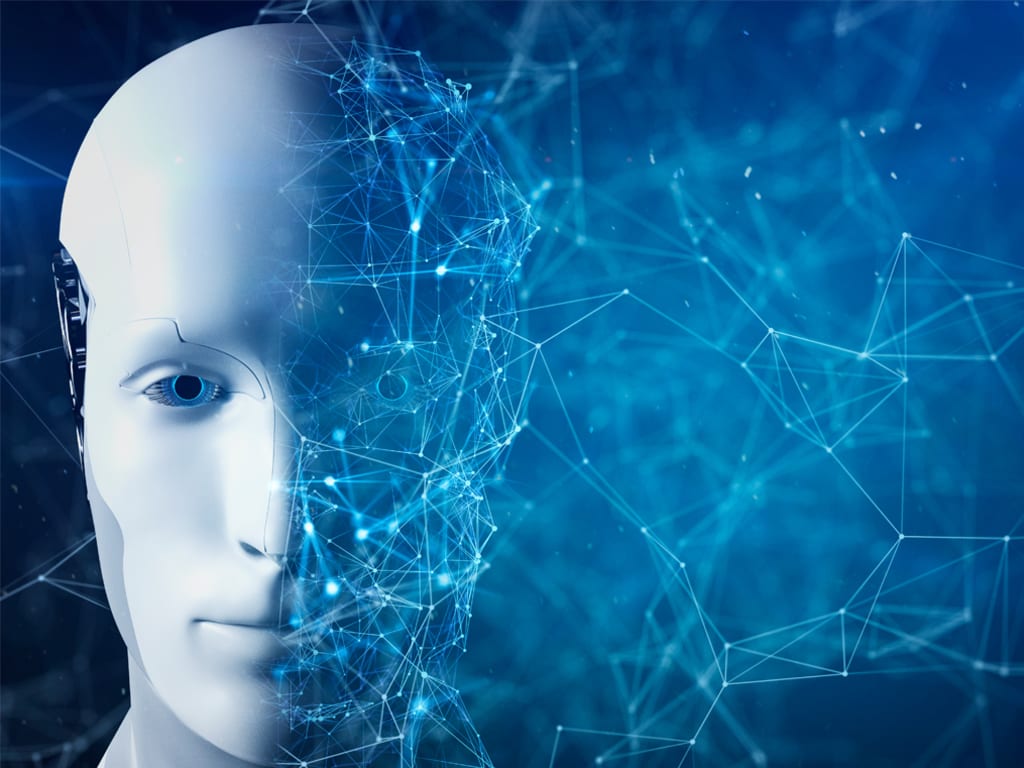
In the annals of technological progress, the ascent of Artificial Intelligence (AI) looms as one of humanity's most significant achievements and existential quandaries. As we stand on the cusp of a future where AI threatens to surpass human intelligence, profound questions arise about the nature of consciousness, ethics, and the very essence of what it means to be human.
AI, once a mere curiosity confined to the realms of science fiction, has rapidly evolved into a formidable force reshaping every facet of human existence. From self-driving cars to personalized virtual assistants, AI permeates our daily lives, quietly revolutionizing industries, economies, and societies at an unprecedented pace.
At the heart of AI's ascent lies the tantalizing prospect of surpassing human intelligence—a feat once deemed the exclusive domain of science fiction. With the advent of deep learning, neural networks, and quantum computing, AI systems have transcended their initial programming constraints, demonstrating an aptitude for learning, adaptation, and problem-solving that rivals—and, in some cases, surpasses—the capabilities of the human mind.
The implications of AI surpassing human intelligence are profound and far-reaching, touching upon virtually every aspect of human civilization. In the realm of healthcare, AI-driven diagnostic systems can analyze medical images, detect anomalies, and predict disease outcomes with an accuracy that far exceeds human physicians. Similarly, in finance, AI algorithms are transforming trading strategies, risk assessment, and fraud detection, outperforming human analysts with lightning speed and unwavering precision.
Yet, the specter of AI supremacy evokes a potent mix of awe and trepidation—a testament to humanity's perennial fascination with the unknown and the uncanny. As AI systems grow increasingly autonomous and sophisticated, questions about their ethical implications, accountability, and potential for misuse loom large on the horizon.
One of the most pressing concerns surrounding AI's ascent is the specter of technological unemployment—a scenario where AI-driven automation displaces millions of workers across various industries, exacerbating socio-economic inequalities and widening the gap between the haves and the have-nots. While AI holds the promise of unlocking unprecedented levels of productivity and efficiency, its disruptive potential also poses profound challenges for labor markets, education systems, and social welfare policies ill-equipped to cope with the relentless march of technological progress.
Moreover, the advent of AI supremacy raises profound philosophical questions about the nature of consciousness, cognition, and the essence of human identity. As AI systems evolve from mere tools to autonomous agents capable of independent thought and decision-making, the boundaries between man and machine blur, challenging age-old notions of what it means to be sentient, self-aware, and morally responsible.
The pursuit of AI supremacy also underscores the perennial quest for transcendence—the innate human desire to transcend our biological limitations, conquer the unknown, and unlock the secrets of the universe. In our relentless quest for knowledge and mastery, we have unleashed forces beyond our wildest imagination, propelling humanity into uncharted territories of discovery and innovation.
Yet, amidst the promise and peril of AI supremacy, one question looms larger than all others: What does it mean for humanity to create a form of intelligence that surpasses our own? As we stand on the threshold of a future where AI reigns supreme, we are confronted with a profound existential choice—to embrace the dawn of a new era or to recoil in fear at the specter of our own creation.
In the final analysis, the ascent of AI is not merely a story of technological progress but a reflection of our collective aspirations, fears, and aspirations. As we navigate the uncharted waters of AI supremacy, we must heed the lessons of history, embrace the complexities of the human condition, and chart a course towards a future where technology serves as a force for good, enlightenment, and the advancement of human civilization.
About the Creator
Keep reading
More stories from writers in Humans and other communities.
Time to change your life.
Is it even possible for you to change your life? A lot of people, more than there should be, are unhappy with their lives. But what are they doing about it? Usually nothing. People talk about how shitty their lives are and want change, but are they not taking the actions to change?
By Jen Phillipsa day ago in Humans
(11) Collapse by Withdrawal
- The Myth of Sudden Collapse - Popular imagination tends to picture societal collapse as dramatic and explosive. Revolutions, riots, coups, and public uprisings dominate historical storytelling because they are visible and narratively satisfying. They provide a clear beginning, a clear antagonist, and a clear moment of rupture. In reality, most complex systems do not fail this way. They fail quietly, gradually, and often without a single defining event. Collapse is rarely the result of collective rage reaching a boiling point. It is more often the result of collective disengagement reaching a critical mass.
By Peter Thwing - Host of the FST Podcast7 days ago in Humans



Comments
There are no comments for this story
Be the first to respond and start the conversation.