
Anunnaki: Ancient Gods of the Cosmos
Exploring the Enigmatic Beings from Mesopotamian Mythology
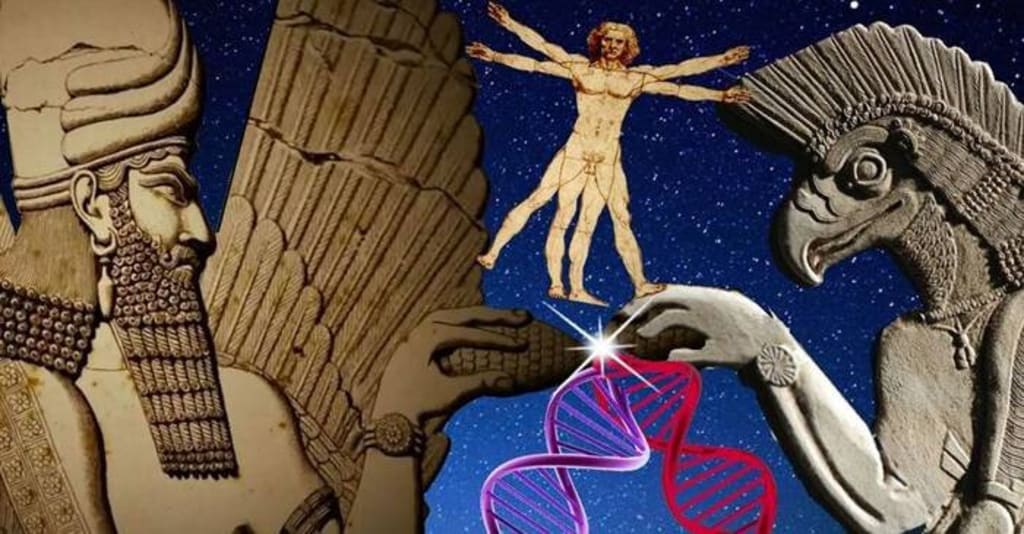
Anunnaki: Ancient Gods of the Cosmos
Introduction:
The cosmos has always been a source of wonder and awe for humanity. Across different cultures and civilizations, stories and myths have emerged to explain the mysteries of the universe. Among the most captivating and intriguing mythologies is that of the Anunnaki, ancient gods who supposedly descended from the cosmos to shape human history. In this paper, we will delve into the fascinating world of the Anunnaki, exploring their origins, influence, and the enduring impact they have had on our understanding of ancient civilizations.
Origins of the Anunnaki:
The tale of the Anunnaki finds its roots in the ancient Mesopotamian civilization, particularly in the Sumerian and Akkadian cultures. According to ancient texts such as the "Enuma Elish" and the "Atra-Hasis," the Anunnaki were created by the sky god Anu to govern different aspects of the world. They were believed to be divine beings, possessing extraordinary powers and knowledge beyond human comprehension.
Roles and Influence:
The Anunnaki pantheon consisted of numerous gods, each responsible for different domains. Enki, the god of wisdom and creation, was known as the patron of humanity, while Enlil, the god of storms and rulership, wielded immense power and influence. Other notable members included Ninhursag, the goddess of fertility and healing, and Inanna, the goddess of love and war. Each deity played a unique role in the grand tapestry of the Anunnaki mythology.
Ancient Astronaut Theory:
The legend of the Anunnaki has garnered renewed interest in recent years, primarily due to the proponents of the Ancient Astronaut Theory. This theory suggests that the Anunnaki were not just mythical deities but extraterrestrial beings who visited Earth in ancient times. It posits that these advanced beings shared their knowledge and technology with early humans, jump-starting the development of civilization. The Ancient Astronaut Theory has sparked numerous debates and speculations about the true nature and origins of the Anunnaki.
Historical Evidence:
While the existence of the Anunnaki remains a subject of debate, some argue that there are traces of their influence in ancient artifacts and texts. The ruins of ancient Mesopotamian cities, such as Babylon and Nippur, exhibit architectural sophistication and astronomical alignments that hint at advanced knowledge. Cuneiform tablets, containing intricate accounts of interactions with divine beings, offer glimpses into the mythological world of the Anunnaki.
Symbolism and Interpretations:
Beyond the literal interpretations, the myth of the Anunnaki carries symbolic significance. Some scholars view the Anunnaki as personifications of natural forces or aspects of human psychology. They represent the eternal struggle between order and chaos, wisdom and power, and the dualities of existence. The Anunnaki mythology provides a rich tapestry through which humans have sought to understand their place in the universe and grapple with existential questions.
Legacy and Cultural Impact:
The legacy of the Anunnaki extends far beyond ancient Mesopotamia. Elements of their mythology can be found in later civilizations, such as the Babylonians, Assyrians, and even echoes in Judeo-Christian narratives. Their influence on architecture, mathematics, and religious beliefs shaped the course of human history. The story of the Anunnaki continues to captivate the imaginations of scholars, researchers, and enthusiasts, fueling a quest for answers about our origins and the mysteries of the cosmos.
In conclusion, the tale of the Anunnaki, the ancient gods of the cosmos, leaves us with more questions than answers. Their enigmatic presence in Mesopotamian mythology continues to captivate and intrigue us, beckoning us to explore the realms of ancient history, archaeology, and cosmology. Whether they were revered as divine beings, interpreted as extraterrestrial visitors, or seen as symbolic representations, the legacy of the Anunnaki lives on, leaving an indelible mark on human culture and our quest for understanding.
As we gaze upon the night sky, contemplating the vastness of the universe, the story of the Anunnaki reminds us of our eternal longing to unravel the mysteries of existence. Their mythology serves as a reminder that within the realm of the unknown lies the potential for discovery, growth, and enlightenment. The Anunnaki beckon us to explore the depths of our own consciousness and to seek wisdom and understanding in our journey through life.
While the true nature and existence of the Anunnaki may remain elusive, their legacy endures as a testament to the enduring power of mythology and the human imagination. As we continue to delve into the secrets of the cosmos, may the story of the Anunnaki inspire us to embrace our curiosity, expand our horizons, and strive for a deeper understanding of the universe and our place within it.
About the Creator
Professor of Space
Hello there!
I am Radu Manuel, a passionate astronomer and expert in space exploration. From a young age, my fascination with the mysteries of the universe led me on a journey of discovery.
I aim to inspire the next generation of scientists.
Keep reading
More stories from Professor of Space and writers in Humans and other communities.
Unraveling the Mystery of the Anunnaki
Unraveling the Mystery of the Anunnaki Deep in the annals of history, a mystifying enigma awaits our exploration. It is the ancient tale of the Anunnaki, shrouded in whispers and speculation. Their existence, their origins, and their purpose continue to captivate the imaginations of scholars and seekers of truth alike. As we embark on a journey into the realms of mystery and myth, we unravel the secrets of the Anunnaki.
By Professor of Space 3 years ago in Humans



Comments
There are no comments for this story
Be the first to respond and start the conversation.