
Alaska
With an area of 1.52 million square kilometers (580,000 square miles), Alaska is the largest state in the United States, with 16 percent of the land in Alaska. Alaska is located at the northwest end of the North American continent

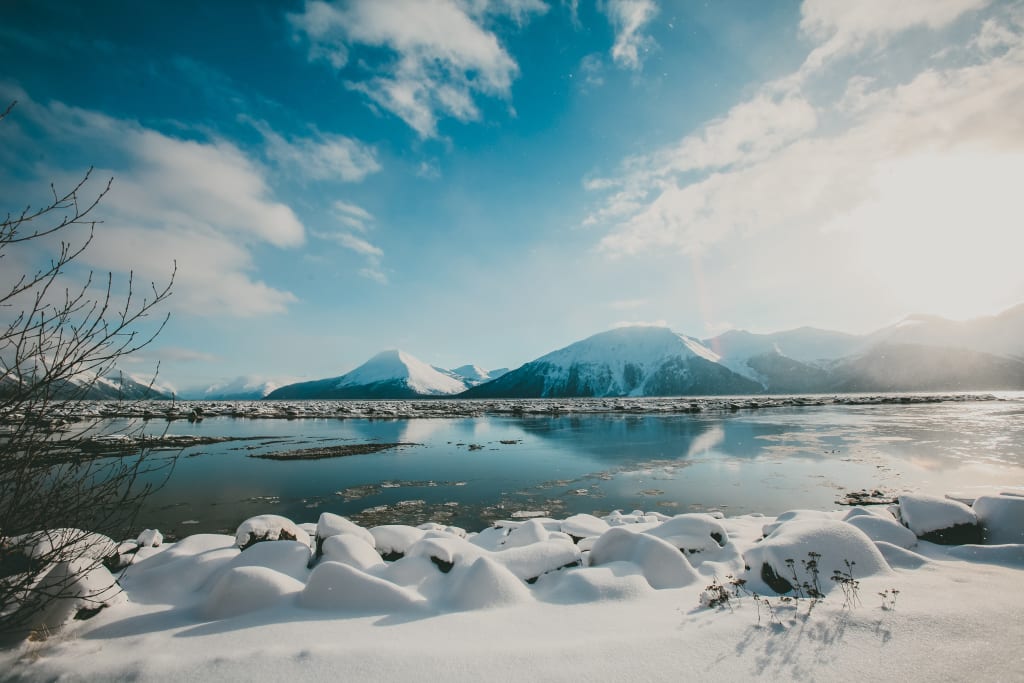
With an area of 1.52 million square kilometers (580,000 square miles), Alaska is the largest state in the United States, with 16 percent of the land in Alaska. Alaska is located at the northwest end of the North American continent, bordering Canada on the east and facing the Arctic Sea, the Bering Sea and the North Pacific Ocean on the other three sides. The west and southwest are affected by the ocean, cold and windy. In the north circle, the climate is polar and below zero all year round. With 54 million acres of national parks and 76.38 million acres of wildlife refuges, the country has the largest area among all states. About 100,000 glaciers cover about 5% of the state's land surface, about 29,000 square miles. Several of the world's most famous glaciers are concentrated in Glacier Bay and Prince William Sound, some of them larger than Switzerland; Many of these packages see 26 glaciers in a single day; The state has about 3 million lakes, 94 of which are more than 10 square miles in size.
1. Known as the "Last pure Land", Alaska is home to some of the most beautiful landscapes in the world. Forest streams meander, and snow-capped mountains zigzag. The Harding Ice Sheet, formed 10,000 years ago, spans a vast swath of south-central Alaska, and Denali National Park, home to the highest peaks in North America, is the best place for visitors to get close to nature. The dreamlike Northern lights are also one of Alaska's unique features. If you love the breathtaking beauty of this world, Alaska is the place for you.
2. Across the Arctic Circle, Alaska has about 3 million lakes, 94 of which are more than 10 square miles wide; Of the 20 high mountains in North America, 17 are in Alaska. The natural environment created the Alaskan National Park, earning it the title of "Last Virgin Land."
3. From October to March is the peak season for dog sled racing in Alaska. Regional races are held on weekends and holidays in almost every town. At the end of March, the all-Alaska Regional Finals are held.
4. Alaska has more national parks than any other country. The largest national park in the United States is wrangel SAN elias in Alaska, which covers 8 million acres (32,000 square kilometers), or six times the size of Yellowstone.
5. Denali National Park Reserve is the most famous national park in Alaska. It spans 256 kilometers of the Alaska Mountains and contains the highest peak in North America, Mount McKinley, at 6,193 meters. Denali National Park is the world's largest ecological reserve, and nature conservation is very thorough. The PARK retains the original mountains, glaciers, forests, etc., contains a large number of polar special plants and wild animals, is absolutely a perfect ecological observation place. Moreover, there is not only one road in the park, so that people can observe it more closely. Hundreds of species of plants and animals, including grizzly bears, deer, moose and caribou, live here.
Introduction:
The State of Alaska is located at the northwestern tip of the North American continent, bordered on the east by Canada, and bounded on three sides by the Arctic Ocean, the Bering Sea, and the North Pacific Ocean. The state is home to 17 of the 20 highest mountain ranges in the United States, with Mount McKinley, at 6,194 meters, the highest peak in North America. Most of the world's active glaciers are in Arizona, with the largest, the Malaspina Glacier, covering an area of 5,703 square kilometers.
State area of 1,717,854 square kilometers, accounting for one-fifth of the national area, is the largest state in the United States. The southeast and south-central regions have a temperate climate, with annual temperatures ranging from 0℃ to 15℃. Inland, the climate can reach 26℃ in summer and -15℃ in winter. The west and southwest are cold and windy due to the influence of ocean currents; The Arctic Circle has a polar climate, with temperatures below zero all year round.
About the Creator
Albert
Take you to see more of the world
Unexpected Romantic Getaway
I was talking to a guy I instantly clicked with online for about a month. We had an instant connection. The kind of you see in the movies. If you imagine those old school music videos with two people sitting on the phone all night that was us. We would spend hours talking every single day. We never ran out of topics to talk about or to joke about. Our connection was so light and effortless and it felt right. I even once called him while he was with his grandparents and made an instant connection with them as well.
By Softly Unspokenabout 20 hours ago in Humans


Comments
There are no comments for this story
Be the first to respond and start the conversation.