

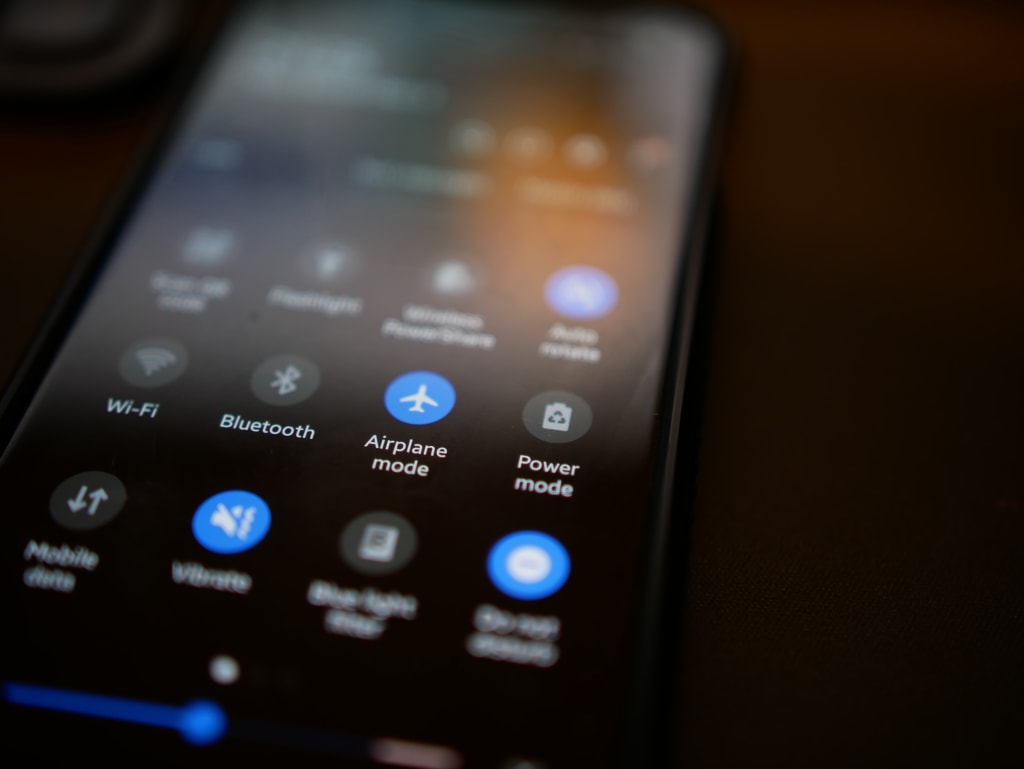
In the seemingly calm expanse of the atmosphere, there is a bustling world of invisible signals all around us. When we look beyond the visible spectrum of light, we find a universe of radio waves that are broad and strong, resembling enormous houses, and they transport a complex web of data between the sophisticated machinery of computers, GPS systems, and cell phones. If given a recognizable form, these waves would grow large enough to be observed from Jupiter in the distance. However, a whirlwind of disruption brought on by routers, satellites, and perhaps the most inconspicuous disruptors—passengers who forget to put their devices in airplane mode—obstructs this fascinating view.
Cell phones create connections within a specific band of the electromagnetic spectrum by transmitting their signals via electromagnetic waves, more specifically radio waves. To understand how these waves' various wavelengths work, think of them as a spectrum of colors. When you use your phone, it emits radio waves in order to communicate with a cell tower. Consider these waves as having the color-based representation of various signal types. The signal from your phone searches for the closest cell tower, but if it's far away, it has to exert more effort to send a strong signal. Up until it connects with the person you're calling, this signal moves from tower to tower. Due to the high volume of simultaneous calls, each phone is assigned a unique color to prevent signal interference.
However, the number of colors (or signals) we can use is limited. It's getting harder to keep signals from getting mixed up as more and more devices use them. This becomes even more difficult in an emergency when everyone is trying to use their phones at the same time.
The issue with phones on airplanes is similar. A plane's phones work incredibly hard to pick up a signal when it is high in the sky. However, occasionally, they approach a ground-based tower too closely and generate a lot of interference, making it challenging for everyone to use their phones.
Our devices, such as Wi-Fi routers and phones, generate a lot of extra signals even when we are not in the air, which can slow the internet and degrade the quality of calls. This makes us pay more for better internet, which encourages the launch of more satellites into orbit. This may start a cycle that prevents you from seeing the stars in the sky.
The situation also has an impact on space research. Telescopes that pick up radio signals from space must operate in an open area. However, the signals from mobile devices and other technology can obstruct their work, making it challenging for scientists to accurately study space.
In spite of some places, like remote areas, where the sky is less crowded with signals, the majority of the Earth is now covered in these waves. The signals travel across the world after being reflected off of satellites, allowing us to remain connected. But we also need to remember to leave space for radio telescopes, which investigate the intricate workings of the cosmos. But we must also keep in mind to make room for the radio telescopes that study the complexities of the cosmos. Because of this, keep in mind to use airplane mode whenever you are flying. It's like allowing the universe some uninterrupted time to express itself.
Thank you from the bottom of my heart to each and every reader who joined me on this reading adventure. Your time and interest are greatly appreciated, and I hope the insights you've gained broaden your understanding and ignite your interest further. Happy reading!
About the Creator
Akanksha Sinha
Crafting knowledge through words 🖋️
Keep reading
More stories from Akanksha Sinha and writers in Humans and other communities.
5 Locations Where Gravity Doesn't Seem to Exist
Imagine a world where the fundamental rules of physics appear to be in flux, where the commonplace transforms into the exceptional, and where reality flirts with delusion. Welcome to the world of mystery places, those enigmatic regions of the planet where gravity seems to take a break and where perception can be deceiving. These mysterious places have long caught people's curiosity, from the fabled Santa Cruz "Mystery Spot" to the unsettling "Bermuda Triangle." However, is there a scientific explanation hiding beneath the surface of these abnormalities, or are they actually paranormal occurrences?
By Akanksha Sinha2 years ago in Earth
Whiskey At Dusk
Guess the whiskey was more important to you in the end, wasn’t it? It was more than the well-being of your friends; more vital than showing up to the places you promised you would and could come to; more critical of a matter than fulfilling your damn responsibilities and getting the press off your back.
By Snarky Lisa4 days ago in Humans
The dark side of OF & its intentions & how to break free from lustful intent
The platform OnlyFans may seem "glamourous" but it has the dark truth behind it that's twisted the minds of it's creators along with it's audience. It markets itself as empowerment and freedom, but underneath is it carefully designed to hook both creators and consumers into an endless cycle that leaves them emptier than before. What looks like a choice is often really exploitation - of your body, your mind, and your soul.
By Bri Szumera5 days ago in Humans



Comments
There are no comments for this story
Be the first to respond and start the conversation.