
AI Isn’t Replacing Us — It’s Forcing Us to Redefine What Being Human Means
Why the real disruption of artificial intelligence isn’t technological, but existential
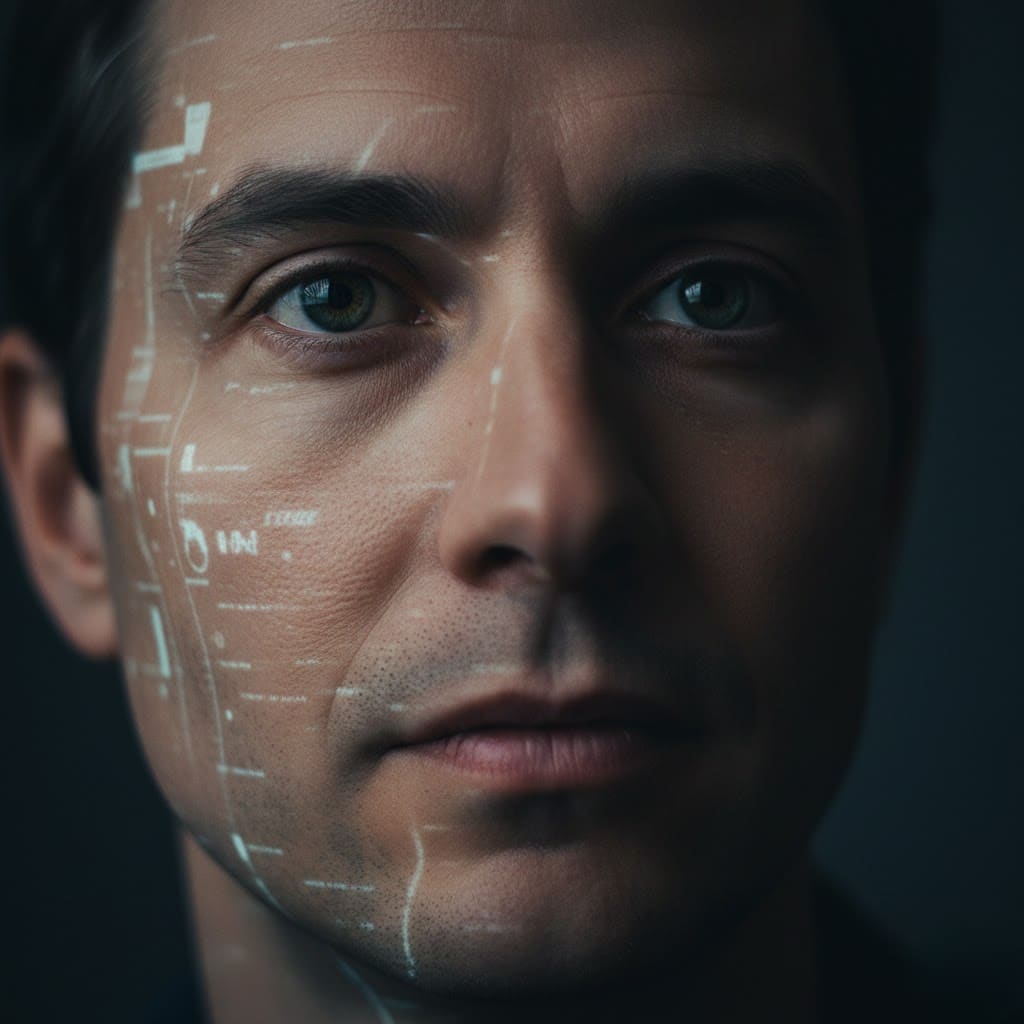
The fear surrounding artificial intelligence is almost always framed the same way: What if it replaces us?
Our jobs.
Our creativity.
Our relevance.
But beneath that fear is a quieter, more uncomfortable question—one we rarely articulate clearly:
If a machine can do what we valued about ourselves, then what exactly made us human to begin with?
AI isn’t threatening humanity by becoming better than us. It’s threatening us by exposing how narrowly we defined ourselves in the first place.
The Myth of Replacement
The idea that AI will “replace humans” assumes something critical—that our value lies primarily in efficiency, output, and measurable intelligence. For decades, we’ve equated being useful with being productive, being smart with being fast, and being valuable with being optimized.
AI excels precisely in the areas we chose to idolize.
It calculates faster.
It processes more information.
It scales without fatigue.
But these were never the deepest expressions of humanity. They were simply the easiest to measure.
What feels like replacement is actually displacement of an illusion—the illusion that intelligence alone defined us.
Intelligence Was Never the Point
AI forces a long-overdue distinction: intelligence is not understanding.
Machines recognize patterns. Humans assign meaning.
A language model can generate poetry, but it doesn’t feel resonance. An image generator can create art, but it doesn’t experience awe. AI can simulate empathy convincingly, yet it does not suffer, hope, regret, or care.
And yet, the discomfort remains.
Why?
Because we built systems that outperform us in the areas where we tied our identity—logic, memory, speed—while neglecting the qualities that cannot be automated.
Not because they’re unimportant.
But because they’re inconvenient.
Productivity as a Proxy for Worth
Much of our anxiety around AI stems from how deeply we’ve intertwined work with identity.
When someone asks, “What do you do?” they’re rarely asking about meaning. They’re asking about function.
AI destabilizes this framework.
If your value is tied to output, automation feels like erasure. If your self-worth is measured by how replaceable your labor is, then AI feels like a verdict.
But this says less about machines and more about the fragile definitions we’ve been living under.
AI didn’t invent this crisis—it revealed it.
Creativity Under a Microscope
Creativity was supposed to be safe. Sacred. Uniquely human.
Then machines started composing music, painting images, writing essays.
The reaction was immediate: If AI can create, what’s left for us?
But creativity was never about novelty alone. It was about intent, context, and risk. Humans create to communicate, to process experience, to leave traces of meaning behind.
AI creates because it is instructed to.
A machine can generate an image of grief.
Only a human knows why grief matters.
The presence of AI-generated art doesn’t diminish human creativity—it forces us to confront why we create at all.
The Mirror Effect
Perhaps the most unsettling aspect of AI is that it functions as a mirror.
It reflects our biases, our language, our priorities. It exposes how formulaic some of our “original” thinking has become. When a machine produces something indistinguishable from human output, it challenges our assumptions about uniqueness.
But mirrors don’t steal identity.
They reveal it.
If AI feels uncomfortably familiar, it’s because much of what we called “intelligence” was pattern repetition all along.
And that realization opens a door—not to replacement, but to redefinition.
What Machines Can’t Carry
AI does not carry responsibility.
It does not live with consequences.
It does not experience moral weight.
It does not bear the cost of decisions.
Humans do.
We live inside our choices. We feel regret. We wrestle with uncertainty. We care about outcomes in ways no system ever will.
Being human isn’t about being the smartest entity in the room. It’s about being the one who cares what happens next.
AI can suggest actions.
Humans decide whether they should be taken.
The Shift From Doing to Being
The age of AI demands a shift many find uncomfortable: moving from doing to being.
For generations, we were rewarded for speed, compliance, and optimization. AI outperforms us there effortlessly. But the future doesn’t belong to those who can produce the most—it belongs to those who can contextualize, judge, and assign meaning.
Skills like:
• Ethical reasoning
• Emotional intelligence
• Wisdom over information
• Discernment over data
These are not inefficiencies.
They are irreducible human traits.
AI doesn’t eliminate them—it makes them essential.
Redefining Human Value
The real question is no longer What can humans do better than machines?
It’s What should humans be responsible for?
Meaning-making.
Moral judgment.
Care.
Purpose.
AI expands our capabilities, but it also sharpens our accountability. As machines become more powerful, human intention matters more, not less.
The future isn’t human versus machine.
It’s human with responsibility in a machine-augmented world.
An Existential Invitation
AI isn’t a threat to humanity.
It’s an invitation.
An invitation to stop measuring ourselves by metrics that were never designed to capture who we are. An invitation to untangle identity from productivity. An invitation to reclaim qualities that can’t be automated.
Machines may become more intelligent.
But intelligence was never the heart of humanity.
Meaning was.
And meaning has always been—and will remain—a human responsibility.
About the Creator
Mind Meets Machine
Mind Meets Machine explores the evolving relationship between human intelligence and artificial intelligence. I write thoughtful, accessible articles on AI, technology, ethics, and the future of work—breaking down complex ideas into Reality
Keep reading
More stories from Mind Meets Machine and writers in Humans and other communities.
Talking to AI Taught Me More About My Own Mind Than Any Therapist
I didn’t start talking to artificial intelligence because I needed answers. I started because I needed to think. At first, the interaction was transactional—questions in, responses out. A tool, nothing more. But over time, something unexpected emerged. The machine wasn’t revealing new insights about the world. It was revealing patterns in me.
By Mind Meets Machine7 days ago in Humans
Time to change your life.
Is it even possible for you to change your life? A lot of people, more than there should be, are unhappy with their lives. But what are they doing about it? Usually nothing. People talk about how shitty their lives are and want change, but are they not taking the actions to change?
By Jen Phillips5 days ago in Humans
What Rage Feels Like
"Majority Fools" What's good for the goose Is good for the gander Wrap my neck in a noose From all that damn slander What is good for one Is not good for all Different lives are spun Before we even start to crawl I can talk and talk Until I'm blue in the face But your guidelines are chalk That you refuse to erase Singular in mind Solitary in view Keep on being confined By everything you thought you knew A line in the sand So easy to cross But your high demands Mean endless lives are lost But we have this system That's confounding to me It leaves so many victims So much for "land of the free" But this is what happens When you go by majority rules Peoples lives are blackened Because the majority are fools
By Hannah Alexandera day ago in Humans



Comments
There are no comments for this story
Be the first to respond and start the conversation.