
AI-Generated Art: A New Era of Creativity
AI-Generated Art

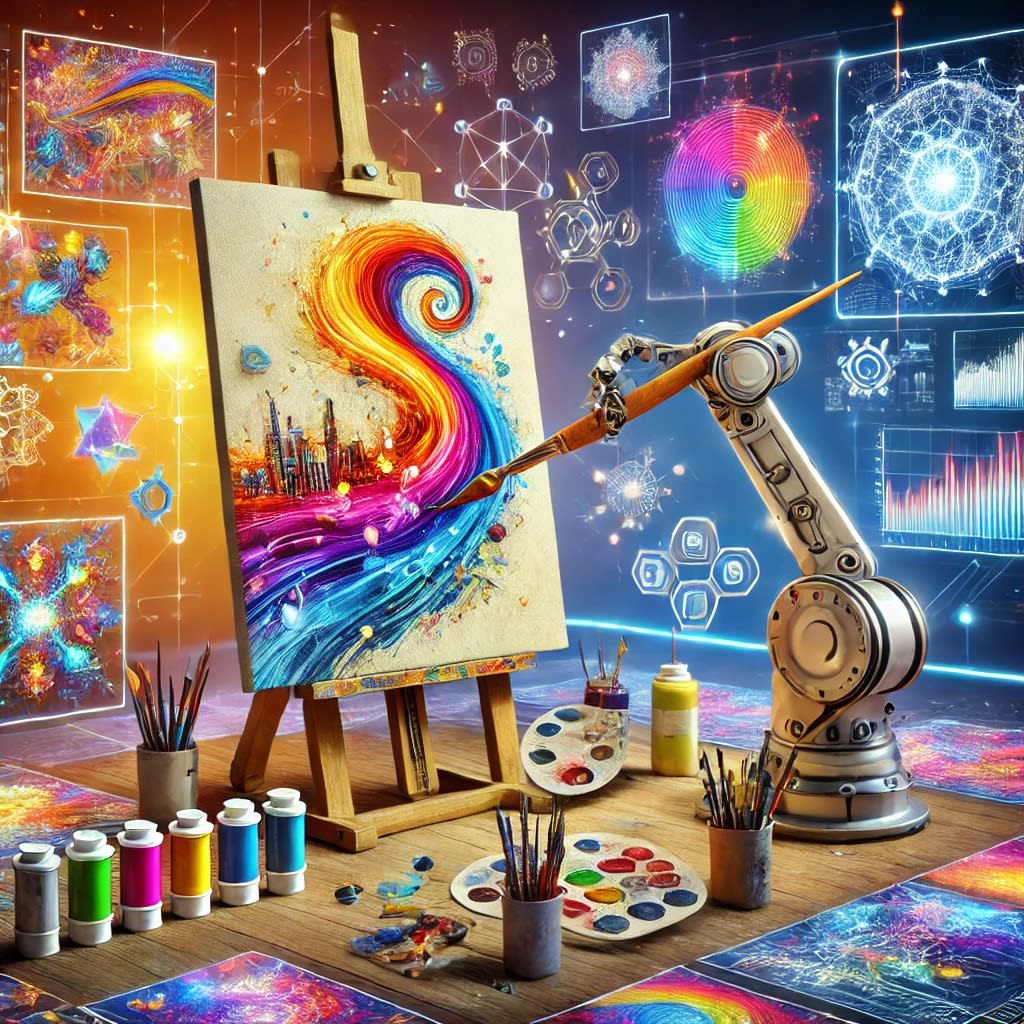
Art has always been a reflection of human creativity, emotion, and culture. From cave paintings to digital art, each era has introduced new tools and techniques. Today, we stand on the brink of another revolutionary shift: AI-generated art. Powered by machine learning algorithms, artificial intelligence is transforming how art is created, consumed, and understood, raising questions about creativity, authorship, and the role of technology in the arts.
This article delves into how AI-generated art is shaping the creative world, its implications, and whether it complements or challenges human creativity.
What is AI-Generated Art?
AI-generated art refers to artwork created with the assistance of artificial intelligence. Using algorithms trained on vast datasets of images, styles, and techniques, AI tools can produce paintings, music, poetry, and more.
Machine Learning Models: Neural networks like GANs (Generative Adversarial Networks) and diffusion models analyze patterns in existing art and generate new, original pieces.
Automation Meets Imagination: While the machine handles technical execution, humans often guide the process by choosing parameters, themes, or styles.
How AI is Transforming Creativity
1. Accessibility for All
AI tools democratize art creation. Anyone, regardless of artistic skill or background, can generate stunning visuals or music with minimal effort.
User-Friendly Platforms: Tools like DALL·E, MidJourney, and Runway allow users to create professional-grade art with a few text prompts.
Empowering Hobbyists: Artists who previously lacked technical skills can now bring their visions to life using AI.
2. Blending Styles and Breaking Boundaries
AI enables the fusion of diverse art styles, creating pieces that were previously unimaginable.
Cross-Genre Creativity: AI can combine techniques from Renaissance painting with modern abstract art or blend cultural motifs seamlessly.
Endless Inspiration: By generating limitless variations, AI helps artists explore new ideas and push creative boundaries.
3. Speed and Efficiency
Creating art through traditional methods can be time-consuming. AI dramatically reduces this time, making it possible to generate intricate designs in seconds.
Rapid Prototyping: Designers can quickly iterate on concepts, testing multiple ideas before finalizing a piece.
Time-Saving: AI assists in repetitive tasks like color matching, pattern creation, or background generation, allowing artists to focus on storytelling and originality.
Challenges and Controversies
1. Originality and Authorship
Who owns AI-generated art: the creator of the algorithm, the user who provides input, or the AI itself?
Human Contribution: Critics argue that AI lacks creativity and merely remixes existing works. Does this qualify as "art"?
Legal Issues: Copyright laws are struggling to keep up. Can AI-generated art be copyrighted, and if so, by whom?
2. Threat to Artists
Some fear that AI may replace human artists, especially in commercial industries like design, advertising, and gaming.
Job Displacement: AI tools could reduce the demand for entry-level or freelance artists.
Reimagined Roles: On the flip side, AI could enhance human creativity, allowing artists to focus on ideation while machines handle execution.
3. Ethical Concerns
AI systems rely on training data sourced from existing artworks, often without the creators' consent.
Cultural Appropriation: AI may unintentionally replicate cultural motifs without understanding their significance, leading to misuse or misrepresentation.
Bias in Data: The datasets used to train AI can reinforce stereotypes or exclude marginalized perspectives, limiting diversity in generated art.
Opportunities for Collaboration
Rather than viewing AI as a competitor, many artists embrace it as a collaborator.
1. Augmenting Human Creativity
AI serves as a powerful tool for brainstorming and exploration.
Hybrid Art Forms: Artists can integrate AI-generated elements into their traditional work, creating hybrid masterpieces.
New Mediums: AI opens doors to innovative forms of expression, such as interactive installations or generative animations.
2. Bridging Disciplines
AI-generated art is inspiring collaborations across fields, from science to fashion.
Scientific Visualization: AI helps researchers visualize complex data as artistic representations.
Fashion and Design: Designers use AI to create unique patterns, textures, and garments.
The Future of AI-Generated Art
The rise of AI in the arts is just beginning, and its potential is vast.
Customization at Scale: AI could create personalized art tailored to individual tastes, making art more accessible and relatable.
Immersive Experiences: Virtual reality (VR) and AI could merge to create fully interactive art installations.
Evolving Creativity: As AI learns from feedback, its creations will become increasingly sophisticated, challenging our understanding of creativity.
Conclusion
AI-generated art represents a paradigm shift in the creative world. While it poses challenges related to originality, ethics, and employment, it also offers unprecedented opportunities for collaboration and innovation.
At its core, art is about connection and expression. Whether crafted by human hands, AI algorithms, or a combination of both, its purpose remains the same: to inspire, provoke, and resonate with audiences. As we navigate this new era, the key lies in using AI not as a replacement for human creativity but as a catalyst for its evolution
About the Creator
Ayesha Rasheed Rajpoot
Video Editor & Content Creator || Expert in Web Content & Blog Posts || SEO Specialist || Social Media & YouTube Management || Handling Social Media Profile & Pages
Keep reading
More stories from Ayesha Rasheed Rajpoot and writers in Humans and other communities.
The Role of Neuroscience in AGI Development
Artificial General Intelligence (AGI), a system capable of human-like reasoning, learning, and decision-making across diverse tasks, has become a focal point of technological research. While computer science and engineering are at the forefront of AGI development, neuroscience plays a vital role in shaping its foundations. By studying how the human brain processes information, learns, and adapts, neuroscientists provide valuable insights for building intelligent systems that mimic human cognition.
By Ayesha Rasheed Rajpootabout a year ago in Humans
Autonomy Is The Real Privilege
Good morning, freedom-seekers! Today we’re gonna be looking at autonomy. A strange word, I know; one many would probably look at blankly and run away from on sight. We’re gonna figure out what it actually means, consider how it’s achieved, and decipher just how deeply most of us are tangled up in dependence without realising it.
By That ‘Freedom’ Guyabout 20 hours ago in Humans
You Don’t Miss Them, You Miss Who You Were With Them
I used to think I missed them. That the tight feeling in my chest, the sudden wave of nostalgia, the random memories that showed up uninvited were all proof that I still wanted them back. I thought longing meant love, and sadness meant unfinished business.
By HazelnutLattea3 days ago in Humans
Smart phones, Humans and Aliens.
WARNING. I will be tapping into one of your favorite creative tensions: The absurdity of humans worshipping their glowing rectangles as if they were tiny oracles. There’s something deliciously poetic about that contradiction, and it lends itself beautifully to an instructive proviso.
By Novel Allen5 days ago in Poets



Comments
There are no comments for this story
Be the first to respond and start the conversation.