
African American by Default
Adopting a culture in black and white America
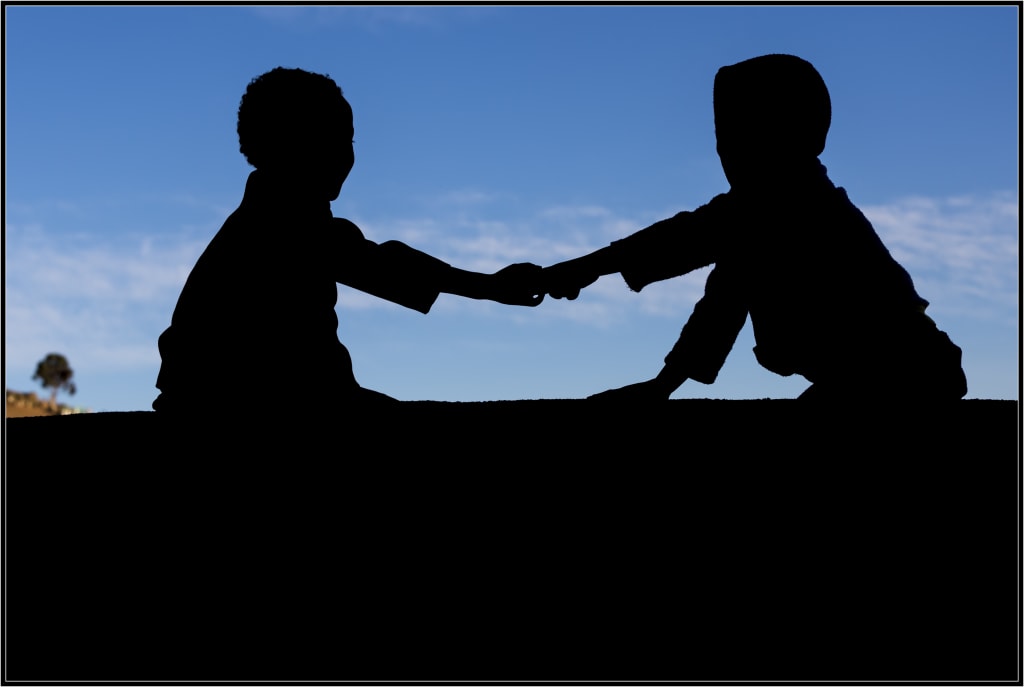
When you grow up in America, and you are African — you become African American by default. This happens when you grow up in a place, where you have Black and White people coexisting.
Let me explain what being African American by default means; it means that not all black people in America are African American but because they share a similar skin tone they often times get grouped in. They get grouped in by outsiders and sometimes they group themselves in.
African American is an ethnicity reserved for a group of people with common roots and ancestry. Many black people in the U.S. only immigrated in the past few decades. They don’t have a long history here and their lineage doesn’t trace back to this land. They may come from Nigeria, South Africa, Jamaica, Mexico, etc., etc. — You get the point. These people often are either born in the U.S. or came as young children. They often automatically and without question will be described as African American by non-black people. Most African Americans do not call people with recent history in Africa or the Caribbean — African Americans. They call them Ethiopian, Kenyan, etc.
Sometimes those American-born and raised immigrants or children of immigrants, incorrectly classify themselves as African American. I have seen them do it and I think it's usually just a careless mistake. They are just lumping themselves into one big group as they are expected to do. I have questioned them about this, their response usually shows that they didn’t really think about it.
When you move to America, you have to learn English, but there are different ways to speak English. Most likely you will pick up the way of talking to those you are around the most. You also learn English by watching TV shows and listening to music.
Our parents learned English by going to work and taking English classes. By watching the news and soap operas and also talking to their one white friend (yes they all had one white friend).
Many of us first-generation kids, spoke the African language first because that’s what was spoken at home. English was a second language even though we were born in America. We didn’t learn much English until we started going to school. Our parents' friends and most of the kids we played with were from the same place we were from.
So we end up adopting a second culture because naturally, we have to adopt a culture to fit in. Since our parents spoke English as a second language, we couldn't mimic their English — it was too broken. For me . . . for us, we had a choice between Black American or White. Most of us gravitated towards black — because we were black.
You don’t really think about these things growing up; you just do them. As a young kid, you aren't as concerned about fitting in, which comes later. I would say 2nd, 3rd, or 4th grade is when you become more conscious of race and also more conscious that you are different. You decide who you identify with, who you see yourself in.
Don’t get me wrong. I always knew I was different.
I used to think it was weird that I was from a random country in Africa. Most people never even heard of it. I wondered why I wasn’t Black or White American. Of all the things I could have been, I was born Eritrean.
America is black and white — at least it was to me. You have to pick a side and get in where you fit in. Every decision you make is racially motivated; what TV shows you will watch, the music you get excited about, what food you will eat. Being African American by default — we immersed ourselves in all things African American. Because what else are we gonna be — White? We wanted to be like the African American kids; they were cool to us. At home, we had a whole different culture. Our parents spoke to us in a different language, and our mother cooked stebhe (a spicy stew) and injera (sourdough flat bread).
We didn’t consciously adopt African American culture, we just liked it, and it was the closest thing to us. I just naturally gravitated toward the only other black girl in the class, and she became my best friend. We were instinctively following some sort of tribal order.
We didn’t have any of our people on TV, radio, or in movies.
Let me get back to what I was talking about earlier about being African American by default in places where Black and White people coexist. Growing up in these environments, it seemed you had to pick a side. You don’t fit in anywhere, but you have to choose how you identify, and it’s better to blend in than be a loner.
The Black kids came to school authentically being themselves. The White kids come to school authentically being themselves. We went to school trying to learn how to be ourselves. In all honesty, I must admit. I think a little bit of shame is associated with being different from me. I didn’t want to talk about my culture at home. I didn’t want to make a spectacle of myself. When they found out, it was because I shared it with the class in a presentation. We were all encouraged to share our cultures.
“Who do you think came here the most recently?” the teacher asked the classroom. They all pointed at me.
Most East Africans that I know, don’t have a high opinion of African Americans. They would prefer their children to adopt the white culture and surround themselves with white friends. Most would also much prefer, that their children marry white as well. This is the irony of their kids then going to school and finding more familiarity in the Black kids than the White ones. This sounds like it should be obvious, but a lot of times it's not. Many of the people that immigrated as adults, do not find African Americans familiar or at all relatable.
We gravitated towards all things black. So we knew all the movies, tv shows, jokes, and music. We knew the lines of our favorite movies because we watched them so much. We knew all the jokes because we stayed up watching BET's ComicView.
On the weekends, we went to cultural events with musicians from Eritrea. Our parents didn't like any of the rappers we liked. Our father broke all of my brother's tapes that he discovered under his mattress. My brother hid music under his mattress. Our father in a wild and disgusting display of aggression, broke them by smashing them against the wall and then pulling out the film. They didn't even belong to him, he had borrowed them from his friend down the street.
The truth is our father hated anything to do with African American culture. You can say he destroyed his music because he didn’t like the messages in it — but really, he didn’t know or care about the message; he just didn't like African Americans. Part of the reason I think my brother and him didn't end up getting along is that he was disappointed. When Junior high hit, our brother had a lot of Black friends at his new school, and he dressed like them. He chose a side, he was gone now — no longer his son.
"They won't buy Champion for me if they know black people wear it." my brother said as we were watching a music video on MTV.
My dad told me not to talk to the black kids in school. He said, "say hi and say bye, but you don't need to talk to them." I remember going to school the next day and putting his advice to use. Although it lasted briefly — I listened to him. He was an elitist and believed we East Africans were better.
When Whitney Houston won an award, and she walked up on that stage and said,
"thank you God!"
he said,
“she probably worships the devil.”
Even then, I thought it was hateful and out of place. I understood that he didn’t like her because she was a Black American. Our parents were like many other Eritrean parents. They always told us,
"you are not American. You are Eritrean."
They said we had a culture, and Americans didn’t have one. Their friends were all Eritrean — and that one white friend. They did not gravitate towards African Americans as we did. They never understood why we didn't want to be the only black kid in class. They thought white people were so nice. I grew up in a culture that didn’t really like African Americans but enjoyed the company of White people, and we couldn’t have had a more different outlook.
African American culture is heavily borrowed from — even from other Black people. We need to recognize that Black people come from many different cultures and not just call them all African American because that’s easier. I think many people don’t even ask because they think it might be offensive — it’s not offensive, just ask. For the kids, it can be confusing when you get conflicting messages at home or from your communities about who you should and shouldn't be around.
Know that you are American by nationality and ethnically something else — it is all a part of you. Your parents brought you to an ethnically diverse place, and understand that their prejudice is wrong, for the parents do not instill fear and prejudice in your kids. You brought them here to thrive, not live in fear. Friendships should be encouraged with anyone who will be a good friend.
About the Creator
Keep reading
More stories from Black River and writers in Humans and other communities.
He Saw Birds
--- He saw birds. They would awaken him from deep sleep, parrots usually or macaws - finches - toucans. Colorful birds with all their glorious colors, wanting to eat him alive. Their piercing eyes and sharp beaks ready to crack his skull like a walnut. In a terrifying swoop and glide their high-pitched screeches were mind-numbing. In that moment of climax, he would awaken in a sweat. He would awaken at the moment their face was right in front of his. The high-pitched squawk echoed throughout the forest. Their colors - magnificent and unlike colors he had ever known, unlike any colors he had ever seen here. He woke. All survival mode set into gear; his chest heaved as he breathed in heavily like the hunted animal he was. A hunted animal that made an escape. He breathed out… sighed… relief... he was not caught -this time. Then sadness, his guts turned - a heaviness in his chest, something was looming around the corner. He could taste it.
By Black River4 years ago in Fiction
Minnesota and Illinois Invoke the 10th Amendment in Lawsuits to Block Federal Agents in Their Cities — Here’s Why That Matters
States Push Back Against Federal Enforcement Minnesota and Illinois have launched high-profile lawsuits invoking the 10th Amendment of the US Constitution in an effort to block or limit the actions of federal agents—particularly immigration enforcement officers—operating within their cities. The legal challenges mark a significant escalation in the long-running conflict between state governments and Washington over who has the authority to enforce immigration laws and how far federal power can reach.
By Aarif Lasharia day ago in Humans



Comments
There are no comments for this story
Be the first to respond and start the conversation.