
A Deep Dive into Homelessness in 2025: Lives Unseen, Stories Untold
"Exploring the hidden realities, shifting demographics, and untold stories behind a growing global crisis."
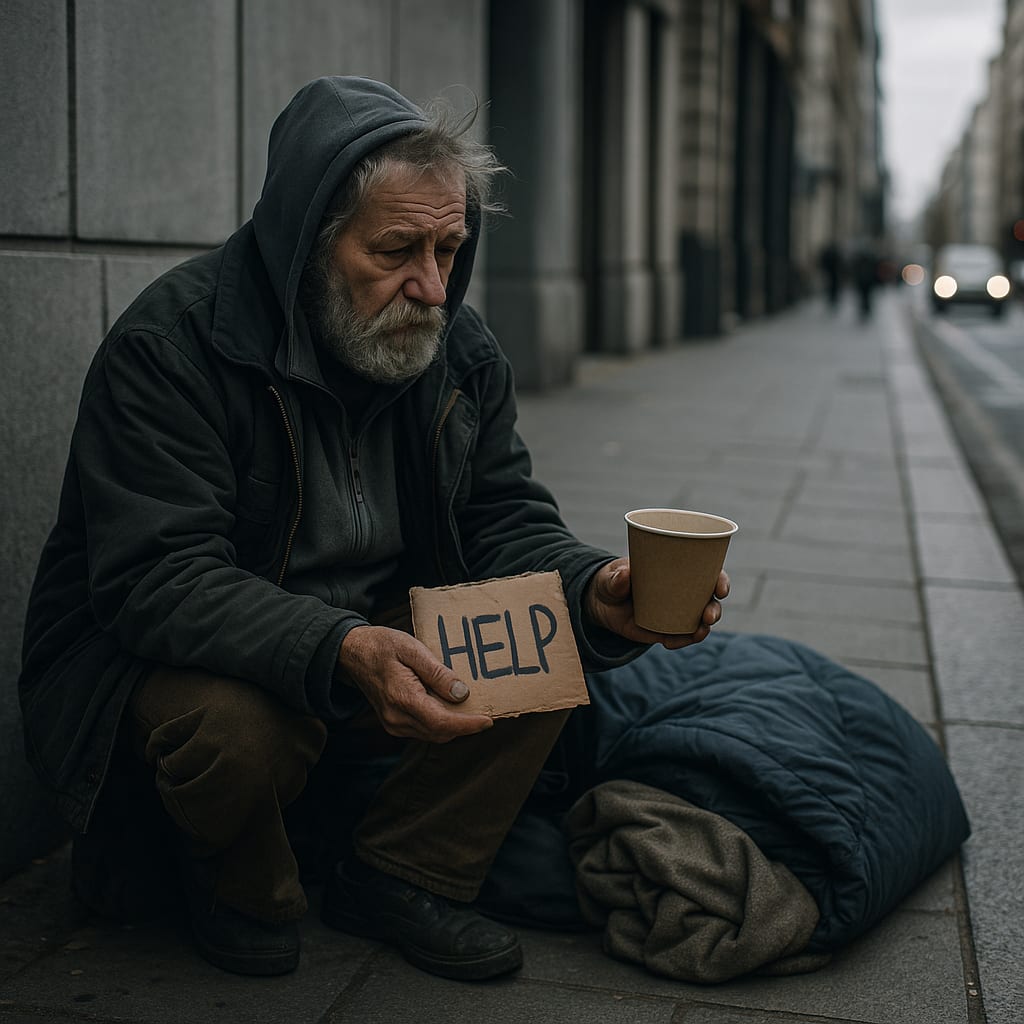
In the year 2025, the world is more digitally connected than ever before. From smart cities to AI-driven services, technology is transforming nearly every aspect of daily life. And yet, amid this wave of progress, one painful truth remains stubbornly unchanged: millions of people around the world continue to live without a place to call home.
Homelessness, in its modern form, has become both more visible and more invisible. We see the tents under bridges, the figures curled up outside subway stations, the cardboard signs at intersections. But do we really see them? Beyond the statistics and the headlines, behind the stereotypes and assumptions, are human beings with stories—stories often marked by trauma, resilience, and an unyielding will to survive.
The Changing Face of Homelessness
In 2025, homelessness is no longer confined to the image of an older man on a park bench. The demographics have shifted significantly. We now see:
Young people who aged out of foster care with no support system.
Single mothers fleeing domestic violence with their children.
Working adults holding down full-time jobs but unable to afford rising rents.
Elderly individuals who lost their homes due to medical debt or inflation.
In many urban centers like Los Angeles, London, Bangkok, and São Paulo, the housing crisis has reached critical levels. Wages haven't kept pace with the cost of living. Public housing waitlists stretch into the thousands. And mental health and addiction services remain underfunded and overburdened.
According to recent global estimates, over 150 million people are homeless worldwide, with another 1.6 billion living in inadequate shelter. That’s roughly one in five people on the planet without stable housing.
Life on the Streets in the Age of Surveillance
In the cities of 2025, surveillance cameras are everywhere. Facial recognition is used in everything from law enforcement to advertising. Yet, for many homeless individuals, this digital visibility does nothing to improve their lives. In fact, it often increases stigma and criminalization.
Instead of offering support, some governments invest in “hostile architecture”: benches with dividers to prevent sleeping, sloped doorways to discourage loitering, and public spaces designed not for inclusion, but exclusion.
Technology can help—AI can predict who is most at risk of eviction, and mobile apps can connect people to shelters. But solutions are inconsistent, and access remains a problem. What good is a smartphone app if you don’t have a phone, data, or even a place to charge it?
Stories from the Margins
Take Jenna, a 28-year-old woman living in the back of her car in Vancouver. She works at a hospital as a cleaner, earns minimum wage, and still cannot afford rent. Every night, she parks in a different lot to avoid being noticed. She showers at a local gym and keeps her uniforms neatly folded in a plastic bin in her trunk.
Or Amir, a refugee from Syria who found himself on the streets of Istanbul after his immigration case stalled. Fluent in three languages, he now sells tissues at traffic lights to survive. He hasn’t spoken to his family in over a year. His dream is simple: a door he can lock, and a job he doesn’t have to hide.
These are not outliers—they represent the growing underclass of the modern world. People who live in limbo, excluded from both systems of care and structures of power.
Resilience Amid Ruin
And yet, in the face of unimaginable hardship, there is resilience. Communities form under bridges. Street kitchens share meals. Homeless-led advocacy groups demand change in public forums. People adapt in ways that defy despair.
There is love in these spaces, too: couples who protect each other, parents reading books to their children in shelters, artists creating beauty from scraps.
But resilience is not a substitute for justice. No one should be forced to survive homelessness in order to prove their strength.
What Needs to Change
Homelessness in 2025 is not a mystery—it’s a failure of policy, not people. It is the result of:
Rising housing costs with no rent control
Stagnant wages and job insecurity
Mental health crises without proper care
Broken foster care and prison re-entry systems
A societal tendency to look away
Solving homelessness requires more than short-term fixes. It demands a cultural shift—one that replaces pity with dignity, charity with equity, and band-aids with structural reform.
Final Reflection: Seeing the Unseen
To walk past someone sleeping on a bench and think, “That could never be me,” is a luxury of stability. In truth, most people are just one or two disasters away from housing insecurity. A lost job. A medical emergency. A death in the family.
In 2025, as our world becomes smarter, faster, and more connected, we must not forget those left behind. Their lives are not mistakes. Their stories are not shameful. They are a reflection of us all.
It’s time we stopped looking away—and started looking closer.
About the Creator
kritsanaphon
"A storyteller who dives deep into news, technology, and global cultures, sharing fresh perspectives you might never have seen before. Enjoy easy-to-read, insightful content with me in every article!"
Keep reading
More stories from kritsanaphon and writers in Humans and other communities.
The Quiet Power of Happiness: Why Joy Is More Accessible Than We Think
In a world obsessed with productivity, comparison, and success, happiness often feels like a distant reward—something we’ll finally reach when we land the job, buy the house, meet the right partner, or check off every item on a long list of achievements. But what if happiness isn’t a prize to be earned at the finish line, but rather a quiet, everyday companion we’ve simply forgotten how to notice?
By kritsanaphon7 months ago in Motivation
Why Kundalini Activation Changes Relationships Fast.
Kundalini activation is a profound spiritual process in which dormant energy at the base of the spine rises through the chakras, triggering heightened awareness, emotional shifts, and deep transformation. One of the most noticeable effects of this energy is the rapid change it brings to personal relationships. Friends, family, romantic partners, and colleagues often notice a difference, sometimes before the individual undergoing the awakening fully understands it themselves.
By Wilson Igbasi6 days ago in Humans
Ludacris and Nelly draw backlash over bookings at MAGA-coded music festival
Ludacris and Nelly headlining a mostly right-wing event is good for them. It’s also great for the genre of hip hop. The two rap veterans have showcased their talents on other stages. Why can’t they perform for mostly MAGA folks and grab that bag?
By Skyler Saunders3 days ago in Beat


Comments (1)
The housing crisis in 2025 is rough. High costs, lack of support. We need real solutions, not just more surveillance.