
(2) From Stake to Abstraction
How Representation Was Detached from Obligation and Why Incentives Inverted


- The Original Logic of Representation -
For most of human political history, representation was not conceived as a mechanism for expressing individual preference or personal identity. It was understood as an extension of responsibility. Political participation flowed to those who bore the material risks of maintaining the community, because those risks imposed discipline on decision making. To have a voice in governance meant being exposed to the consequences of governance. That exposure included taxation, compulsory service, property seizure, legal punishment, and, in many cases, the obligation to physically defend the community. Representation was therefore not grounded in abstract equality, but in the practical need to align authority with liability so that decisions would remain tethered to reality rather than sentiment or impulse. The system did not assume wisdom or virtue. It assumed self-interest and constrained it by consequence.
This is why early political systems often treated the household rather than the individual as the unit of representation. The household was the primary economic, social, and survival structure. It pooled labor, absorbed shocks, raised children, managed resources, paid taxes, and endured the outcomes of political decisions collectively. Representation flowed to the person legally accountable for that unit, not because others lacked opinions or influence, but because the system required a clear locus of enforceable responsibility. Authority had to rest somewhere the law could reach. The household model forced internal negotiation before political demands reached the state, filtering impulse through shared obligation and long-term consequence.
- Why Voting Was Not Originally a Sex Issue -
Modern discourse often reframes early suffrage systems as primarily motivated by exclusion based on sex. That interpretation obscures the actual operating logic of those systems. The decisive factor was not sex itself, but enforceability. Political authority followed those whom the system could compel, punish, and hold accountable. Men were not granted representation because they were believed to be morally superior, inherently wiser, or more deserving of dignity. They were granted it because they were the ones subject to conscription, imprisonment, physical punishment, and direct legal liability. The system was built around coercive reality, not moral aspiration.
This distinction matters because it clarifies what actually changed when suffrage expanded. The expansion of voting rights did not merely broaden participation. It fundamentally redefined what voting meant. Representation was transformed from a function of obligation into an expression of entitlement. The vote ceased to be an extension of liability and became a symbolic assertion of preference. That philosophical shift altered incentives at every level of governance. It did not simply add voices. It removed structural restraint. The consequences of that removal are still unfolding.
- The Transition from Household to Individual as Political Unit -
The most consequential transformation was not who was allowed to vote, but what constituted a vote. When the political unit shifted from the household to the individual, representation multiplied without a corresponding multiplication of responsibility. A single family went from one vote tied to shared risk and accountability to multiple votes tied to individual preference, each insulated from the full cost of collective decisions. This fragmentation dissolved the internal constraint that had previously disciplined political demands before they reached the state.
As a result, the state increasingly became the primary mediator of individual claims rather than the arbiter between organized social units. Authority moved upward as responsibility moved outward. Dependency replaced negotiation. When individuals could appeal directly to centralized power without first reconciling their demands with shared obligation, political incentives changed. Emotional appeal became more effective than cost accounting. Short-term benefit displaced long-term stability. Promises no longer required clear identification of who would bear the burden if they failed.
- How Obligation Was Quietly Removed While Power Expanded -
As representation expanded, obligation did not expand with it. Military service became selective and increasingly disconnected from political influence. Economic risk was absorbed by centralized institutions, financial systems, and bureaucratic buffers rather than borne directly by decision makers. Enforcement became uneven, discretionary, and negotiable for those with sufficient status or resources. At the same time, the scope of political decision making grew dramatically, reaching deeper into economic life, social organization, and private behavior.
This produced a structural imbalance. More people gained influence over decisions whose costs they would never personally experience, while those who exercised disproportionate power over policy increasingly insulated themselves from its consequences. Authority expanded both upward and outward, while accountability narrowed and flowed downward. This was not the result of malice or conspiracy. It was the predictable outcome of a system that removed constraint without replacing it with enforceable responsibility.
- Why This Shift Changed the Nature of Politics Itself -
Once representation was detached from obligation, politics necessarily shifted from management to persuasion. The goal was no longer to balance tradeoffs under constraint, but to mobilize sentiment under abstraction. Fear, safety, and moral urgency became dominant tools because they bypassed accountability and compressed decision making. When no one is personally liable for failure, proof becomes optional. Mechanism becomes secondary to intention. Responsibility becomes collective and therefore dissolves.
This is why modern political discourse is saturated with catastrophic framing and emotional urgency while remaining vague about implementation, cost, and long-term consequence. In earlier systems, catastrophic decisions endangered the decision maker. In modern systems, they endanger the public while rewarding those who promise protection from the very risks they amplify. The structure selects for those most adept at narrative rather than those most capable of restraint.
- Why This Was Predictable, Not Accidental -
None of this requires bad actors, secret coordination, or moral decay. It follows directly from incentive design. When representation expands without corresponding obligation, emotional appeal outcompetes discipline. When enforcement becomes unequal, power consolidates. When consequences are delayed, diffused, or externalized, exploitation becomes rational. Systems do not drift randomly. They move in the direction their incentives point.
This does not imply that earlier systems were just, humane, or ideal. It means they were constrained in ways modern systems are not. Removing constraint without replacing it with accountability guarantees instability. History demonstrates this repeatedly across cultures, technologies, and political forms. The failure is not expansion itself. It is expansion without redesign.
- What This Means for the Present -
Understanding this shift clarifies why modern politics feels unmoored from reality. It explains why promises multiply while outcomes stagnate, why outrage cycles repeat without resolution, and why trust erodes regardless of electoral outcomes. People are not disengaged because they are apathetic. They are disengaged because participation no longer feels causally connected to results.
This recognition is not nostalgia and not reaction. It is diagnostic clarity. Until representation is meaningfully reattached to responsibility in some form, participation will continue to feel symbolic rather than substantive, and politics will continue to reward those most skilled at manipulation rather than governance.
- From Abstraction Back to Accountability -
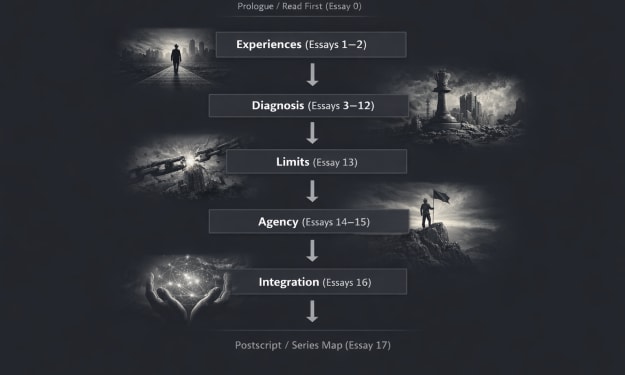
If the first essay was about learning to see the system, this essay identifies the moment its operating logic changed. Representation divorced from obligation did not produce freedom. It produced abstraction. Abstraction made manipulation easier, enforcement uneven, and responsibility elusive. The system did not become more humane. It became less grounded.
The question moving forward is not whether participation should exist. It is whether participation can be structured in a way that restores consequence, coherence, and legitimacy. That question cannot be answered without understanding how abstraction replaced stake. And now, that path is visible.
About the Creator
Peter Thwing - Host of the FST Podcast
Peter unites intellect, wisdom, curiosity, and empathy —
Writing at the crossroads of faith, philosophy, and freedom —
Confronting confusion with clarity —
Guiding readers toward courage, conviction, and renewal —
With love, grace, and truth.
Keep reading
More stories from Peter Thwing - Host of the FST Podcast and writers in Humans and other communities.
(1) Seeing the System Clearly
- The Shared Feeling No One Can Quite Explain - Most people do not need to be convinced that something is wrong. They feel it in rising costs that never seem to stabilize, in rules that change without explanation, in institutions that demand compliance but no longer command trust, and in a political process that feels permanently hostile yet strangely ineffective. These experiences are not isolated. They are widespread, persistent, and remarkably consistent across demographics, ideologies, and personal circumstances. What differs is not the feeling, but the explanation people are given for it.
By Peter Thwing - Host of the FST Podcast2 months ago in Humans
My First Time Skiing and I Got Lost, Alone, in the French Alps
Looking back, I can trace some of my life’s biggest adventures to a simple action from my sister. She’d introduced me to Tommy (a very long time ago), a colleague of hers, who had overshared his penchant for Italian-looking women, and I ticked that box.
By Chantal Christie Weissabout 4 hours ago in Humans
Sonia Beeksma: Biography, Age, Husband, Children, Career & More
Sonia Beeksma is a celebrated Canadian television broadcaster, entertainment reporter, and former weather anchor known for her vibrant on-screen personality and sharp storytelling. From her early life in India to becoming one of Canada’s most recognized media figures, Sonia’s journey is nothing short of inspiring.
By Enoch Sagini7 days ago in Humans



Comments
There are no comments for this story
Be the first to respond and start the conversation.