
World War I: The Great War That Redrew the World
How a Single Assassination Ignited a Global Conflict and Changed History Forever
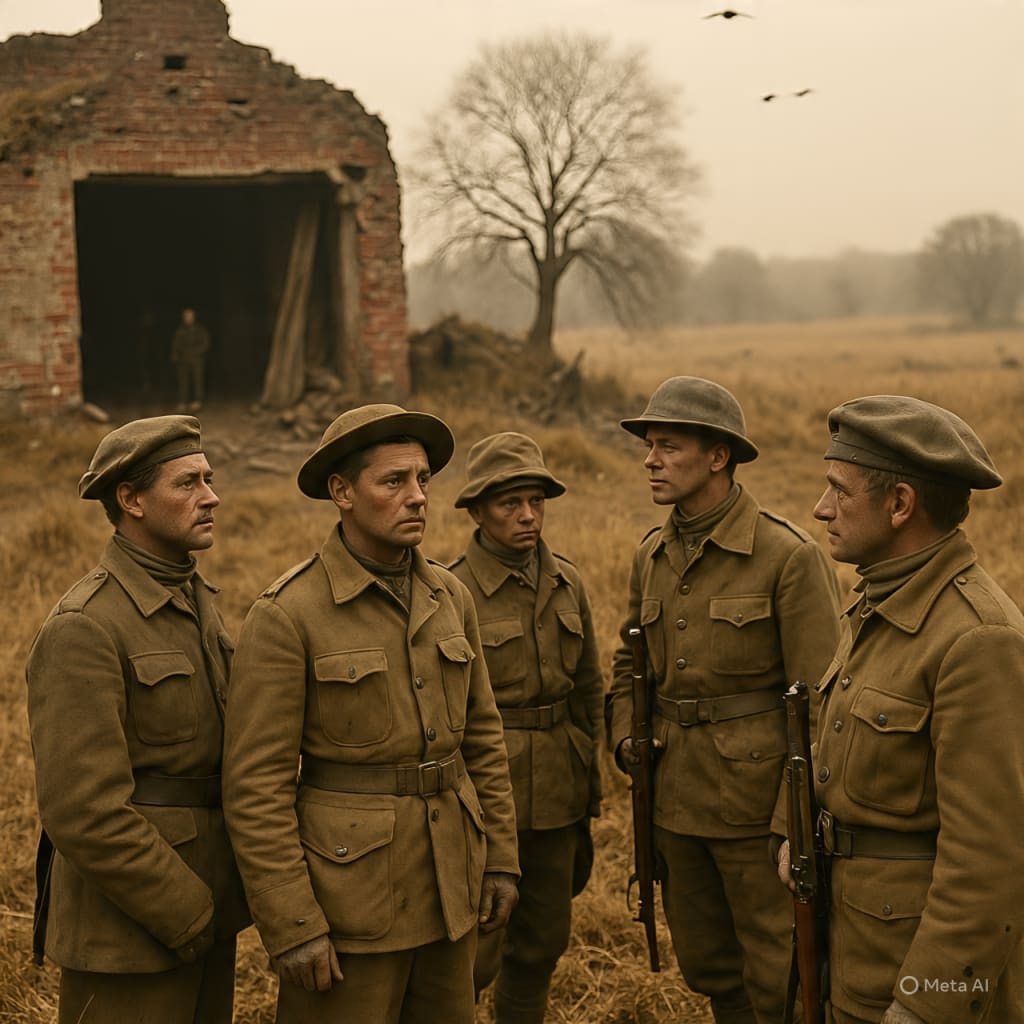
World War I, often called the Great War, was unlike any conflict the world had ever seen before. Beginning in 1914 and lasting until 1918, it involved the major powers of the world and forever altered the political, social, and cultural landscape of the 20th century. The war’s causes were complex, but the spark that ignited this devastating conflict was a single, tragic event — the assassination of Archduke Franz Ferdinand of Austria-Hungary. What followed was a brutal, global struggle that would lead to the collapse of empires, the birth of new nations, and lay the groundwork for the second great war just decades later.
The Web of Alliances and Rising Tensions
Europe at the start of the 20th century was a continent bristling with tension. Powerful empires — the Austro-Hungarian, German, Russian, and Ottoman Empires — vied for influence and territory. Nationalism, imperial ambitions, and military build-ups created an unstable environment. Countries formed complicated alliances designed to protect each other if war broke out. Two major groups had emerged by 1914:
The Allied Powers, led by France, the United Kingdom, and Russia.
The Central Powers, led by Germany, Austria-Hungary, and the Ottoman Empire.
Italy, initially neutral, would later join the Allies, while the United States remained neutral until 1917.
The Spark: Assassination of Archduke Franz Ferdinand
On June 28, 1914, Archduke Franz Ferdinand, heir to the Austro-Hungarian throne, was assassinated in Sarajevo by Gavrilo Princip, a Bosnian Serb nationalist. This single act sent shockwaves across Europe. Austria-Hungary, blaming Serbia, issued an ultimatum with harsh demands. When Serbia’s response failed to satisfy Austria-Hungary, war was declared. Due to the tangled system of alliances, what might have been a localized conflict escalated rapidly.
Within weeks, Germany declared war on Russia and France, and Britain declared war on Germany. The world was at war.
The Horrors of Trench Warfare
The Western Front — stretching across Belgium and northern France — soon turned into a deadly stalemate. Both sides dug in, creating a vast network of trenches that became home to millions of soldiers. The conditions were horrific: mud, rats, disease, constant shelling, and the ever-present threat of death. Battles such as the Somme and Verdun epitomized the brutality, with hundreds of thousands of casualties on both sides for gains of mere miles.
Technology and the Changing Face of War
World War I was the first “modern” war, using advanced technology that increased the scale of destruction:
Machine guns made mass infantry charges deadly.
Poison gas, introduced by the Germans, caused agonizing injuries.
Tanks debuted to try breaking the trench stalemate.
Airplanes were used for reconnaissance and combat.
Submarines (U-boats) threatened naval dominance and supply lines.
These innovations changed warfare forever but came at an enormous human cost.
The Eastern Front and Other Theaters
While the Western Front grabbed much attention, fierce fighting also occurred in Eastern Europe, where Russia faced off against Germany and Austria-Hungary. The Russian army suffered devastating losses, and by 1917, internal unrest led to the Russian Revolution and Russia’s withdrawal from the war.
In the Middle East, the Ottoman Empire fought the Allies, with battles like Gallipoli becoming legendary for courage and sacrifice.
The United States Enters the War
Initially, the United States stayed neutral, eager to avoid European conflicts. However, unrestricted submarine warfare by Germany, which sank civilian ships including those with American passengers, and the revelation of the Zimmerman Telegram — in which Germany encouraged Mexico to attack the U.S. — pushed America to join the Allies in 1917.
American involvement provided a critical boost in manpower and resources, helping to tip the balance.
The War Ends and Its Aftermath
By late 1918, the Central Powers were exhausted. Germany faced economic hardship, food shortages, and growing unrest at home. Allied offensives pushed the German forces back, and on November 11, 1918, an armistice was signed, bringing an end to the fighting.
The Treaty of Versailles, signed in 1919, formally ended the war but imposed harsh penalties on Germany, including massive reparations, territorial losses, and military restrictions. These terms sowed seeds of resentment and economic hardship, setting the stage for World War II.
The Legacy of World War I
World War I was a turning point in history. It led to the collapse of several empires — Austro-Hungarian, Ottoman, Russian, and German — and redrew borders across Europe and the Middle East. New countries emerged, and nationalist movements gained momentum.
The human cost was staggering — more than 16 million deaths and millions more wounded. Societies grappled with grief and the psychological scars of war, while veterans returned to a world forever changed.
The war also spurred social and political changes, including shifts in gender roles as women took on new roles during the conflict.
Conclusion: Remembering the Great War
World War I’s profound impact is still felt today. It was a conflict that reshaped nations and defined the modern era. The lessons of the Great War — the devastating cost of nationalism, the dangers of entangled alliances, and the horrors of modern warfare — continue to remind us of the importance of peace and diplomacy.
About the Creator
Keep reading
More stories from Ismail khan and writers in Horror and other communities.
: The Man Behind the Icon: Che Guevara’s Unfinished Revolution
On a warm June morning in 1928, in the city of Rosario, Argentina, a boy named Ernesto Guevara de la Serna was born. No one could have guessed that this boy — later known simply as “Che” — would grow into one of the most recognizable figures of the 20th century. His life would become a tapestry woven from threads of idealism, armed struggle, and an unyielding quest to challenge the world’s injustices.
By Ismail khan 7 months ago in History
"Scream 7" (2026): Running out of Fresh Screams
This is the seventh time we’ve had a Ghostface crisis. Scream 7 is the latest edition of the Scream franchise. Sydney Prescott and her family are under attack by another anonymous killer dressed in a Ghostface costume. While having issues with her daughter, Tatum, they run from the bloody murders, trying to determine who is behind it all.
By Marielle Sabbag7 days ago in Horror
A Symbol Linked to Freemasonry and the Illuminati
The Eye of Providence, often referred to as the “All-Seeing Eye,” is one of the most recognized and debated symbols in the modern world. Depicted as a single eye enclosed within a triangle and often surrounded by rays of light, this symbol has appeared in religious art, national emblems, and popular culture for centuries. However, in recent times, it has become strongly associated with secret societies such as the Freemasons and the Illuminati, fueling countless conspiracy theories about hidden power and global control.
By Irshad Abbasi 6 days ago in Horror


Comments
There are no comments for this story
Be the first to respond and start the conversation.