
Unrevealing the Darkest Myths: The Darkest Myths from Across the Globe to Keep You Up All Night
Step into the World of Haunting Spirits and Terrifying Legends from Every Corner of the Globe—Can You Handle the Truth Behind the Terror?

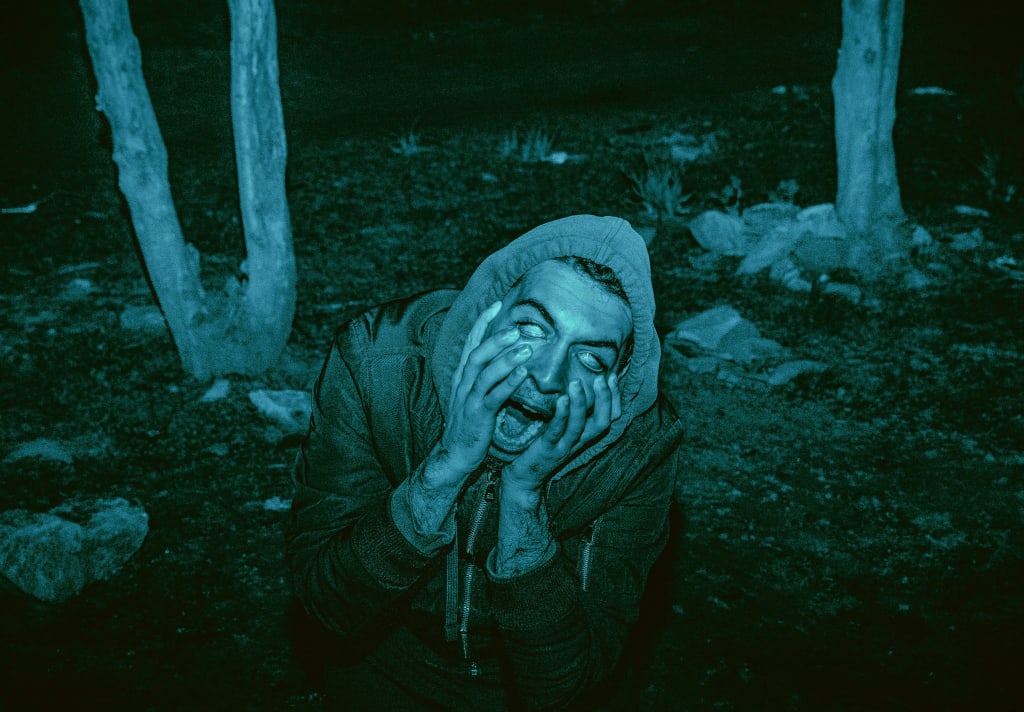
Horror is an experienced phenomenon in all cultures across borders as well as cultures. Each culture has its way of representing the supernatural- touching deep, visceral fears and anxieties. Those stories sometimes passed down over centuries, are far from spine-chilling fiction; they may be windows into the values, beliefs, and collective fears behind their creation. Legends, as we will discuss in this paper, give us insight not only into how death, grief, or supernatural folklore might be understood in a starkly different culture but also emotions and even broader societal lessons which are an integral part of those haunting tales.
From the screams of La Llorona from a riverbank to the eerie howling of the Irish Banshee, each seems to stir emotions of dread, and sadness, yet there is always a dark shadow of death behind it. Here are some of the most scariest, yet interesting, ghost stories and folklores from all over the world.
1. La Llorona- The Weeping Woman (Mexico)
Perhaps the most chilling legend of Mexico was the tragic tale of La Llorona, or "The Weeping Woman." She is thought to be the spirit of a woman by that name, Maria, who, overcome with jealousy and pain, drowned her two children in a fit of rage. When she realized the horror of what she had done, she also perished, and now her restless soul is doomed to roam the riversides, forever weeping for her children.
In fact, the anguished cry—¡Ay, mis hijos! —was said to echo through the night as a warning to children to stay away from water. It's an emotionally rich tale of unending anguish, guilt, and passion without control at its extreme end. The wandering spirit of La Llorona shows how fear of staying alive with too much remorse and at one's own cost due to their past transgression works. The fear is not only over the ghost itself but also over the loss of innocence and the irrevocable consequences of one's actions.
Parents often use this tale to teach their children about the dangers of disobedience, yet this also speaks to universal themes of motherhood, sacrifice, and tragic love.
2. The Banshee – Herald of Death (Ireland)
In the mist-covered hills of Ireland, there is the awful figure known as the Banshee. She's a lady in white or grey who forebodes the death of a family member whose passing is near. The Banshee is believed to belong to certain Irish families and is considered their harbinger of death. She is supposed to cry just before a member of the family dies, sending shivers down the spines of those who hear her. It is not just the scream that sends down icy, chilling chills but the emotion it evokes—fear of death, a deep sadness. The Banshee is not evil but a mourner, a symbol of inevitable death looming over all of us. She is a common phobia: something unknown, the afterlife, and the emotional havoc death leaves the living to cope with. Death is finally an end and a beginning: a time of ineluctable and fateful change nature can't outrun.
The wailing Banshee's screech is a warning that death is a reality that can't be outrun or avoided.
3. The Krahang – The Flying Terror (Thailand)
Krahang in Thailand is one of those mythical beings that feeds on fear as much as it feasts on its prey. Folklore says the Krahang becomes a man by day, but at night, this beast turns into one of the deadliest flying demons that scares all people living in the countryside. The Krahang roams the country and feeds on livestock as well as some human beings sometimes. With such an ugly appearance and the ability to fly, this frightening-looking creature is a terror in Thai folklore. The Krahang is more than just a monstrous creature; it's the fear of the unseen, the unknown terror out of the corner of an eye. The way it melts into daylight serenity and becomes night's fearful predator reflects human fear of duality: what appears familiar and safe can slip momentarily into menace and danger. This is perhaps one fear that most people can relate to: surveillance, a look at something ordinary with a darker secret underlying it.
The Krahang is another reminder that evil does not wear a mask but is ready to strike.
4. Yuki-Onna – The Snow Woman (Japan)
A ghostly figure in Japanese folklore known as the Yuki-Onna, or "Snow Woman," begins appearing in the cold months. She wears a white dress and is a beautiful and mesmerizing yet frightful apparition. Her breath is icy cold, freezing a person in place. She leads travelers astray during snowstorms, becoming lost and freezing to death in some versions of the legend. The Yuki-Onna is tapping into the fear of isolation and the overwhelming ability of nature. She is the harsh winter, not yielding: all it takes is getting lost in the wind with a gale blowing, going vulnerable to become deadly. Yet, at the same time, Yuki-Onna conveys and shares deeper fears of beauty concealing danger. Her kiss seems attractively promising; however, her kiss can be deadly. Her presence is a reminder of the fact that sometimes what appears most beautiful is also the most dangerous.
The Yuki-Onna's touch is ice and refers to the deep fear of the elements and the inescapable nature of death brought on by nature's brutality.
5. El Chupacabra – The Blood-Sucker (Latin America)
Perhaps one of the most infamous creatures in modern folklore is the Chupacabra itself, especially throughout Latin America. This reptilian creature was first spotted in Puerto Rico during the 1990s and sucks the blood of livestock, especially goats, leaving mysterious puncture wounds. According to other descriptions, the Chupacabra has glowing red eyes and sharp fangs. This habit of sucking blood is the reason why it is termed as a "goat-sucker." The fear accompanying the phenomenon of Chupacabra is an archaic anxiety over something unknown. Here comes the creature, which emerges unheralded, attacks people, and cripples them, all without warning. What better way to coax up an ancient fear of lurking, unseen dangerous predators in dark corners? It is an incarnation of the unknown: the creature science has not been able to explain yet. Its sudden surfacing as a modern legend addresses something in society's growing anxieties over environmental change, wildlife disease, and the fear of losing control over the natural world.
The Chupacabra is an otherworldly predator; it is almost all the more frightening because of its unpredictability.
6. The Uniondale Hitchhiker – South Africa's Ghostly Passenger
In South Africa, there's the Uniondale Hitchhiker, an apparition that has been on a deserted road in the Eastern Cape for decades. According to the legend, it is the ghost of a young woman who died in the 1970s after being involved in a fatal car accident; up to date, the apparition roams the same stretch of road, begging rides from unsuspecting travelers. The hitchhiker gets into the car but then disappears into thin air, thereby not reaching her destination at all. The Uniondale Hitchhiker taps into that fear that any horror can arise in a prosaic, everyday situation. There is a delicious terror in the possibility that something as mundane as picking up a hitchhiker can turn into something completely strange and terrifying. The story weaves on that fear of the unknown and the unexpected, something as familiar as a ride in a car turning into an inexplicable, frightening occurrence.
The Uniondale Hitchhiker also evokes sadness and unrequited emotions through tragic accidents, reminding one that at times the dead come not only to haunt but to make sure that their story never disappears into the sands of time.
Conclusion: The Power of Fear Across Cultures
Horror stories are more than spine-tingling tales; they reflect the cultures that originated them. Be it the tears of La Llorona or the terrifying unpredictability of the Chupacabra, these legends unveil collective fears, beliefs, and anxieties from different societies. What unites these stories is their supernatural content but the broad, universal human emotions that depict fear, loss, isolation, and the relentless grip of death. As we enter into these terrifying tales from other nations, it becomes pretty clear that horror is both scary and close to a better understanding of the vices within our selves and the common humanity that exists in terms of facing the unknown. In these terrific figures and haunting tales, we see how fear unites humankind irrespective of the places of origin of people.
About the Creator
Abhisek Sikdar
Hello, I am Abhisek Sikdar, a writer who is dedicated to creating well-researched content with a unique writing style that inspires readers at all levels. Simplicity merges into the narration so that difficult ideas may well be understood.
Keep reading
More stories from writers in Horror and other communities.
Autonomy Is The Real Privilege
Good morning, freedom-seekers! Today we’re gonna be looking at autonomy. A strange word, I know; one many would probably look at blankly and run away from on sight. We’re gonna figure out what it actually means, consider how it’s achieved, and decipher just how deeply most of us are tangled up in dependence without realising it.
By That ‘Freedom’ Guy4 days ago in Humans

Comments
There are no comments for this story
Be the first to respond and start the conversation.