
The Whispers of Misty Cove
Unraveling the Secret Behind the Old Lighthouse and the Keeper's Silent Song

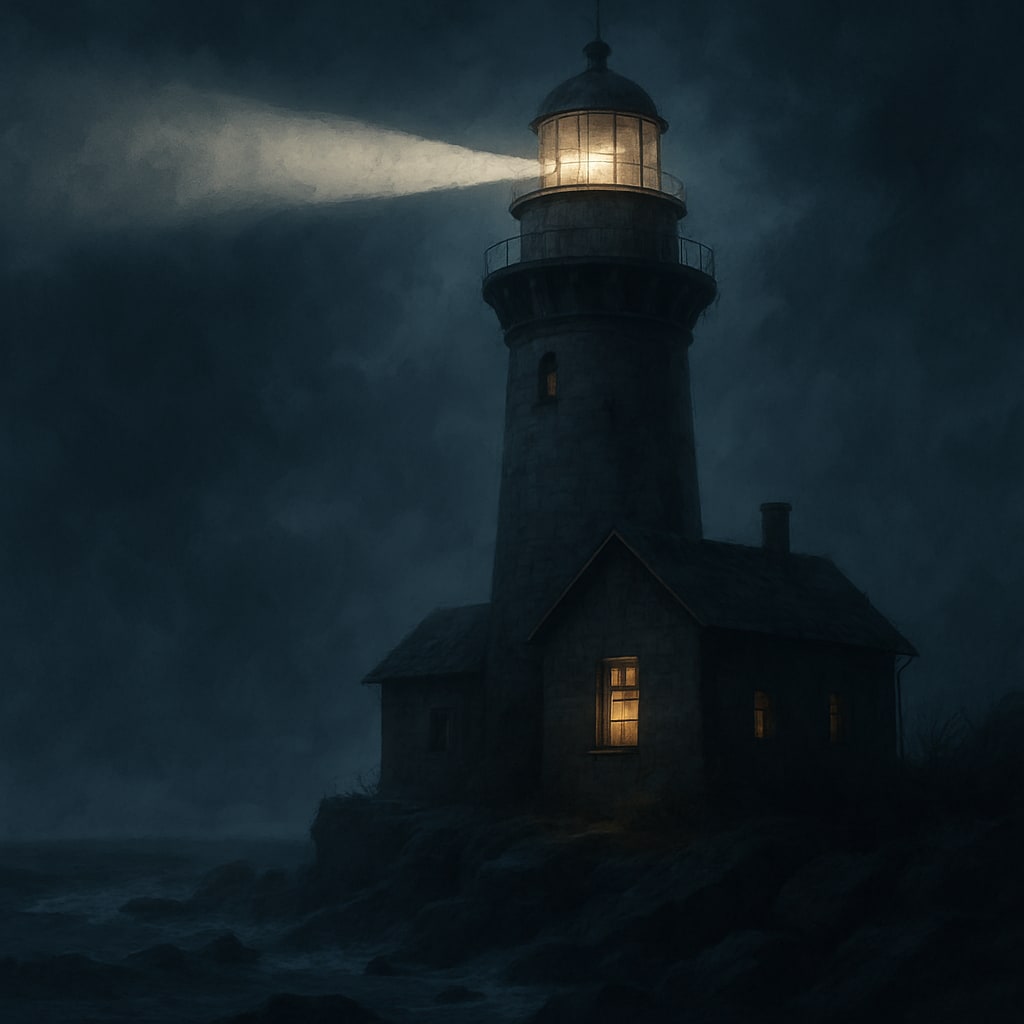
They say some places are better left alone.
The old lighthouse at Misty Cove, perched precariously on the jagged cliffs, was one such place, shrouded in an aura of forgotten tales and lingering unease. For years, the villagers whispered stories about the abandoned structure, their voices hushed with a mixture of fear and fascination. They spoke of strange, ethereal lights that flickered within its shattered lantern room at the stroke of midnight, and the faint, melancholic sound of music that the wind sometimes carried from its desolate tower. No one had dared to step inside the decaying structure since the devastating great storm of 1963, a tempest that had swallowed ships whole and claimed the lighthouse keeper, Mr. Hargrove, who vanished without a trace, leaving behind only unanswered questions and a growing sense of dread.
But I wasn't like the others, bound by superstition and fear. An insatiable curiosity pulsed within me, a relentless need to understand the mysteries that clung to the world like the persistent sea fog. On a particularly chilly October evening, as the fog rolled in thick and heavy, blanketing the coastline in a ghostly embrace, I made up my mind. I had to know what secrets were hidden within the weathered stone walls of that lonely lighthouse, what truth lay buried beneath the layers of local legend. I packed a reliable flashlight, a sturdy notebook to document my findings, and my old camera, hoping to capture any tangible evidence of the stories. Curiosity, they say, might kill a cat, but it had always been my most trusted companion, leading me down paths others avoided.
When I reached the edge of the cliff, the old lighthouse stood silhouetted against the bruised twilight sky, a tall and lonely sentinel guarding forgotten secrets. Its cracked walls seemed to whisper tales of storms and solitude, of loss and longing. The heavy iron gate, once a proud barrier, was now rusted shut, a testament to years of neglect. But a hard shove with my shoulder, fueled by determination and adrenaline, forced it open with a protesting screech that sliced through the otherwise profound silence of the cove.
Inside, the air was immediately different – damp and heavy, carrying a distinct smell of salt mingled with something else… something older, something akin to decay and forgotten time. The wooden floorboards groaned under my weight as I cautiously stepped into the circular entrance room, the sound echoing eerily in the confined space. The spiral staircase, a skeletal helix of aged wood and iron, curled upward into the darkness like a sleeping serpent waiting to awaken. My flashlight trembled slightly in my hand, not entirely from the cold that seeped through the stone, but because I could feel a presence, a subtle shift in the atmosphere. Something was watching.
I shook off the unsettling feeling, attributing it to the power of suggestion and the eerie environment, and started my ascent up the winding staircase. Each step creaked underfoot, each breath echoed in the stillness. Shadows danced on the peeling, water-stained walls, playing tricks on my eyes. For a fleeting moment, I thought I heard soft footsteps behind me, a faint rustling that wasn't my own. I turned abruptly, my heart pounding in my chest – but there was nothing. Only the oppressive dark and the increasingly frantic rhythm of my own pulse.
Finally, I reached the top and stepped into the lantern room. The once magnificent space was now a scene of disarray. Broken glass crunched underfoot, remnants of the storm's fury. The giant lamp, once a beacon of hope guiding ships safely through treacherous waters, now stood shattered and silent, its lens cracked like a weeping eye. I moved closer, my flashlight beam cutting through the gloom – and that’s when I saw it.
A door.
Hidden behind a collapsed cabinet, almost completely obscured by debris and shadow, was a small, unassuming iron door. It had no handle, only a single, intricately carved keyhole shaped like a star.
A star? That detail struck me as particularly strange, an unexpected symbol in this place of maritime utility.
Suddenly, as if the lighthouse itself was reacting to my discovery, a powerful gust of wind slammed the heavy wooden door behind me with a resounding bang, plunging me into near darkness. I jumped, my flashlight flickering wildly, casting frantic shadows that writhed across the walls. In that brief, disorienting second, something else caught my eye – a faint carving etched into the stone wall near the hidden door:
"To find the truth, follow the music."
Music? The word hung in the air, a bizarre and cryptic clue.
As if summoned by the inscription itself, the faint, ethereal sound of a piano reached my ears, barely audible at first, as if it was seeping through the very stones of the lighthouse. An instinctive pull urged me forward. I followed the sound, down the spiral staircase again, but this time, I continued descending deeper than before, past the point where the stairs should have logically ended.
And that’s when the impossible became real. I realized with a growing sense of awe and bewilderment that the lighthouse was far bigger on the inside than its exterior suggested. The stairs spiraled down into a narrow, stone-walled underground passage. A wave of cold, damp air pressed against my skin, carrying a stronger, more pungent smell of salt and something ancient. The music grew steadily louder, no longer a faint whisper but a distinct melody, hauntingly sad and profoundly beautiful.
At the end of the seemingly endless tunnel, a low archway opened into a hidden underground chamber. The air here was heavy with a stillness that felt both timeless and oppressive. In the center of the circular chamber, bathed in the faint glow of my flashlight, sat an old grand piano, its polished ebony seemingly untouched by the decay that permeated the rest of the lighthouse.
And next to it – a figure.
Mr. Hargrove.
His ghostly form, translucent and grey, was seated at the piano, his spectral fingers moving across the ivory keys, playing the soft, sorrowful melody that had guided me. His head lifted slowly, and for a fleeting, unforgettable moment, our eyes met across the divide between the living and the spectral.
There was no anger or fear in his gaze – only an overwhelming, profound sadness that seemed to echo the mournful notes of his music.
Without thinking, compelled by an inexplicable empathy, I stepped closer. That's when I noticed the heavy iron chain that encircled his translucent ankle, binding him to the massive instrument. On the piano’s polished lid, engraved in tarnished brass, were the chilling words:
"The Keeper’s Curse: Bound to the Light He Could Not Save."
A cold dread washed over me, far more potent than the chill of the underground chamber. Mr. Hargrove hadn’t simply vanished into the storm. He had been trapped here, in this hidden realm beneath the lighthouse, bound by some unknown force – punished, perhaps, for failing to guide the ships to safety during the great storm that had claimed him. Or maybe… for something darker, something the whispers of the villagers hadn't even touched upon.
The lighthouse wasn't merely haunted by restless spirits or malevolent entities.
It was haunted by regret, by a sorrow so profound it had woven itself into the very fabric of the place.
An overwhelming desire to help him surged within me. But how could a mortal break a spectral chain, undo a centuries-old curse?
Then, the image of the star-shaped keyhole flashed in my mind. The cryptic clue upstairs – "follow the music" – had led me here. Perhaps the key to his release was also hidden within the lighthouse.
I searched the chamber frantically, my flashlight beam dancing across the damp stone walls and the dusty surfaces. Finally, my fingers brushed against a loose stone near the base of the piano. Beneath it, nestled on a faded velvet cloth, was a small, intricately crafted brass key – shaped like a star.
My hands trembled as I carefully carried the key back upstairs, retracing my steps through the echoing passage and up the winding staircase, back to the hidden iron door behind the broken cabinet in the lantern room.
With bated breath, I inserted the star-shaped key into the lock. It fit perfectly. A deep groan echoed through the tower as the rusted mechanism turned, and the heavy iron door swung open, revealing a small, dusty hidden room. Inside, stacks of old journals lay scattered across a wooden table alongside faded nautical maps and various navigational tools. And most importantly, mounted on the wall, was a large, antiquated switch connected to the lighthouse's main lamp.
Without a moment's hesitation, driven by instinct and a growing understanding of the keeper's plight, I pulled the switch.
A low groan emanated from the depths of the lighthouse as the old machinery, dormant for decades, shuddered back to life. With a powerful surge, the long-silent lamp at the top of the tower blazed to life, casting a brilliant, golden beam into the inky blackness of the night, cutting through the dense fog like a guiding sword. Far below, on the dark, restless waves, I saw the faint lights of a fishing boat adjust its course, drawn safely by the resurrected light.
And just like that – the melancholic music stopped. The silence that descended was profound, yet somehow… lighter.
I rushed back downstairs, my heart pounding with a mixture of hope and trepidation, back to the underground chamber. But it was empty. Mr. Hargrove's ghostly form was gone. Only the old grand piano remained, silent and still in the dim light, a poignant reminder of the sorrow that had once filled the space.
I knew then, with a certainty that resonated deep within my soul, that I had somehow set him free, broken the keeper's curse with the rekindled light.
The old lighthouse at Misty Cove still stands today, its weathered stones repaired, its lantern room gleaming once more. And every night, as its powerful beam sweeps across the vast expanse of the ocean, guiding ships safely to shore, I often wonder – was it just a ghost I encountered that chilling October night?
Or was it something deeper, a testament to the enduring power of regret and the possibility of release? Some secrets, after all, aren’t meant to be feared in the darkness.
They’re meant to be brought into the light and understood.
About the Creator
Keep reading
More stories from Shades of Faith and writers in Horror and other communities.
Illusion
The rain had just begun to fall, a soft, hesitant drizzle, as if the sky itself was caught in a moment of reflection, unsure whether to unleash a torrent or simply weep gentle tears. Arjun sought refuge under the worn awning of a quaint bookstore, the kind of place that held the scent of aged paper and whispered secrets, a sanctuary filled with forgotten pages and echoes of old memories. He wasn’t there seeking escape from the rain's melancholy embrace, nor was he drawn by the silent promise of the books within. He simply craved silence—a rare and precious commodity in his usually bustling world.
By Shades of Faith 11 months ago in Confessions
The Disappearance of the Sodder Children (1945)
This case is widely considered one of America’s most baffling missing-person mysteries. Five children disappeared on Christmas Eve 1945. Officially, they died in a house fire. But investigators later discovered something deeply unsettling: There was never any evidence their bodies were in the fire. Not a single bone... Not a single tooth... Nothing!
By Veil of Shadows2 days ago in Horror




Comments
There are no comments for this story
Be the first to respond and start the conversation.