
Exploring the Brazilian Folklore
Legend of the Cuca

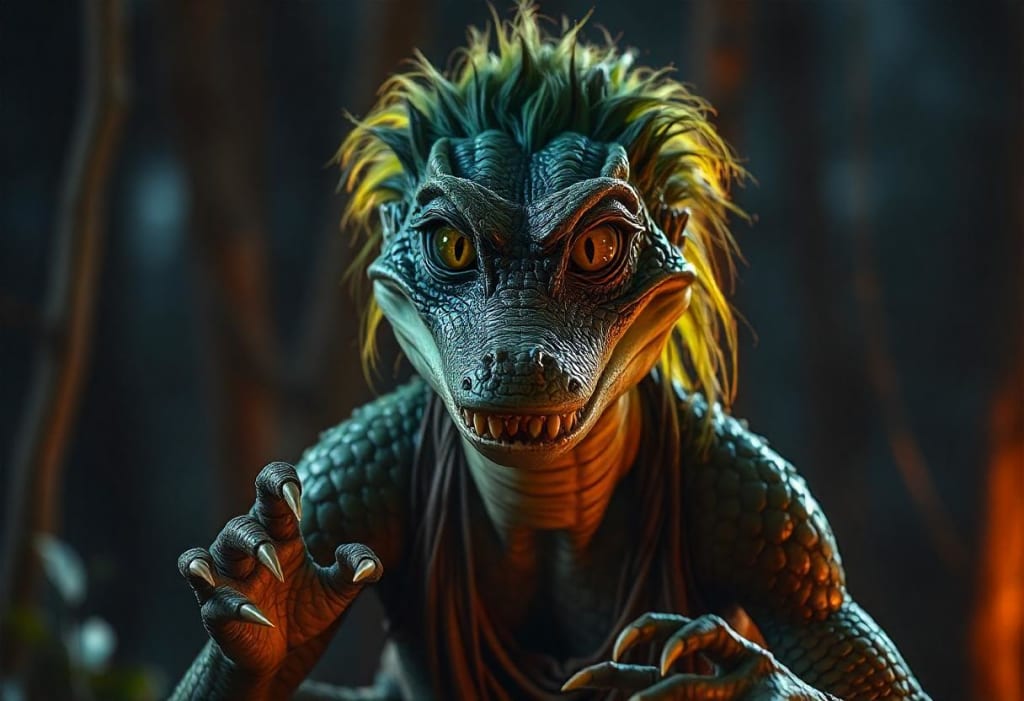
In the vibrant landscape of Brazilian folklore, a multitude of captivating and unsettling characters exists. The Cuca, in particular, emerges as one of the most compelling and formidable figures. Renowned for her terrifying aura and association with childhood anxieties, the Cuca has established herself as a prominent element in Brazilian cultural narratives, evoking feelings of fear, reverence, and intrigue. This article will explore the origins, characteristics, and cultural importance of the Cuca, examining the reasons behind her enduring influence in Brazilian folklore. The Cuca is a mythical entity frequently portrayed as a witch or a terrifying old woman. In various narratives, she is described as a woman with reptilian characteristics or is envisioned as a creature resembling a crocodile, possessing the power to transform. Unlike numerous other folkloric beings tied to specific locations or items, the Cuca is predominantly feared for her tendency to abduct misbehaving children or those who remain awake too late. Similar to the Bogeyman in Western folklore, the Cuca serves as a daunting figure employed by parents to discipline their children. The origins of Cuca are deeply intertwined with a fusion of Brazilian indigenous, African, and Portuguese legends. Some interpretations suggest that her character may be linked to the ancient Portuguese tale of Coca, a dragon or monster symbolizing evil, which was vanquished by St. George in medieval narratives. Over time, this figure evolved, becoming an integral part of Brazilian folklore, uniquely adapted to the nation's cultural landscape.
Moreover, Brazilian folklore frequently features characters that embody both the allure and menace of the natural environment. Cuca’s resemblance to reptiles or crocodiles is believed to reflect the perilous creatures inhabiting Brazil's jungles, as well as to represent the enigmatic and fearsome aspects of nature. One of the most intriguing elements of the Cuca is her role as a tool for parenting. In Brazilian families, the Cuca is frequently referenced to motivate children to follow rules, adhere to bedtime, and refrain from misconduct. Parents caution their children that misbehavior may result in the Cuca coming to take them away. This method is not exclusive to Brazil; various cultures globally employ frightening tales to promote good behavior among children. Nevertheless, the unique characteristics of the Cuca render her particularly influential within Brazilian society. The Cuca legend has had a lasting impact on Brazilian pop culture, manifesting in various forms such as literature, television, and music. The esteemed Brazilian author Monteiro Lobato provided a more elaborate depiction of the Cuca in his children's series, Sítio do Picapau Amarelo. In this narrative, she is characterized as a formidable and clever witch who employs magic to fulfill her desires. Her portrayal, reminiscent of a crocodile-like figure, has cemented her image in the minds of countless Brazilian children over the years.
Additionally, the Cuca's influence extends into music, particularly through traditional lullabies. A prominent Brazilian lullaby cautions children to behave, lest the Cuca come to take them away. These lullabies not only reflect the legend but also reinforce it, instilling a blend of reverence and fear that many Brazilians carry into adulthood. The frightening attributes of the Cuca and her function as a nocturnal abductor render her a significant emblem of childhood anxieties. On a more profound level, the Cuca signifies the unfamiliar and the unpredictable. She embodies a power that lies beyond the realm of the everyday, serving as a reminder—particularly for children—of the presence of elements that elude complete comprehension or anticipation. Thus, the Cuca also illustrates the necessity of adhering to the societal rules and boundaries that govern behavior. The Cuca stands as a prominent symbol in Brazilian folklore, representing elements of mystery, discipline, and the strength of cultural narratives. Her legacy has transcended generations, reminding us of the importance of tradition and the impact of legends on our perception of reality. While she may evoke fear, the Cuca is a complex and nuanced figure whose significance in Brazilian culture is unmistakable.
About the Creator
A História
"Hi. My name is Wellington and I'm a passion for general history. Here, I publish articles on different periods and themes in history, from prehistory to the present day.
Keep reading
More stories from A História and writers in Horror and other communities.
The Headless Mule
In the rich landscape of Brazilian folklore, the tale of the "Headless Mule," known as Mula sem Cabeça in Portuguese, remains a source of intrigue for audiences of all ages. This mythical being, which roams the rural areas of Brazil with its blazing breath and resounding hooves, embodies both fascination and fear. Let us explore the origins, symbolism, and cultural significance of this remarkable supernatural narrative. The story of the Headless Mule has its origins in Brazil's colonial era, with roots that stretch back several centuries. It is believed to be a blend of Indigenous folklore and European traditions introduced by Portuguese colonizers and African slaves. Many think that this legend was created to deter immoral conduct, particularly within the Catholic-centric society of colonial Brazil.
By A Históriaabout a year ago in Horror
"Scream 7" (2026): Running out of Fresh Screams
This is the seventh time we’ve had a Ghostface crisis. Scream 7 is the latest edition of the Scream franchise. Sydney Prescott and her family are under attack by another anonymous killer dressed in a Ghostface costume. While having issues with her daughter, Tatum, they run from the bloody murders, trying to determine who is behind it all.
By Marielle Sabbag4 days ago in Horror




Comments
There are no comments for this story
Be the first to respond and start the conversation.