
The Salem Witch Trials: A Historical Case of Mass Hysteria
This was a place where faith reigned supreme, and any deviation from societal norms could easily be seen as a pact with the devil.

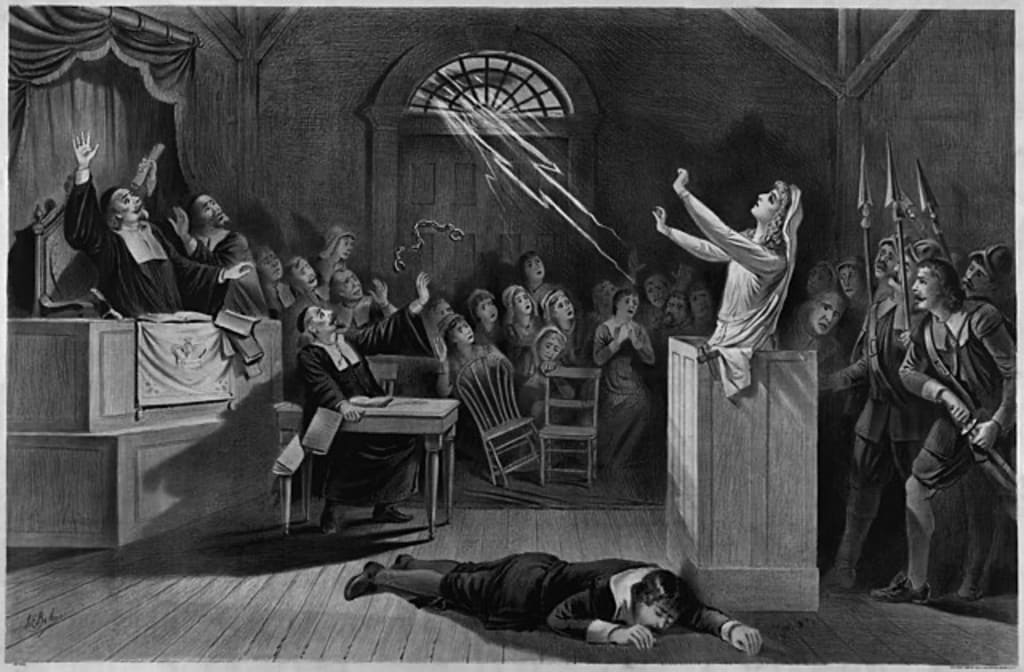
The year was 1692. Salem, a small Puritan community in colonial Massachusetts, was shrouded in an atmosphere of paranoia. Dark forests encircled the town, the unknown lurking just beyond the tree line. This was a place where faith reigned supreme, and any deviation from societal norms could easily be seen as a pact with the devil.
That winter, the tightly knit community began to unravel. It started innocuously, with two young girls, Elizabeth Parris and Abigail Williams, nieces of the local minister Samuel Parris. They exhibited strange, unexplainable behaviors: convulsions, fits of screaming, and episodes of contorted limbs. Doctors, baffled by their condition, reached a grim conclusion — it was not illness, but witchcraft.
The Spark of Hysteria
Word of the girls’ affliction spread like wildfire. Soon, other young women in Salem began displaying similar symptoms. Fear gripped the town, and the question on everyone’s lips was, *Who is to blame?* Pressured for answers, the afflicted girls pointed fingers at three women: Sarah Good, a homeless beggar; Sarah Osborne, an elderly woman who had fallen out of favor with the church; and Tituba, an enslaved woman of Caribbean origin in the Parris household.
Under interrogation, Tituba confessed, perhaps under duress, that she had communed with the devil and implicated others. This confession was the spark that ignited the blaze. If the devil’s agents could be among them, no one in Salem was safe.
The Witch Hunt Begins
The town fell into a frenzy. Neighbors accused neighbors, and old grievances resurfaced, cloaked in accusations of witchcraft. The trials began with spectral evidence — claims of seeing spirits or feeling invisible forces — that required no physical proof. In a society that equated dissent with heresy, even the mildest suspicion could spiral into a death sentence.
By the summer of 1692, dozens of people stood accused. The court, led by magistrates William Stoughton and Samuel Sewall, operated under the assumption that it was better to condemn the innocent than risk letting a witch go free. Nineteen people were hanged, and one man, Giles Corey, was pressed to death with heavy stones after refusing to enter a plea.
Crime Born of Fear and Superstition
The Salem Witch Trials were not driven by evidence or reason but by fear — a fear deeply rooted in religious dogma and the unknown. Puritans believed in a world where the devil was an ever-present force, seeking to corrupt and destroy. Misfortunes such as failed crops, illness, or even disagreements were often attributed to malevolent supernatural forces.
The social fabric of Salem played a role as well. The town was rife with divisions: land disputes, gender biases, and generational tensions. Women, particularly those who were unmarried, outspoken, or defied societal norms, were prime targets for accusations.
The End of the Trials
By the fall of 1692, the hysteria began to wane. Prominent members of the community, including Governor William Phips, grew skeptical of the proceedings. The reliance on spectral evidence was discredited, and the trials were effectively halted. Those still imprisoned were eventually released, but the damage had been done.
In the aftermath, Salem was left to grapple with the moral and social consequences. Families of the accused struggled to clear their names, and the community faced the haunting reality that their own fears had led to the deaths of innocent people.
A Lesson from the Past
The Salem Witch Trials remain one of history’s most infamous examples of mass hysteria. They illustrate how fear, ignorance, and unchecked authority can lead to grievous injustice. Salem’s tragedy serves as a cautionary tale, a reminder of the dangers of scapegoating and the human cost of abandoning reason in favor of superstition.
In the end, Salem was not a town besieged by witches but a community consumed by its own demons. The real lesson of the trials lies not in the supposed presence of witchcraft but in the very human tendency to fear what we do not understand — and the lengths to which we will go to protect ourselves from imagined threats.
Thank you for reading.
If you find this piece interesting, please leave a heart, comment, or even subscribe! Your support means a lot to me as a writer!
About the Creator
Victoria Velkova
With a passion for words and a love of storytelling.
Keep reading
More stories from Victoria Velkova and writers in Horror and other communities.
Kuchisake-onna: The Slit-Mouthed Woman
It was a quiet night in the outskirts of Tokyo, where the streets, narrow and dimly lit, wound through rows of traditional wooden houses. The faint hum of cicadas filled the air, but the atmosphere carried an unsettling weight — a chill that clung to the skin and whispered of something unnatural.
By Victoria Velkova12 months ago in Horror


Comments
There are no comments for this story
Be the first to respond and start the conversation.