

In the early months of World War II, a routine surveillance operation led to an unanswered mystery after 80 years.
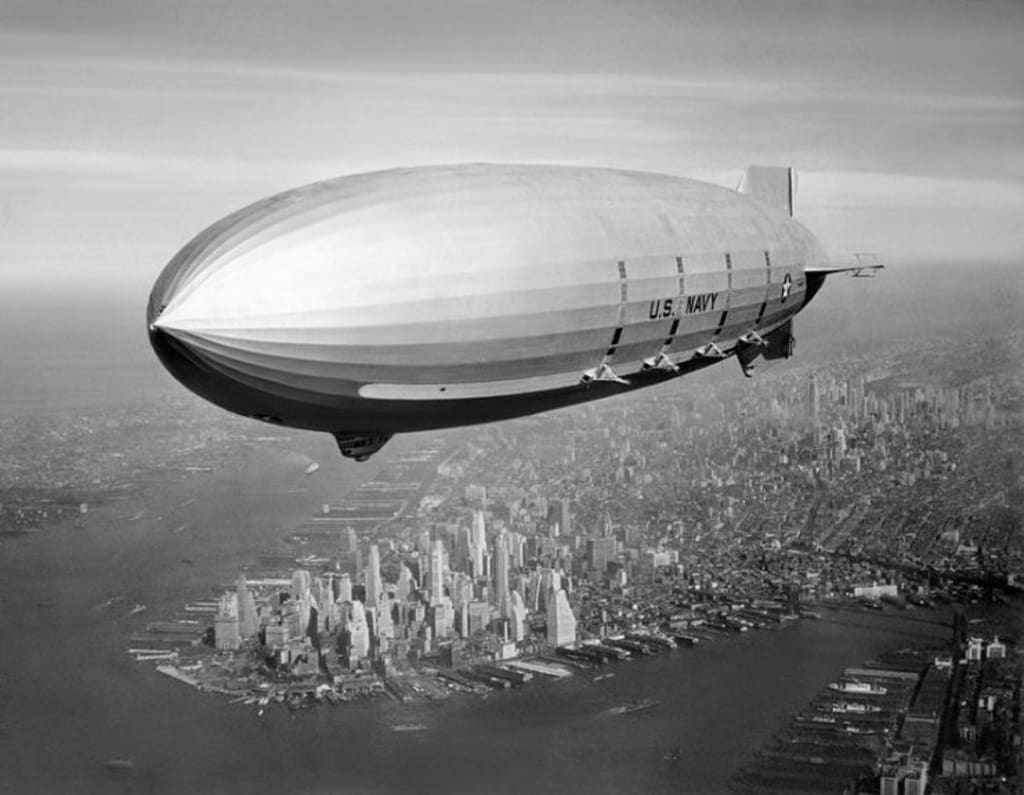
The US Navy blimp L-8 took off from a tiny airport on Treasure Island, an artificial island erected in San Francisco Bay for a recent world's fair, at 6 a.m. on August 16, 1942. Lieutenant Ernest DeWitt Cody and Ensign Charles Ellis Adams were on board.
Five hours later, the L-8 crashed on a residential street in Daly City, California, scraping roofs and electrical wires. Local firefighters fled a fire in the hills to race to the scene, extinguish flames, and rescue the airship crew. But they soon realized there was no one to rescue. Both pilots disappeared from their spacecraft.
Five hours later, the L-8 crashed on a residential street in Daly City, California, scraping roofs and electrical wires. Local firefighters fled a fire in the hills to race to the scene, extinguish flames, and rescue the airship crew. But they soon realized there was no one to rescue. Both pilots disappeared from their spacecraft.
Aviation expert Dan Grossman thinks biplanes were ideal for coastal surveillance. “They could stay in the air for long periods of time, fly slowly and at very low altitudes, hover over targets, and operate in low visibility and cloud ceilings, which fixed-wing airplanes of the time could not do.”
Goodyear created the L-8 as a promotional blimp. The Navy moved it and four other L-series blimps to Moffett Field in Santa Clara County, California, which already had numerous massive airship hangars, in early 1942. Other L-series blimps visited Lakehurst, New Jersey, the 1937 Hindenburg crash site.
Cody and Adams were skilled airship pilots. Cody, 27, graduated from the Naval Academy in 1938. Adams, 34, was commissioned as an officer after nearly a decade in the Navy. He survived the 1935 U.S.S. Macon wreck and drowning off California.
Cody ordered machinist's mate James Riley Hill off before the L-8 departed Treasure Island. Hill thought Cody was worried about the weight.
The first 1.5 hours of the trip seemed unremarkable. At 7:50 a.m., the men radioed that they were inspecting an oil slick in the sea, which may indicate a submarine. They disappeared from public view.
The Navy deployed aircraft to find the L-8 when it didn't report back. Fears calmed when a neighboring military installation claimed the blimp had landed and two pilots had escaped, but this was incorrect.
Instead, the blimp landed on a beach a mile distant. No one was on board, witnesses stated. They attempted to stop it, but it rose again and headed toward Daly City.
Daly City police and fire rescuers discovered the blimp's control vehicle door open but no fire or damage. The ship's radio worked, and both men's parachutes were intact. One of the blimp's anti-submarine depth charges was found on a neighboring golf course. Except for the two guys, their lifejackets—nicknamed “Mae Wests” after the bosomy actress and comedian—were gone. Pilots wear lifejackets in flight, so that was expected.
The mystery intensified as investigations continued. Many people watched the blimp because fishing boats and Navy and Coast Guard ships were in the seas around San Francisco that day. Investigators believed the blimp dropped two smoke flares over the oil slick to indicate its position before rising to a higher height. A Pan Am Clipper seaplane saw it fly. A search aircraft saw it at 2,000 feet, double its typical altitude, before it plunged back into the clouds.
On the ground, hundreds of witnesses watched the deflated, deformed airship glide through the heavens. A subsequent witness called it a “big broken wiener.” Some onlookers captured images that authorities tried to seize.
As usual, witnesses presented conflicting stories. Some said they saw no one on the balloon. Using binoculars, a horseback rider saw three persons. Other witnesses saw guys parachuting.
Navy searched San Francisco seas for days. One hopeful notion was that Cody and Adams were rescued by a ship that was keeping radio quiet. The men and their lifejackets were never located.
Many ideas surfaced after the catastrophe and for decades. Japanese grabbed the guys. They defected. A stowaway killed them. They died fighting for a lady. Aliens kidnapped them.
Many experts now believe they fell out, maybe as one tried to fix something outside the ship and lost his balance, then the other tried to save him and fell too. The Navy supported that theory, but called it “a matter of conjecture.”
Some say one guy fell from the balloon and the other dived into the water to help. This theory is rejected by Grossman. He thinks “it is certainly possible that both officers accidentally fell into the ocean”. “If one officer fell, the other would have stayed in the blimp to radio for help (the radio worked) and mark his comrade's location. Navy men instinctively avoid abandoning ship unless necessary.”
“Yes, ‘Don’t Give Up the Ship’ is the U.S. Navy’s unofficial motto.”
L-8s returned to Navy duty after repairs. The control vehicle returned to Goodyear after the war and became part of the Blimp America. After the blimp retired in 1982, the control vehicle transferred to the National Naval Aviation Museum in Pensacola, Florida, where it remains. Museum admission is limited to Department of Defense ID holders. The L-5 control vehicle from a happier blimp is in the Smithsonian's Steven F. Udvar-Hazy Center in Chantilly, Virginia.
About the Creator
"Scream 7" (2026): Running out of Fresh Screams
This is the seventh time we’ve had a Ghostface crisis. Scream 7 is the latest edition of the Scream franchise. Sydney Prescott and her family are under attack by another anonymous killer dressed in a Ghostface costume. While having issues with her daughter, Tatum, they run from the bloody murders, trying to determine who is behind it all.
By Marielle Sabbag6 days ago in Horror
The BAFTA Awards
By now, in a stunning departure from recent years, most of the world is aware of what happened at the BAFTA film awards. Social Media Headlines will tell you the bare bones: that John Davidson, a Tourette's Syndrome advocate, shouted a racial slur at two Actors of Colour, Michael B Jordan and Delroy Lindo.
By Natasja Rose4 days ago in Psyche



Comments
There are no comments for this story
Be the first to respond and start the conversation.