
The Hollow Voices of Elkwood Mine: What the Survivors Refused to Describe
The Forgotten Disaster That Still Echoes Through Pennsylvania Coal Country

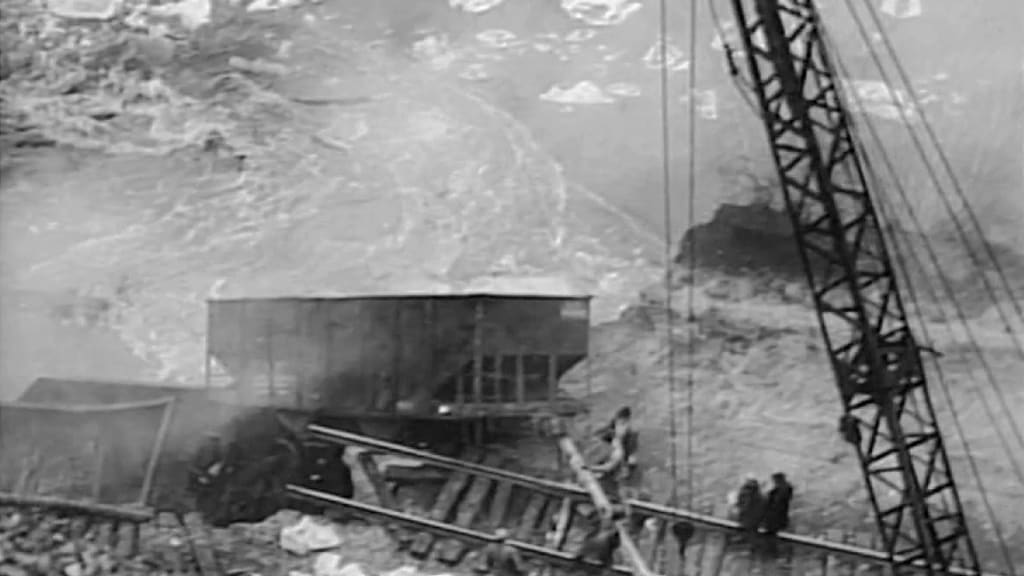
Elkwood Mine #7, located in the rolling hills of western Pennsylvania between the towns of Coalport and Madera, has been abandoned. Once the economic lifeblood of Clearfield County, it is now shut and forgotten, having been officially closed due to "geological instability" following the incident on November 12, 1963. Locals, however, know that the truth is deeper than any government report would admit.
The last shift
On a very cold Tuesday morning, November 12, 1963, 27 miners descended into Elkwood's main shaft for what should have been a typical day of collecting bituminous coal from the rich seams that had sustained the region for decades. The crew, led by foreman Daniel Kovach, was experienced—the majority had been in the mines for over a decade.
According to time logs maintained in county archives, the men arrived at 6:43 a.m. According to weather data, the temperature was 28°F with a little snowfall. By all indications, nothing indicated that this day would be any different than the hundreds before it.
At 9:17 a.m., surface workers reported hearing a strange rumble followed by "a sound like wind through a hollow pipe, but somehow formed into words nobody could understand." Communication with the underground team immediately stopped.
The Rescue Attempt
Frank Decker, the site supervisor, immediately began emergency procedures. The first rescue crew entered the mine at 9:36 a.m., armed with breathing apparatus and communication equipment. Radio contact was maintained for the first seventeen minutes as they descended to the 600-foot level, where Kovach's team had been operating.
The last transmission, recorded in Pennsylvania Department of Mines safety records, was disturbing: "We've reached the main gallery." There are no signs of structural breakdown. There are no bodies. Just... Christ, what is that sound? Can you hear it on the radio? It's as if... they're speaking, but I can't... Wait, someone is moving at the end of the—[static]. GET BACK UP! DO NOT SEND ANYONE ELSE DOWN! THERE'S SOMETHING—[transmission ends].
Three members of the rescue crew emerged from the mine shaft at 10:22 a.m. The remaining four never returned.
The Survivors
Only eight of the twenty-seven miners who entered Elkwood #7 survived. The first, Thomas Hiller, was discovered crawling along the access road at 2:14 PM, approximately a half-mile from the mine entrance. He was followed by seven more over the next three hours, each discovered in a different position on the mine grounds.
Medical records from Clearfield Hospital show that all survivors had similar symptoms: severe dehydration, hyperthermia despite the cold weather, ruptured eardrums, and, most puzzlingly, symmetrical bruising around their throats described as "consistent with attempted vocalization under extreme pressure."
None of the survivors would talk about their experiences. Following that, three of them were permanently mute. On November 18, 1963, hospital psychiatrist Dr. Eleanor Weiss noted that the patient continued to respond to questioning regarding the mining event by drawing a circular design with interconnected lines. When questioned, he grows furious and writes just 'they're still utilizing our voices' before refusing to communicate further.
The Cover Up
On November 14, 1963, just two days after the incident, officials from the United States Bureau of Mines came, along with representatives from an unidentified federal agency. The mine has been permanently shuttered owing to catastrophic structural failure with multiple fatalities.
Local newspaper archives show that the Clearfield Gazette was the first to report on the bizarre conditions, including quotations from surface workers regarding the unusual sounds. The next day's issue withdrew the statements, blaming reporting errors.
Geologist Edward Rankin of the Pennsylvania Department of Natural Resources issued a report on November 20, 1963, which was soon classified. A Freedom of Information Act request in 2008 resulted in the release of portions with heavy redactions. The viewable sections refer to unusual acoustic anomalies and "non-standard seismic readings inconsistent with typical mine collapses."
Even though no remains were ever recovered, the families of the nineteen miners who went missing got death payments.
Elkwood Mine #7 was sealed with concrete in December 1963. A memorial detailing the names of the missing miners was created in Coalport, but it was mysteriously removed in 1971.
The survivors remained in the region but never spoke again. The last, Raymond Wilkes, died in 2012, taking whatever happened that November morning with him.
His daughter, Marie Wilkes Cooper, supplied the only information during a local history recording project in 2018.
"Dad would wake up screaming at the hollow voices. He stated that they were not dead, but also not alive. He'd say, 'They're in between, and they found a way to use us to get out. That was all he would ever say. That and dad made me vow not to go near Elkwood, not even the sealed entrance. He said, 'They're still down there, and they're still chatting.
The Lingering Mystery
Today, the entrance to Elkwood Mine #7 is buried under overgrown vegetation, with the concrete seal coated in decades of garbage. According to official archives, it is one of numerous abandoned coal mines throughout Pennsylvania's industrial history.
But locals know better than to go near the location, especially after dark. Hikers and curious teens who explore the area describe hearing what appear to be faraway voices conversing in terms that are just beyond comprehension.
In 2019, sound engineer Jackson Hayes, who was researching local mythology for a documentary project, placed recording equipment near the shut entrance. What he obtained defies conventional explanation—a spectrogram analysis revealed what looked to be numerous human voice patterns speaking simultaneously, but at frequencies that human vocal cords cannot produce.
Hayes abandoned his initiative shortly after, refusing to give any further interviews on the issue.
A 2021 research by Pennsylvania State University's geology department discovered continued seismic activity beneath the mine despite its long abandonment—subtle vibrations that, according to department chair Dr. William Samuels, "resemble human vocal patterns when analyzed through spectral mapping." It's as if the planet is trying to communicate."
The Warning Remains.
Whatever transpired on that November morning in 1963 is officially unexplained. The complete records are still sealed under national security rules that do not generally apply to mining tragedies.
Elkwood Mine is more than just a historical footnote to Clearfield County residents; it's a destination to avoid, a word mentioned in whispers. Local parents still warn children with a song passed down through generations: "Stay from Elkwood's sealed-up door, Where twenty voices speak no more, Yet in the ground, their words still pour, Seeking throats to speak once again."
The hollow sounds of Elkwood Mine continue their unfathomable discourse beneath the Pennsylvania hills—a discussion that, according to the few who have heard it, was never intended for human ears.
About the Creator
A.O
I share insights, tips, and updates on the latest AI trends and tech milestones. and I dabble a little about life's deep meaning using poems and stories.


Comments
There are no comments for this story
Be the first to respond and start the conversation.