
The History on the Genre of Horror
An article I did back my freshman year of college

When we hear the word horror, we automatically think of scary movies or playing a prank on your friends to scare them. We also think that horror is just a genre that is used in many fictional stories during a sleepover or a campout in the woods over a fire. However, what is the true meaning of the word horror and how do previous and current creators of horror stories try to get you to have goosebumps on your arms. The term horror means an overwhelming and painful feeling caused by something frightfully shocking, terrifying, or revolting; a shuddering fear (Dictionary). However, how has horror changed over the years and what was the difference between horror back then and now? We will be looking into three types or places where we will find horror: Literature, movies, and real life horror. I hope by the end of this essay, you will have a better understanding of the genre of horror and why we have it.
One of the first ways to hear about horror stories was in literature. Today, horror books written or published are a little different than ones written back a few centuries ago or even back to ancient times. In the ancient times, horror was based on evil, death, demonic activities, etc. and it also manifested in the creation of supernatural stories (wiki). As the years go by, horror has been told or written in different ways, one of these ways was using supernatural characters likes monsters or spirits from the dead.
The first published book to have supernatural elements instead of realism was Castle of Otranto (1764) by Horace Walpole. This story is centered on unwanted love, an evil prince, and many deaths to one family (wiki). With this book being a horrific success, many other horror books were also created.
During the eighteenth century, the majority of the horror books were written by women (wiki). I am quite surprised about this because you would think that in order to write a book you would need some sort of education. With that, the only ones who were allowed to go to school were white men, women were not encouraged to go to school, they were expected to be housewives instead. So hearing about women writing gothic or horror literature is very interesting. One theory for why so many horror books were written by women was because of the war that was happening at that time and the men had to go and fight. This left the women to create and publish stories in the eighteenth century. Luckily as wars end and a new century emerges, Gothic literature blossomed into popularity.
Many popular gothic stories include Mary Shelley’s Frankenstein (1818) and Bram Stoker’s Dracula (1897). One of my favorite historical people of all time would be Edgar Allan Poe. He has created many short stories and poetry all based on gothic horror. Some of his pieces of work include The Raven (1845), Annabel Lee (1849), The Pit and the Pendulum (1850), The Tell-Tale Heart (1850), The Masque of the Red Death (1850), etc. With his work and all the other great gothic horror pieces written, many of these stories would soon inspire the creation of on screen and stage horror (wiki).
As we move into the twentieth century and film is being more involved, we don’t see as much gothic/horror literature as we did before. But there is one writer who has not only changed the way horror literature is made, but is probably the best known author of our time, his name is Stephen King. He has created stories such as Carrie (1974), The Shining (1976), Children of the Corn (1977), Cujo (1981), IT (1986), etc. With all the literatures we have heard of from the very first gothic novel to Stephen King’s masterpieces, there is one particular trait that defines the term horror in literature. The goal of all horror stories is to provoke a response; emotional, psychological or physical, within readers or viewers that causes them to react with fear (wiki). So far, this goal has been accomplished quite well in my opinion.
Even though horror literature was one of the only ways to get goosebumps on our arms, horror film was about to take its turn to popularity in the goth culture. While literature focused on evil and death, films have tried to give the viewers nightmares, fear, revulsions, and terror of the unknown (wiki). There are many types of elements filmmakers have use throughout horror movies: ghosts, extraterrestrials, vampires, werewolves, demons, gore, torture, vicious animals, evil witches, monsters, zombies, cannibals, psychopaths, and serial killers (wiki).
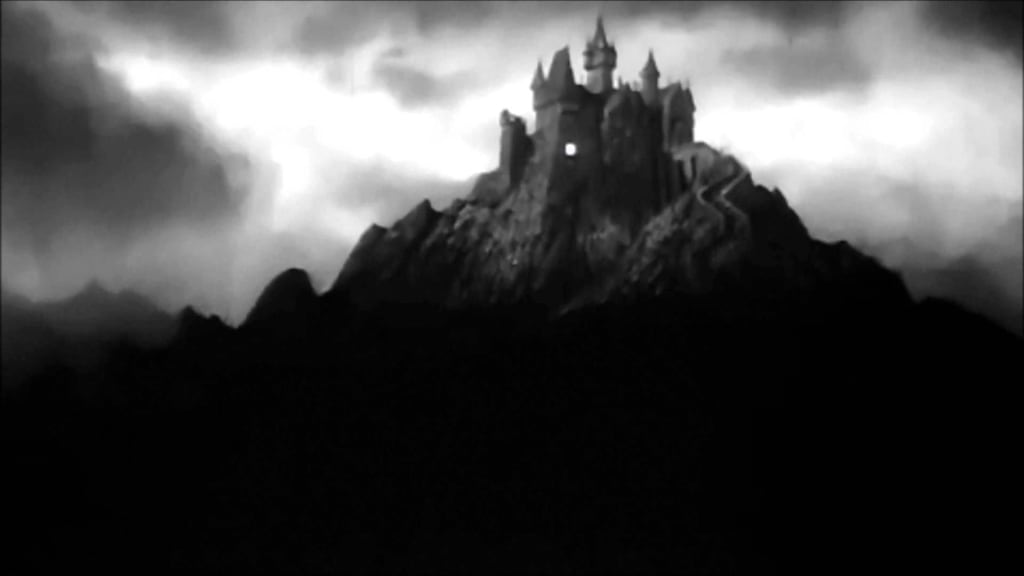
One of the first horror movies made was Le Manoir Du Diable (The Haunted Castle) (1896) directed by Georges Melies. The story is based on the Devil’s castle and the supernatural characters who roam all over the castle (wiki). Silent films were used frequently between the 1890s-1930s, one of the few successful silent films that was horror was Phantom of the Opera (1925). What made this film successful was the makeup effects that actor Lon Chaney did for his role as the Phantom, making his character gruesome and attracted audience to this horror classic. Other successful silent films include F.W. Murnau’s Nosferatu (1922) which was also the first vampire-theme movie made at the time (wiki). Once silent films died down and talking pictures were rising up, Universal Pictures began a successful gothic horror film series. Dracula (1931) was the first horror film with sound. Other successful films made in the era of the 1930s was Frankenstein (1931), The Mummy (1932), Freaks (1932), Bride of Frankenstein (1935), etc. One director, James Whales, was the first well known and famous director for his horror films during this era.
One of the most unique films of this time was Freaks. One thing that makes this film gruesome and great is how the actors were deformed in real life. It gave chills to many viewers because they never imagined someone with these deformities- such as a man with no legs or a woman with a beard, it was just not common back at the time.
As we go into the 1940s-1960s, we see a change in the themes of horror movies. Around this time, the themes of these films were over doomsday and demonic based stories, monsters such as the wolfman and black cats were still involved, but not as much as it did in the 30s (wiki). Going forward to the early 60s, psychos and demonic possession have taking a tole on the horror movie industry. One classic that grabbed viewers the most was The Night of the Living Dead (1968). They were a few reason why this film got many viewers, one reason was that the hero in the story was a african american man. Especially with the Civil Rights movement going on, it was quite unique for a colored man to play a lead role in a movie filled with white people playing the zombies and the survivors (Docu.). Another reason that this film was so popular was that the makeup and the props used in the film were great. The movie was also good for its low budget on costumes, makeup, setting props, etc. It also I believe was the start of the zombie movie generation from 1968 to today with movies like World War Z or TV shows such as The Walking Dead.
As we move into the 1970s, we see more graphic and horrifying films. One film that your parents might have told you is the scariest movie they have ever seen would be the The Exorcist (1973). This movie is about a 12 year old girl named Regan who is possessed by a demon who takes over her body and causes her to look disfigured and an exorcist and a priest must save her before the demon kills her. I also believe that the makeup of Regan was gruesome, which also drew horror fans to see this movie (Docu.). “The Exorcist” horrified millions back in that time, but for me, I fell asleep twice watching it. Now the 1973 movie was not the first movie to use a child for demonic possession, Rosemary’s baby (1968) was about a woman's baby who is known to be the child of the devil himself. I can see why so many people feared these movies, especially if you had children at the time.
Moving into the late 70’s and early 80’s movies, we see more movies based on occults and horrific killers. Movies include Texas Chainsaw Massacre (1974), Halloween (1978), Friday the 13th (1980), Nightmare on Elm Street (1984), etc. As we move into the 90s and the early 21st century, the horror genre took a backseat in the filming industry for two key reasons. One is that horror movies started to become dull or not scary enough for the viewers. Second, science fiction and fantasy movies were becoming more popular around that time such as the Harry Potter films (2001-2011) (wiki). Even though horror movies have not be at their best, we can still have successful horror films today. Some of these movies include Saw (2004) Paranormal Activity (2007), The Conjuring (2013), World War Z (2013), Lights Out (2016), The Conjuring 2 (2016), etc.
To many people, horror is just a fictional story that matches our worst nightmares, however, horror can be real as well. Many fictional stories and movies have been based on real horror that goes on in our world. But what are some examples of these real life horrors? Some main key figures include serial killer Ed Gein, countess Elizabeth Bathory, and the exorcism of Anneliese Michel. So how do these idles influence our worst nightmares?
We will first look at the infamous Edward Theodore Gein. He has inspired many films, such as Texas Chainsaw Massacre (1974), Psycho (1960), and Silence of the Lambs (1991). Gein was born in Wisconsin in 1906 to George and Augusta Gein (wiki). They lived in a small town of Plainfield, Wisconsin. His father was an alcoholic who could not hold down a job due to his drinking habit. His mother was in charge of the farm they owned and kept him and his brother Henry in complete isolation from the rest of the world. She was also a very religious woman, she kept reading the bible to her sons and telling them about alcohol being bad and that all women were pure evil, except her (wiki).
I believe that Ed’s mother has influenced Stephen King in creating a character in his book Carrie (1974). This character is Carrie’s mother who is also a very strict, religious woman who kept telling Carrie that all men were evil and everyone will go to hell except her and Carrie. Another connection I see is that both Ed and Carrie have a love/hate relationship with their mothers. Ed’s love towards his mother also influences the movie Psycho which shows the unhealthy relationship and attachment the son had for his mother (Docu.).
As Ed grew into his 30s, his father died of heart failure in 1944, leaving him, Henry, and his mother in charge of the farm. A little over a month later, a fire got out of control and got the fire fighters attention. When they arrived and extinguished the fire, Ed told them that his brother was missing and he didn’t know where he was. After the search party found him dead in the woods, they believed he died from heart failure since there were no burn marks on him. Later reports said that there were bruises around Henry’s neck and many people in the later years have suspected that Ed killed Henry (Docu.).
With Henry’s death, Augusta and Ed had the house to themselves. His mother suffered two strokes the following year and she died in 1945. This death devastated Ed the most, he lost his only friend and true love and he now felt utterly alone with the farm and house to himself. His grieving over his mother started to make him feel so lost and lonely that he started grave robbing at night, bringing dead corpses of women back to the house. However, he soon started to grow tired of this method, he wanted more, he wanted real woman to manipulate to his desire.
On November 16th, 1957 people noticed that shop owner, Bernice Worden, was missing and when her son told police that Gein was the last person to see her, they went over to his farmhouse. What they found in the house shocked the whole world for many, many years to come. Not only did they find Worden hanging from her feet dead, but in a paper bag they found the skinned face mask of Mary Hogan who had gone missing three years before Worden went missing (Docu.). What was also in the house included furniture covered in human skin, skulls as bowls, leggings made out of human leg skin, a corset made out of a female torso, a belt made out of human nipples, etc. When he was arrested, he confessed to the murders of Worden and Hogan, and claimed that the rest were from corpses that were already dead (Docu.).
Claims about Gein state he created bodysuits made out of human skin so that he could wear them and become his dead mother. This idea sparked the character Buffalo Bill in Silence of the Lambs. The furniture made of human remains and the human face mask inspired the character Leatherface in Texas Chainsaw Massacre.
When Ed Gein went on trial, he was found not guilty by reason of insanity, and he was put in a mental hospital for the criminally insane for the rest of his days. In 1984, he died of respiratory failure due to lung cancer. To this day, his grisly crimes still shock the world as well as promote stories based on his life and the crimes he committed, he is now known as “The mad butcher of plainfield” (Docu.).
The next key figure we will be looking at that has inspired many fictional stories is Hungarian countess Elizabeth Bathory. Bathory was once a ruler over the Hungarian kingdoms in the 16th century who, behind closed doors, tormented and killed over 600 of her servants and the majority of the killing was done by her own hand. Her reason for killing them was just for her own pleasure. (Docu.) She is labeled as the most horrific serial killer of all time. We do not know much about her childhood, but we do know that Elizabeth witnessed lots of torture of the lower class. One incident was when her father and a couple of men found a gypsy and they opened up a horse and sewed the man inside the horse and left both of them to die right in front of her (Docu.).
When she turned 15, she married Ferenc Nadasdy, who would introduce her to more torture methods that he practiced on his own servants. He was soon sent off to war as the chief commander of the Hungarian troops. He died due to illness that is still unknown to this day, he was only 48 years old (wiki). While he was off to war and after his death, Elizabeth took charge of the kingdoms her late husband ruled over. She also tormented her servants in ways that were way worse than her husband. Bathory had a horrible temper and would lash out at her servants for minor mistakes. One example is when a servant was brushing her hair and she yanked too hard and Elizabeth yelled and hit the servant so hard that the young girl bled out (Docu.). Unfortunately, this is not the worst of her violent ways. Her other torture methods included starving, freezing, biting, smearing them with honey and leaving them outside for ants and bees to sting, burning, etc. (Hist.) There was also a belief that she was bisexual and was labeled as a sexual sadist toward her servants. One of the infamous things she did was bathe in the servants’ blood. Bathory believed that the blood of the young girls would give her youth and beauty. So she would gather up lots of blood and when the right time came, she would bathe in it.
Her crimes were kept silent and ignored because she was a countess of wealth and had so much power over the Hungarian empire. However, once she started to kill non-servants, her killing spree would be put to a stop (Docu.). She was put to trial and got locked up in a tower for the rest of her days. She died of unknown causes in August of 1614. Her crimes sparked many fictional characters such as the species of vampires, especially Count Dracula. I believe if she did not commit these crimes, the supernatural creatures would not have come into the light until many years later.
The last example we will go over is not about a serial killer, but about an innocent victim who was believed to be possessed by many dark forces. This victim was Anneliese Michel, her story inspired movies like The Exorcist of Emily Rose (2005) and other demon-based movies. Anneliese was born on September 21, 1952 in Leiblfing, Germany (wifi). Growing up, she was bright, beautiful, kind, and smart. Both her parents were strict catholics and made sure their kids followed their path with God (Docu.). She wanted to become a teacher and did everything she could to accomplish this (Docu.). Things were going good until she started to suffer from unexpected seizures at the age of 16. The parents did not trust the doctors and put all of their trust on the Catholic Church. When the family finally took her to the doctors, they diagnosed her with neurotic epilepsy and she was put on medication to control her seizures (Docu.). She slowly got better and was able to continue her progress reaching her dream job. However, according to Anneliese, she saw an angel telling her that she must stop taking her medication because apparently it was her destiny to take on the demons within her. Being religious herself, she listened to the angel and she stopped taking her medication and everything went downhill from there on (Docu.). The seizures returned and she soon started to sleep on the floor and refused to eat or drink anything, believing the angel told her to do so.
She soon started to look a lot different than she did before. She went from this beautiful, young woman to a tiny bruised-up girl who no one could recognize. What was also strange was the way Anneliese started to speak. She spoke in languages she didn’t even know and at other times would claim that Hitler or the devil himself was inside of her (Docu.). The parents abandoned the thought of medical attention and immediately went to the Catholic Church for help. The priests there saw Anneliese and believed that an exorcism needed to be done to her.
Priest Arnold Renz exercised her about 73 times, twice a week at least, and it went on for over ten months (wiki). Unfortunately, Anneliese did not show any signs of improvement and on July 1st 1976, she died of dehydration at the age of 23 (wiki). Her parents and the priest were put on trial and found guilty of negligent homicide, but were only given three years of probation and a fine. Anneliese Michel was the last person to have an exorcism done in the country of Germany This case was not only shocking, but also very depressing as well. I don’t believe anyone will ever know for sure if Michel was ever possessed by demons or if she was so sick that she started to have these abnormal behaviors. But, I can say that exorcisms are more common now than they were before Anneliese Michel’s case.
Do you think you have a better idea about the horror genre? Do you now know how horror was created and why we have it? Horror has shaped America both in a good and bad way. From introducing readers and viewers to a new kind entertainment, to having us terrified about the real horrors going on in our world. Now we ask ourselves the essential question we had before, “How has horror changed over the years?” Well, Psychologist in the 1940s-1950s created a theory called “Hypodermic Needle Theory” which is used in all media studies, including horror. This theory proves how today we aren’t as scared watching horror movies as we were back then. I think the reason for this is the negativity that goes on in our world, including war and terrorist attacks (UOT). However, even with this thought, we still love getting goosebumps on our arms and having our hearts race like crazy. I believe that horror will always be my favorite and the most successful genre in both film and literature, not so much in real life, but I do love horror.
Citation
“Anneliese Michel” Wikipedia https://en.wikipedia.org/wiki/Anneliese_Michel accessed 29 November, 2016
“Bathory torturous escapades are exposed” History Channel http://www.history.com/this-day-in-history/bathorys-torturous-escapades-are-exposed accessed 29 November, 2016
“Ed Gein” Wikipedia https://en.wikipedia.org/wiki/Ed_Gein accessed 29 November, 2016
“Ed Gein The Real Leatherface Serial Killer Documentary” uploaded by Documentary Best, 6 January 2014, https://www.youtube.com/watch?v=9jsC9IN85sY accessed 29 November, 2016
“Elizabeth Bathory” Wikipedia https://en.wikipedia.org/wiki/Elizabeth_B%C3%A1thory accessed 29 November, 2016
“ELIZABETH BATHORY: Female SERIAL KILLER and TORTURER (SHOCKING CRIME DOCUMENTARY)” uploaded by Jam Stan, August 14 2014, https://www.youtube.com/watch?v=76rAn4JZfiA&t=2377s accessed 29 November, 2016
“Exorcism: Documentary on the Myth and Reality of Exorcisms (Full Documentary)”, Uploaded by Cobal Finset, 6 November 2015, https://www.youtube.com/watch?v=jsJblTxPU5M accessed 29 November, 2016
“A History of Horror with Mark Gatiss (Part 1 of 3) Frankenstein Goes to Hollywood”, uploaded by bleachershane, 2 January 2014, https://www.youtube.com/watch?v=ZkZBJd4UTlM&t=3172s accessed 29 November, 2016
“A History of Horror with Mark Gatiss (Part 3 of 3) The American Scream” uploaded by bleachershane, 2 January 2014, https://www.youtube.com/watch?v=5EH1FiToj4w accessed 29 November, 2016
“Horror” Dictionary http://www.dictionary.com/browse/horror?s=t accessed 29 November 2016
“Horror fiction” Wikipedia https://en.wikipedia.org/wiki/Horror_fiction accessed 29 November, 2016
“Horror film” Wikipedia https://en.wikipedia.org/wiki/Horror_film accessed 29 November, 2016
University of Twente, “Hypodermic Needle Theory”, https://www.utwente.nl/cw/theorieenoverzicht/Theory%20Clusters/Mass%20Media/Hypodermic_Needle_Theory/, accessed 29 November, 2016
About the Creator
Mia Ellison
Hello. I'm not the best at writing, but I will give it my best effort.
Keep reading
More stories from Mia Ellison and writers in Horror and other communities.
Everything
It's a cold rainy night in the middle of nowhere on November 25th. There's a house next to a gravel road surrounded by the cornfields of Iowa. Inside, a man named Tucker is sitting at his dining room table drinking his fifth beer. He usually isn't this bad of a drinker, but it has been two days since he found his wife, Leah, hung in their closet, she committed suicide. Tucker, even though he mourned her death, had a good understanding of why she did it. Within this past month, Leah has lost both of her children, Jacob and Nancy. They were all grown up and already starting families of their own. Those children were also Tuckers step kids, but he loved them like his own. It was just unusual for them to pass away in just a short amount of time.
By Mia Ellison5 years ago in Horror
Sometimes It's Like That and That'sThe Way It Is
It was the late 1960s, and ten-year-old Gloria Coleman was standing with her grandmother on the side of the highway waiting for the bus. As the Greyhound pulled up, it seemed monstrous and intimidating. Grandma Elizabeth grabbed Gloria's hand, holding it tightly as they boarded.
By Cheryl E Preston2 days ago in Fiction




Comments
There are no comments for this story
Be the first to respond and start the conversation.