
The Funhouse (1981) Review: Tobe Hooper’s Carnivalesque Misfire
“A Carnival of Missed Opportunities: Revisiting Tobe Hooper’s Uneven Cult Slasher”

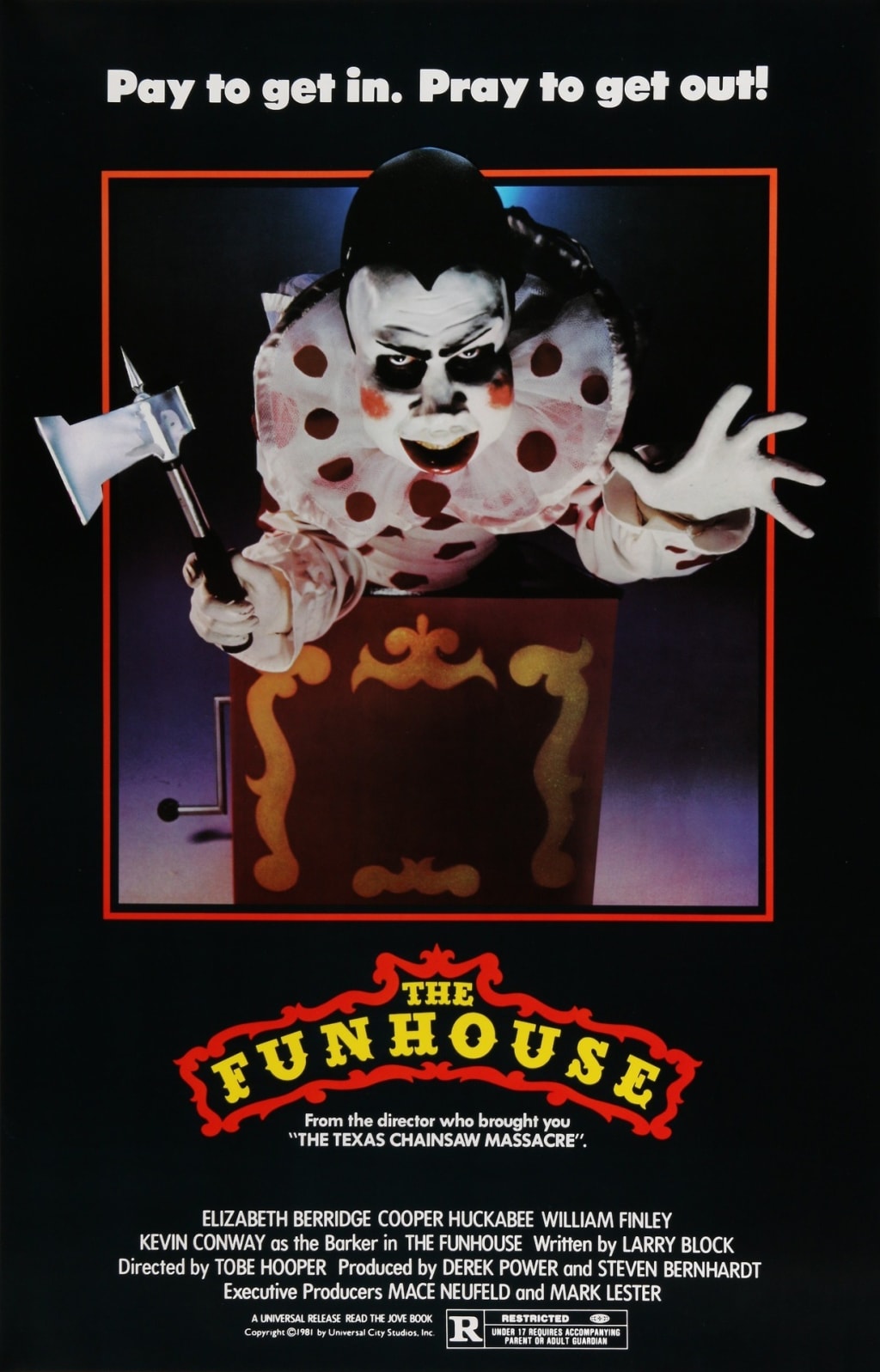
The Funhouse (1981)
Directed by: Tobe Hooper
Written by: Larry Block
Starring: Elizabeth Berridge, Cooper Huckabee, Largo Woodruff, Miles Chapin
Release Date: March 13, 1981
Published: May 14, 2025
For my money, The Texas Chainsaw Massacre is not just the greatest horror movie ever made—it’s one of the most important American films of the 20th century. With that movie, director Tobe Hooper slammed the door shut on the idealism of the hippie generation, gutting their dreams of peace, love, and utopia with a chainsaw and a scream. Reflecting the traumas of Vietnam, the Manson Family, and the assassinations of JFK, RFK, MLK, and Malcolm X, Hooper’s debut was a blood-soaked cultural exorcism.
Given that, it’s no surprise Hooper never quite topped Chainsaw. When you define a generation’s end on film, where do you go from there? While he followed it up with some worthwhile efforts—Poltergeist being the most famous, albeit with heavy Spielberg influence—much of his later work, including The Funhouse, falls into the “interesting misfire” category.
A Plot Built on Carnival Clichés
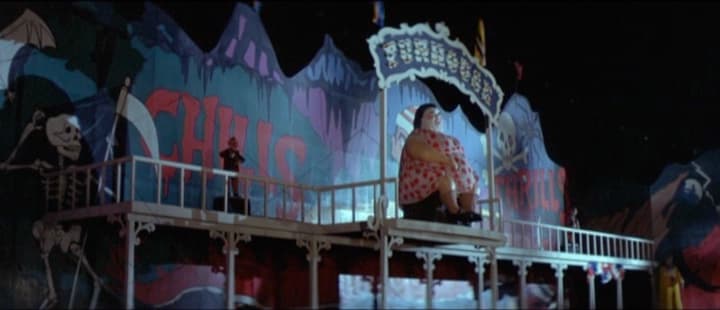
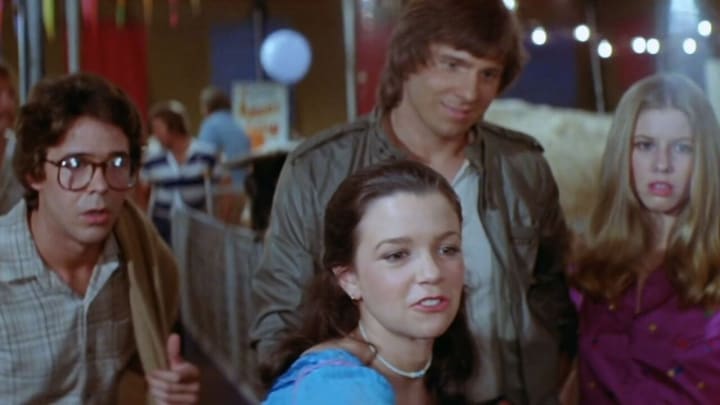
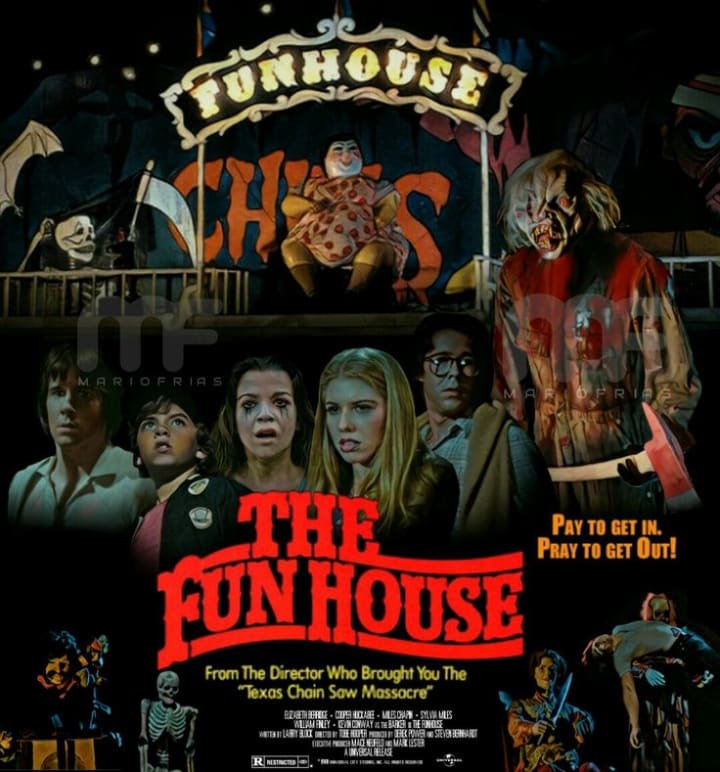
The Funhouse stars Elizabeth Berridge as Amy Harper, a suburban teenager heading out on her first date with Buzz (Cooper Huckabee), a college-aged guy she’s clearly not telling her parents much about. Despite warnings about the carnival’s dark history—where teens were found dead not long ago—Amy and her friends Liz (Largo Woodruff) and Richie (Miles Chapin) head off to check it out.
The film meanders through the usual carnival fare—rides, palm readers, sleazy side shows—and takes its sweet time getting to the titular funhouse. The first two acts drag, bogged down by generic teen antics and not enough tension. The audience is left wondering when the horror will actually begin.
The Final Act Finally Delivers
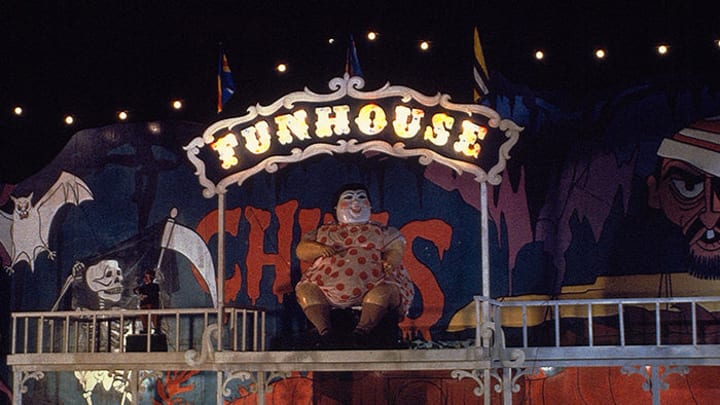
Thankfully, when we do arrive at the funhouse, the film kicks into gear. Hooper finally cranks up the tension, and the kills begin. It’s not enough to redeem the whole movie, but it’s a welcome reminder that Hooper still had the ability to deliver genuine horror atmosphere when he wanted to. The climax is tighter, bloodier, and far more entertaining than anything that came before it.
A Love Letter to Classic Horror?
It’s clear that Hooper had bigger ambitions than just making a slasher film. The opening scene is a wink to horror fans—part homage to Halloween, part explicit parody of Psycho—featuring a voyeuristic younger brother peeping on his sister in the shower as a so-called prank. It’s twisted and tonally strange, but you can feel Hooper tipping his cap to the horror films that inspired him.
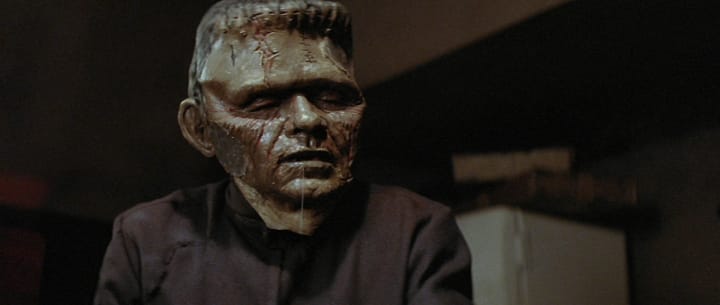
This motif continues with the film’s antagonist, Gunther Twibunt, aka The Monster, who begins the film wearing a Frankenstein-style rubber mask, only to later reveal a grotesque, mutated face—evoking everything from The Elephant Man to Freaks. Hooper clearly wants to blend classic horror aesthetics with his own grotesque sensibilities. Unfortunately, the execution doesn’t live up to the concept.
Themes That Don’t Quite Land
Some critics have tried to mine deeper meaning from The Funhouse, framing the carnival as a symbol of dangerous freedom in contrast to Amy’s supposedly repressive home life. Personally, I think that’s reaching. Amy’s parents are barely in the film and seem more concerned than controlling. Their warning to avoid a carnival linked to previous murders is hardly tyrannical parenting—it’s common sense.
The film flirts with ideas but never follows through. It’s not scary enough to work as pure horror, nor thoughtful enough to succeed as commentary. It exists in a muddy middle ground, where good intentions are buried under plodding pacing and underdeveloped characters.
A Disappointment, But Not a Disaster
Watching The Funhouse, I got the sense that Tobe Hooper was trying to merge his affection for classic monster movies with a more modern, grotesque aesthetic. It’s a noble effort, but one that never quite gels. Too much of the film is spent watching horny teens wander aimlessly around a bargain-bin carnival, waiting for something—anything—to happen.
Still, I don’t think The Funhouse is an outright embarrassment. Hooper does recapture some of his spark in the final act, reminding us what he’s capable of. It’s not enough to elevate the movie to greatness, but it’s enough to keep it from being a total loss.
⸻
Final Thoughts
The Funhouse is a frustrating near-miss. It has flashes of Hooper’s brilliance, but they’re buried under a sluggish start and a lack of narrative drive. Horror fans and Tobe Hooper completists might find it worth a look, but casual viewers may find it a carnival of disappointment.
The Funhouse is featured in the latest episode of the I Hate Critics Movie Review Podcast, available wherever you listen to podcasts. Watch the show on YouTube, follow us on Facebook for news and reviews, and join the conversation on Twitter: @CriticsPod and @PodcastSean.
⸻

Tags
#TheFunhouseReview #TobeHooper #80sHorror #CultMovies #CarnivalHorror #SlasherFilms #IHeartCriticsPodcast #ElizabethBerridge #HorrorMovieReviews #ClassicHorrorHomage
About the Creator
Sean Patrick
Hello, my name is Sean Patrick He/Him, and I am a film critic and podcast host for the I Hate Critics Movie Review Podcast I am a voting member of the Critics Choice Association, the group behind the annual Critics Choice Awards.
Keep reading
More stories from Sean Patrick and writers in Horror and other communities.
Part 6 Vampire Story
So here I was. Now I had a whole dysfunctional family, and they were vampires. Hermosa and Ivory were sharing the same bedroom. She wanted to share my room with me. Not hardly. I didn’t want to get that friendly. She seemed to be fascinated with the weather up here. I couldn’t understand it. It was becoming winter. The sun began to disappear more quickly and hover around the horizon as people prepared for all of the months of darkness.
By Om Prakash John Gilmore5 days ago in Horror



Comments
There are no comments for this story
Be the first to respond and start the conversation.