interview
Interviews with authors, film directors and horror snobs of all kinds; conversations that will unsettle, and shed light on all things dark and mysterious.
The Princes in the Tower: A Historical Mystery of Medieval England
Introduction The fate of the Princes in the Tower—Edward V and his younger brother, Richard, Duke of York—is one of the most enduring and tragic mysteries in English history. These two boys, the sons of King Edward IV, disappeared in the summer of 1483 while under the protection of their uncle, Richard, Duke of Gloucester, who later became King Richard III. Their disappearance has fueled centuries of speculation, debate, and historical investigation. Were they murdered? By whom, if so? Did they escape and live in secret? The lack of definitive evidence has turned this case into one of history’s greatest unsolved crimes. This article explores the events leading up to their disappearance, the key suspects, and the various theories that historians have proposed over the centuries.
By Silas Blackwood8 months ago in Horror
Frankenstein by Mary Shelley (1818): A Gothic Masterpiece of Science, Morality, and Humanity
Introduction One of the most influential pieces of Gothic literature and science fiction is Frankenstein: Or, The Modern Prometheus (1818), written by Mary Shelley. Written when Shelley was just 18 years old, the novel explores profound themes such as the dangers of unchecked scientific ambition, the nature of humanity, and the consequences of isolation. Through the tragic story of Victor Frankenstein and his monstrous creation, Shelley raises enduring ethical questions about creation, responsibility, and societal rejection. This article delves into the novel’s plot, themes, characters, historical context, and its lasting legacy in literature and popular culture. Summary of the plot
By Silas Blackwood8 months ago in Horror
Dracula by Bram Stoker (1897): A Gothic Masterpiece of Horror and Victorian Anxiety
Introduction Published in 1897, Dracula by Bram Stoker is one of the most influential Gothic horror novels ever written. The novel introduced the archetypal vampire Count Dracula, who has since become a cultural icon and the subject of numerous literary, film, and popular culture adaptations. Beyond its surface-level horror, Dracula explores deep-seated Victorian anxieties about sexuality, colonialism, technology, and the clash between modernity and superstition. This article examines the novel’s plot, themes, characters, and enduring legacy. Plot Summary of the plot The novel's realism comes from its use of journal entries, letters, newspaper clippings, ship logs, and other forms of epistolary writing. The story unfolds through multiple perspectives, primarily those of Jonathan Harker, Mina Murray, Dr. John Seward, Lucy Westenra, and Abraham Van Helsing. Jonathan Harker’s Journey to Transylvania Jonathan Harker, an English solicitor, travels to Transylvania to assist Count Dracula in an England-based real estate transaction. Harker soon realizes that he is a prisoner in Dracula’s castle, where he encounters the Count’s supernatural abilities—scaling walls like a lizard, commanding wolves, and lacking a reflection. He also meets three vampiric women who attempt to seduce and feed on him before Dracula intervenes. The arrival of Dracula in England After escaping the castle, Harker falls ill and is hospitalized. Meanwhile, Dracula boarded the Demeter to travel to England, where he killed the crew. He arrives in Whitby, where he begins preying on Lucy Westenra, a beautiful and innocent young woman. Lucy’s health deteriorates mysteriously, and despite blood transfusions from her suitors—Dr. She dies and transforms into a vampire, joining Quincey Morris, Seward, and Arthur Holmwood. The Hunt for Dracula The group, which includes Harker, his fiancée Mina, Seward, Holmwood, and Morris, is led by Dutch doctor and vampire expert Professor Abraham Van Helsing. They discover Lucy's undead state and are forced to stake her heart and behead her to bring her peace. They then turn their attention to Dracula, who has been feeding on Mina, slowly turning her into a vampire. Using a combination of modern technology (such as phonographs and typewriters) and ancient folklore (garlic, crucifixes, holy wafers), the group tracks Dracula back to Transylvania. In a final confrontation, they ambush him just as the sun sets. Quincey Morris is mortally wounded, but Jonathan and Arthur manage to stab Dracula in the heart and behead him, ending his reign of terror. Themes in Dracula 1. Fear of the "Other" from abroad Dracula embodies Victorian fears of foreign invasion and racial degeneration. He represents the "other," someone who corrupts English purity, as an Eastern European aristocrat infiltrating England. His physical appearance (pale, with sharp features and red lips) reinforces stereotypes of Eastern Europeans as exotic yet dangerous. 2. Sexuality and Repression The novel is steeped in sexual undertones. Vampirism is a metaphor for forbidden desire—Lucy and Mina’s transformations involve seductive, predatory behavior that contrasts with Victorian ideals of female chastity. The vampire brides in Dracula’s castle and Lucy’s undead seduction of children and Arthur highlight fears of female sexuality unleashed. 3. Science vs. Superstition Dracula is defeated by the characters using modern science (blood transfusions, phonographs), but folklore (garlic, holy symbols) is ultimately used. Van Helsing represents the balance between rational thought and belief in the supernatural, suggesting that modernity alone cannot defeat ancient evil. 4. Colonialism and Reverse Invasion Dracula’s move from Transylvania to England reverses colonial dynamics—instead of the British Empire expanding outward, a foreign force invades England. His ability to buy property and blend into society reflects anxieties about immigrants gaining power. 5. Religion and Salvation Christian symbols (crucifixes, holy water) are weapons against Dracula, reinforcing the idea of divine good versus satanic evil. The characters’ moral purity (especially Mina’s) is crucial in defeating the Count, suggesting that faith and virtue triumph over corruption. Key Characters Count Dracula Dracula, the name of the vampire, is aristocratic, intelligent, and ruthless predator. Unlike later romanticized versions, Stoker’s Dracula is a monstrous figure who represents decay, contagion, and unchecked desire. Jonathan Harker A rational Englishman whose experience in Transylvania alters his perspective on the world. His survival and later participation in Dracula’s destruction symbolize resilience against evil. Mina Murray (later Harker) Mina is one of the most intelligent and capable characters, organizing the group’s records and assisting in the hunt. She is saved by her purity and love for Jonathan, despite Dracula's corruption. Lucy Westenra Lucy’s transformation into a vampire serves as a cautionary tale about female sexuality. Her death and subsequent staking highlight Victorian fears of women who defy social norms. Abraham Van Helsing A Dutch professor and vampire hunter, Van Helsing combines scientific knowledge with folklore expertise. He is the moral and intellectual leader of the group. Dr. John Seward, Arthur Holmwood, and Quincey Morris These men represent different aspects of Victorian masculinity—Seward the rational scientist, Holmwood the noble aristocrat, and Morris the adventurous American. Their unity against Dracula underscores the novel’s theme of solidarity against evil. Literary and Cultural Impact Dracula was not an immediate bestseller but grew in popularity through stage adaptations, most notably the 1924 play that inspired Bela Lugosi’s iconic 1931 film portrayal. Since then, Dracula has appeared in countless films, TV shows, and novels, ranging from faithful adaptations (Bram Stoker’s Dracula, 1992) to modern reimaginings (Castlevania, Dracula Untold). The novel also established many vampire tropes: Vulnerability to sunlight, garlic, and holy objects Shape-shifting abilities (bat, wolf, mist) The need for an invitation to enter a home Immortality and blood-drinking Beyond horror, Dracula has been analyzed through feminist, postcolonial, and psychoanalytic lenses, proving its depth and adaptability.
By Silas Blackwood8 months ago in Horror
The Pendle Witch Trials (1612)
Introduction The Pendle Witch Trials of 1612 remain one of the most infamous cases of witchcraft persecution in English history. The trials, which took place in England's Lancashire during a time of superstition, religious strife, and social unrest, resulted in the execution of ten people who were accused of witchcraft. The events were meticulously documented by the clerk of the court, Thomas Potts, in his book The Wonderfull Discoverie of Witches in the Countie of Lancaster, providing a chilling insight into 17th-century legal proceedings and societal fears. The Pendle Witch Trials, their key players, the allegations leveled against them, the trial itself, and the long-term effects of this tragic incident are the subject of this article. Context: Witchcraft in England in the 17th century Belief in witchcraft was widespread in early modern Europe, fueled by religious conflict, economic hardship, and fear of the supernatural. King James I's personal obsession with witchcraft is reflected in his book Daemonologie (1597), which makes practicing witchcraft a capital offense. The Pendle trials took place in Lancashire, a poor area with strong beliefs in folk magic and religious dissent (with Catholic sympathies despite Protestant rule). These factors created an environment ripe for accusations of witchcraft. The Accused: Families at the Heart of the Trials The Demdikes and the Chattoxes, two rival families led by elderly matriarchs reputed to be witches, were the primary focus of the Pendle Witch Trials. The Demdike Family Elizabeth Southerns, also known as "Old Demdike," was regarded as the region's most powerful witch. She was an elderly, blind widow. She allegedly taught witchcraft to her family. Elizabeth Device – Demdike’s daughter, accused of using witchcraft to kill multiple people. James Device – Elizabeth’s son, whose testimony under pressure implicated many others. Alizon Device – Elizabeth’s granddaughter, whose encounter with a peddler sparked the initial accusations. The Chattox Family Anne Whittle (aka "Old Chattox") – A rival of Demdike, accused of using witchcraft to harm others. Anne Redferne – Chattox’s daughter, accused of murder through witchcraft. Other accused individuals included Alice Nutter, an unusually wealthy woman whose involvement remains mysterious, and Jane Bulcock and her son John, who were caught up in the hysteria. The Beginning of the Trials: The Spark When Alizon Device met a peddler by the name of John Law in March 1612, the events that led to the trials began. After he refused to give her pins (possibly for use in folk magic), Alizon cursed him, and he subsequently suffered a stroke. Alizon admitted to the accusations made against her by Law's son and named members of her family and others in the plot. Authorities, led by Justice Roger Nowell, began arresting suspects. The accused were held in Lancaster Castle, where some, including James Device, provided damning confessions—likely under torture or coercion. The Infamous Meeting at Malkin Tower A key element of the prosecution’s case was a gathering at Malkin Tower, the Devices’ home, allegedly held on Good Friday, 1612. Witnesses claimed it was a witches’ meeting to plot the destruction of Lancaster Castle. Despite the possibility that it was simply a family gathering, this "evidence" was used to establish a conspiracy. The Trial: Justice and Injustice The trials took place in August 1612 at Lancaster Assizes, presided over by Sir Edward Bromley and Sir James Altham. The account by Thomas Potts reveals an extremely flawed legal procedure: Confessions Obtained Under Duress: Numerous "confessions" were most likely obtained through intimidation, torture, or lack of sleep. Use of Child Testimony – Jennet Device, Alizon’s nine-year-old sister, testified against her own family, sealing their fate. Spectral Evidence – Claims of supernatural harm were accepted without physical proof. Ten people were found guilty and hanged at Gallows Hill on August 20, 1612: Elizabeth Equipment James Device Anne Whittle (Chattox) Anne Redferne Alice Nutter Katherine Hewitt Bulcock, John Jane Bulcock Alizon Instrument Robey, Isobel While Margaret Pearson, one of the accused, was given a pillory rather than an execution, Old Demdike passed away in prison prior to the trial. Why Did the Pendle Witch Trials Happen? Several factors contributed to the witch hunt: Religious Tensions – Lancashire was seen as rebellious, with Catholic sympathies clashing with Protestant rule. Economic Hardship – The poor accused the poor, often over disputes or grudges. King James I’s Influence – His writings and laws encouraged witch hunts. Local Disputes: It's possible that the Demdike and Chattox families were the targets of personal resentment. Legacy of the Pendle Witch Trials The Pendle Witch Trials remain a symbol of injustice and mass hysteria. Scholars of today see them as a product of their time, shaped by fear, superstition, and brutality on the part of the law. Tourism & Memorials – Pendle Hill is now a tourist destination, with plaques and museums commemorating the victims. Cultural Impact – The trials have inspired books, plays, and TV shows, including The Lancashire Witches by William Harrison Ainsworth. Legal Reforms: As skepticism grew over time, the number of witch trials decreased, which led to the repeal of witchcraft laws in 1736. Conclusion The Pendle Witch Trials were a tragic example of how fear, superstition, and judicial corruption could lead to devastating consequences. The victims—mostly poor, marginalized individuals—were scapegoated in a society gripped by paranoia. Today, their story serves as a cautionary tale about the dangers of mass hysteria and the importance of fair justice.
By Silas Blackwood8 months ago in Horror
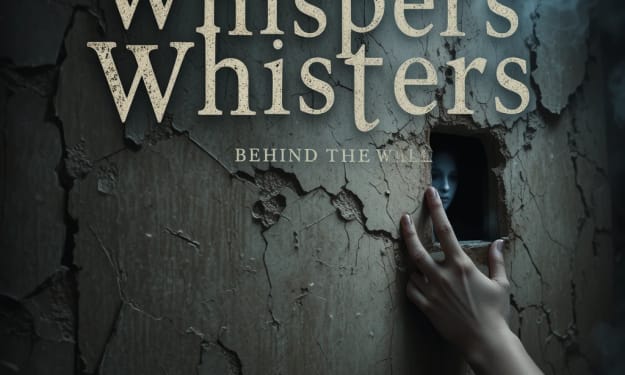
Whispers Behind the Wall
When Miriam Fletcher inherited her grandmother’s crumbling Victorian house in the quiet village of Ashford Hollow, she almost refused it. She had never felt close to her grandmother—an austere, reclusive woman with cold eyes and colder words. But after her recent divorce and the slow collapse of her job as an art teacher, the house was all she had left.
By Esther Sun8 months ago in Horror
The Silence by Tim Lebbon: A Harrowing Tale of Sound-Based Apocalypse
Introduction: When Silence is the Only Survival Tim Lebbon's The Silence (2015) presents a terrifyingly original plot in a world saturated with zombie outbreaks and viral pandemics: a swarm of deadly creatures that hunt by sound. In this gripping horror-thriller, humanity is forced to choose between remaining silent and being eaten alive. One of the most unsettling apocalyptic novels of the last ten years is The Silence because of its relentless tension, emotional depth, and brutal survival stakes. A story like this forces readers to consider the question, "How long could you survive without making a sound?" In this in-depth analysis, we’ll examine: The terrifying sound-based apocalypse of the book How Lebbon creates uncontrollable tension Themes of family, sacrifice, and human fragility Comparisons to other survival horror films and A Quiet Place Why The Silence remains a must-read for horror fans The Premise: A World Where Noise Means Death The novel follows Ally, a deaf teenager, and her family as they navigate a sudden global catastrophe. The "vesps," a species that has never been seen before, emerge from underground caves blind, ravenous, and extremely sensitive to sound. The Crucial Aspects of the End Times: Within a matter of hours, cities are reduced to slaughterhouses as the vesps attack anything that makes noise. Governments collapse as emergency broadcasts only worsen the carnage. Survivors must learn absolute silence or die. Ally’s deafness gives her family a unique advantage—she’s already adapted to a silent world. But as society crumbles, they soon realize that other humans may be just as dangerous as the creatures. The Horror of Sound: How Lebbon Builds Dread Unlike traditional monster stories, The Silence derives terror from what you can’t do—speak, scream, or even move carelessly. The key to Lebbon's mastery of suspense is: 1. The Constant Threat posed by Noise Every action—a footstep, a whisper, a dropped object—could mean death. The tension is constant, forcing readers to imagine their own survival in such a world. 2. The Vesps: An Unlikely Threat They don’t stalk or play with prey—they swarm and consume. Their origin is never fully explained, making them even more frightening. They evolve, adapting to human tactics in horrifying ways. 3. The Psychological Toll of Silence Lebbon doesn’t just focus on physical survival—he explores how silence warps the mind. The following must be kept out: Grief (no crying for the dead) Fear (there are no terrified screams) Conflict (no arguing over decisions) The result is a suffocating atmosphere where even breathing feels dangerous. Themes: More Than Just a Characteristic of a Animal While the vesps are terrifying, The Silence is ultimately a story about humanity under pressure. 1. Family Bonds vs. Survival Instinct Ally’s father, Huw, makes increasingly brutal choices to protect his family. The novel asks: How far would you go for those you love? 2. The Fragility of Civilization Within days, society descends into mob rule, religious fanaticism, and cannibalism. Lebbon suggests that monsters don’t just exist outside—they’re inside us all. 3. Disability as Strength Ally’s deafness, once a challenge, becomes her greatest asset. The novel flips the script on traditional survival narratives, showing that adaptation is the key to endurance. Comparison to A Quiet Place: Similar Premise, Different Execution Many compare The Silence to A Quiet Place (2018), but the two diverge in key ways: Aspect The Silence A Quiet Place Creatures Vesps (evolving, swarm-based) "Death Angels" (stalkers) Tone Darker, more brutal More hopeful, family-centric Deaf Character’s Role Ally adapts but isn’t idealized Regan’s hearing aid becomes a weapon Human Threat Major focus (cannibals, cults) Minimal While both are excellent, The Silence leans harder into cosmic horror and societal collapse, making it the darker, more unsettling experience. Why The Silence Still Resonates Today 1. The Fear of Losing Communication The concept of forced silence is particularly terrifying in this day and age of constant digital noise. The novel explores what happens when language, music, and human connection are stripped away. 2. The Real-World Parallels Pandemic lockdowns (isolated families fearing invisible threats) Climate change (ancient calamities brought about by reckless human action) Echo chambers on social media (the vesps, a metaphor for viral hysteria) 3. The Unforgettable Ending Without spoilers, Lebbon delivers a finale that’s both heartbreaking and hauntingly ambiguous, leaving readers to ponder the true cost of survival.
By Silas Blackwood8 months ago in Horror
Bird Box by Josh Malerman: A Terrifying Exploration of Fear, Survival, and the Unknown
The Book That Changed the Face of Apocalyptic Horror Bird Box, Josh Malerman's debut novel, captivated horror readers in 2014 with its chilling depiction of a world where seeing is fatal. The book’s premise—an unseen force drives people to violent madness upon sight—captivated readers and later inspired the hit Netflix film starring Sandra Bullock. However, Bird Box is not simply a viral sensation. It’s a masterclass in psychological horror, blending relentless tension, deep character study, and existential dread. It is still one of the most influential horror novels of the 21st century, nearly ten years after it was published. In this deep dive, we’ll explore: The terrifying premise of Bird Box How Malerman crafts fear without showing the monster The novel’s themes of motherhood, trust, and survival Why Bird Box still haunts readers today The Hypothesis: In a world where looking is fatal, Malorie, a woman who lives in a post-apocalyptic world where anyone who sees an unknown entity is driven to homicidal rage, is the protagonist of the book. Survivors must blindfold themselves to stay alive, turning every outdoor journey into a nerve-wracking game of sound and memory. Malorie, along with two young children she calls only "Boy" and "Girl," embarks on a perilous river journey to a rumored safe haven. The problem? They must do it blindfolded. Why This Concept Works So Well The monster is never seen – By never describing the entity, Malerman forces readers to imagine something far worse than any visual could provide. Survival depends on vulnerability – Characters must willingly blind themselves, heightening tension in every scene. The fear is universal – Unlike zombies or plagues, this horror exploits a fundamental human instinct: the need to see. How Malerman Creates Fear: The Horror of the Unseen Bird Box's moderation is one of its greatest assets. Unlike many horror stories that rely on gore or jump scares, Malerman’s terror is psychological, built through: 1. Lack of Perception With characters blindfolded, every sound, touch, or whisper becomes a potential threat. Readers experience the world as Malorie does—uncertain, disoriented, and hyper-alert. 2. The Madness of Others Flashbacks reveal how society collapsed, with infected individuals describing beautiful visions before turning violent. The unseen force is made even more disconcerting by the contrast between wonder and horror. 3. The Paranoia of Trust In a world where opening your eyes could mean death, who can you rely on? The novel explores how fear erodes human connection, leading to betrayal and isolation. Themes: More Than Just a Monster Story While Bird Box is undeniably terrifying, its deeper themes elevate it beyond standard horror fare. 1. Motherhood and Survival Instinct Malorie’s journey is as much about protecting her children as it is about survival. Her decision to train Boy and Girl in extreme discipline—forcing them to rely on hearing alone—raises ethical questions about love and necessity in a broken world. 2. The Fragility of Sanity The infected don’t just die—they lose themselves in ecstatic visions before turning violent. This suggests that the entity doesn’t just kill; it reveals something horrifying about human nature. 3. The Fear of the Unknown By never explaining the creatures, Malerman taps into Lovecraftian horror—the idea that some truths are too terrible to comprehend. The novel’s power lies in what it doesn’t show. Comparing the Book to the Movie on Netflix The 2018 Netflix film brought Bird Box to a wider audience, but there are key differences: Aspect Novel Film Malorie’s Character More introspective, haunted More action-driven The entity was never described and was only briefly depicted (controversial). Ending Ambiguous, open to interpretation More concrete, hopeful While the film is effective, the book’s unseen horror and deeper psychological exploration make it a richer experience. Why Bird Box Still Haunts Readers Today 1. It appears strangely plausible. In a post-pandemic world, the idea of an invisible, unstoppable threat resonates more than ever. The themes of survival, isolation, and false information come across as unsettlingly familiar. 2. The Horror Lingers Because the monster is never seen, readers keep imagining it long after finishing the book. This lingering dread is a hallmark of great horror. 3. It Reinvents Apocalyptic Fiction Unlike zombie or virus stories, Bird Box presents a threat that can’t be fought, only avoided. This makes survival feel even more desperate. Final Verdict: A Modern Horror Classic Bird Box isn’t just a scary story—it’s a brilliant exploration of fear itself. By forcing characters (and readers) to confront the unknown, Malerman crafts a horror novel that’s as thought-provoking as it is terrifying. Have you read Bird Box? Could you survive blindfolded?
By Silas Blackwood8 months ago in Horror
The Terrifying Pandemic Horror Twist in Your Shadow Half Remains
How Sunny Moraine’s Novel Reinvents Apocalyptic Fear In an era still reeling from real-world pandemics, horror fiction has evolved to reflect our deepest anxieties—not just about disease, but about the collapse of human connection. Sunny Moraine’s Your Shadow Half Remains (February 2024) takes pandemic horror to a chilling new level with a simple, devastating premise: what if eye contact made people violently insane? This is not another Bird Box imitation. Moraine’s novel strips survival horror down to its most primal fear—the inability to trust anyone, even yourself—and crafts a claustrophobic, psychological nightmare that lingers long after the last page. In this deep dive, we’ll explore: The terrifying premise of Your Shadow Half Remains How it differs from other horror stories about pandemics The real-world fears it exploits Why this could be 2024’s most unsettling horror novel
By Silas Blackwood8 months ago in Horror
The Black River Orphan: A Cursed River in New England in the 19th Century
Introduction In the shadowy corners of 19th-century New England folklore, few tales are as chilling as that of The Black River Orphan—a cursed river said to whisper the names of the drowned and lure the unwary to their doom. This spectral waterway, shrouded in Puritan guilt and whispered legends, embodies the region’s deep-rooted fears of the supernatural and the unresolved sins of the past. This article explores the origins of The Black River Orphan, its ties to historical anxieties, and its lasting influence on horror literature. We’ll examine: The real-life New England history that shaped the legend Tragic drownings, eerie apparitions, and forbidden rituals are all part of The River's Curse. Puritanical Dread: Why 19th-century New England was a good place for these kinds of stories Literary Legacy – How the curse echoes in modern horror.
By Silas Blackwood8 months ago in Horror
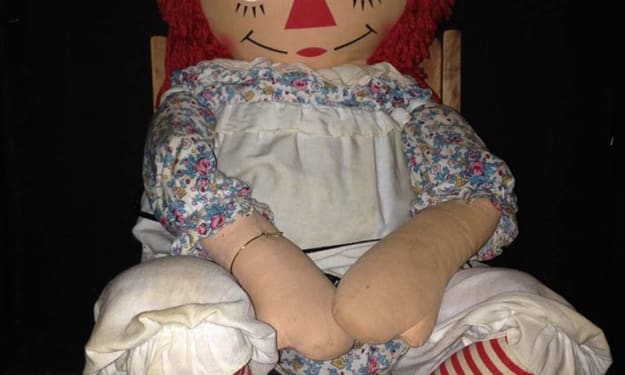
The horror of the Annabelle Doll. Content Warning.
The Horror of the Annabelle Doll: A Tale of Terror and Possession Few objects in the world of horror carry as much chilling notoriety as the Annabelle doll. Made infamous by the real-life accounts of paranormal investigators Ed and Lorraine Warren, as well as popularized by a series of films within The Conjuring universe, the Annabelle doll embodies pure malevolence wrapped in an innocent, vintage exterior.
By raven kade8 months ago in Horror
The Best Brand-New Horror Reads for 2024
Rolling Stone’s Must-Read Picks for the Year’s Scariest Stories In 2024, horror literature is doing well because authors are pushing the boundaries, combining genres, and creating new nightmares that will keep readers up until midnight. This year's lineup includes everything from folk horror to cosmic dread and supernatural hauntings to psychological thrillers. Here are Rolling Stone’s picks for the best new horror books of 2024—each one guaranteed to send chills down your spine.
By Silas Blackwood8 months ago in Horror