book reviews
Book reviews for horror fans; weather a sleepless night with literary accounts of hauntings, possessions, zombies, vampires and beyond.
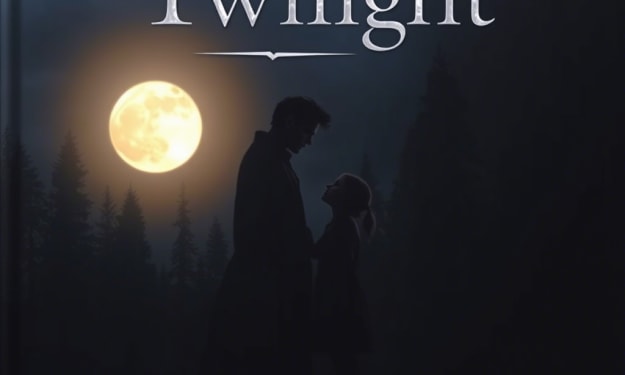
Twilight, Book 1 : Twilight
🌧️ A New Life in a Rainy Town Isabella “Bella” Swan is a quiet, thoughtful 17-year-old girl who leaves the sunny state of Arizona to move in with her dad, Charlie, in the small, rainy town of Forks, Washington. Bella makes this move so her mom can travel with her new husband.
By Muhammad Hayat9 months ago in Horror
A mirror that shows a different reality each night.. AI-Generated.
It started on a cold Tuesday night. Maya had just moved into a worn-down apartment on the third floor of an old building downtown. The paint was chipped, the pipes groaned, and the windows barely closed — but the rent was cheap and she needed a fresh start after her messy breakup and even messier bank account.
By Amar Mughal9 months ago in Horror
Frankenstein
Frankenstein by Mary Shelley is one of the most famous horror and science fiction stories ever written. But it's more than just a tale of a scary monster. It's a powerful story about science, ambition, loneliness, and what happens when we try to play the role of God.
By Muhammad Hayat9 months ago in Horror
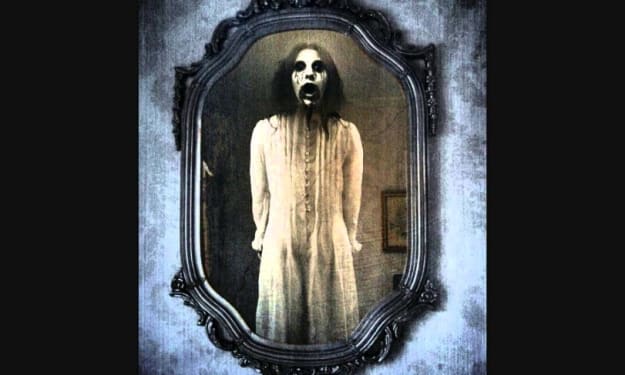
The Mirror | Horror Story | Creepy Story. AI-Generated.
The story begins. Neha was a simple girl of 23 years. She had recently rented a flat in an old part of the city. The flat was not big, but it was cheap and in a peaceful place.One day she was looking at old items in the furniture market when her eyes fell on a big and beautiful mirror in a shop. A mirror with a wooden frame, a little rusted but with a very royal look.The shopkeeper said,"It is a very old mirror, madam; it is said to be of the royal family... but I will give it to you for cheap."Neha liked the mirror very much. She bought it and hung it on the wall of her room.Little did she know, this mirror would not only show her face... but would steal her soul.
By Horror best kahani9 months ago in Horror
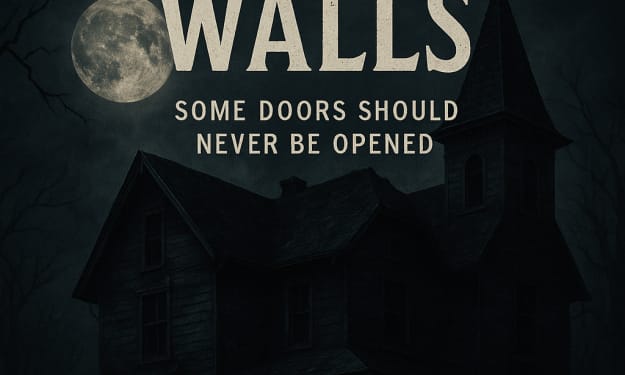
Whispers in the Walls
Rain lashed against the crooked windows of Black Hollow Manor, each drop sounding like a faint tap on a coffin lid. The manor had stood for over two centuries, long abandoned and buried in the woods of Raven’s Hollow, where even animals refused to tread. Locals called it cursed. Stories of missing hikers, disembodied screams, and the faint glow of lanterns in the dead of night haunted the nearby village. No one dared approach after sunset.
By Sakibul Islam Sakib9 months ago in Horror
Moby-Dick
Moby-Dick, written by Herman Melville and published in 1851, is one of the greatest adventure novels in American literature. It's a story about a dangerous journey across the ocean, a mysterious white whale, and one man's obsessive quest for revenge. But it’s also a deep book filled with meaning about life, death, nature, fate, and the struggle between man and the unknown.
By Muhammad Hayat9 months ago in Horror
The “Dark Forest”
One of humanity's most profound questions has long been a topic of discussion in science fiction: Are we the only ones in the universe? The paradox that physicist Enrico Fermi famously described in the 1950s is that the cosmos remains eerily silent despite decades of searching for extraterrestrial intelligence. Where is everyone, if intelligent life is statistically likely to exist elsewhere? The Dark Forest theory, which has captured the imaginations of sci-fi writers, thinkers, and fans worldwide, is one of the most unsettling responses to this question. The theory provides a terrifying explanation for the Fermi Paradox, and Chinese science fiction author Liu Cixin popularized it in his acclaimed novel The Dark Forest, the second book in the Remembrance of Earth's Past trilogy. According to Liu's vision of the universe, intelligent life is afraid, not because it is scarce but because it is silent. The Hypothesis: a cosmic disguise Liu Cixin depicts the universe as a vast, pitch-black forest in The Dark Forest. Every civilization is like a vigilant and armed hunter who creeps through the trees. This theory is based on the following fundamental assumptions: Civilizations want to stay alive. The universe has a finite supply of resources. It is impossible to fully comprehend another civilization's intentions. Any civilization could, with enough time, develop the means to harm other civilizations. In a universe where communication is slow and intentions are ambiguous, the safest course of action is to remain silent—or even worse, to eliminate potential threats before they can eliminate you. This disturbing conclusion is based on these four presumptions. In the same way that a hunter might shoot at the first sign of movement in the woods, an advanced alien species might decide to destroy any civilization that is detected as a precaution. versus the "Dark Forest" Other Perspectives on Life on Other Planets One of several answers to the Fermi Paradox is the Dark Forest theory, each with its own philosophical and scientific implications: In order to let humanity develop naturally, the Zoo Hypothesis proposes that advanced civilizations are deliberately avoiding contact with Earth. The Great Filter suggests that intelligent life may self-destruct before reaching the stars, a stage in the evolution of life that is extremely unlikely or catastrophic. According to the Rare Earth Hypothesis, conditions comparable to those found on Earth are so uncommon that intelligent life is virtually nonexistent elsewhere. The Dark Forest theory stands out thanks to its unadulterated psychological realism. It is based on a fundamental distrust and the logic of survival, not technological barriers or natural rarity. It portrays the universe not as a hopeful frontier but rather as a high-stakes space cold war in which extinction is the price of a mistake. The Development and Origins of Literature The Dark Forest concept's philosophical underpinnings have previously appeared in Western science fiction, despite the fact that Liu Cixin brought the theory to prominence. Similar ideas were explored by authors like Fred Saberhagen, Greg Bear, and Vernor Vinge—where advanced alien civilizations might act ahead of time or hide out of fear. As an illustration of interstellar Darwinism, for instance, in Saberhagen's Berserker series, self-replicating machines destroy intelligent life across the galaxy. However, Liu's interpretation distills these concepts into a coherent metaphor. The forest is dark not because it is empty, but rather because it is full of watchers who don't want to be seen or hunted because they don't want to be heard. Reflections from the Real World: Should We Be Broadcasting? The theory has serious repercussions not only for science fiction but also for actual endeavors like SETI and METI (Search for Extraterrestrial Intelligence). Should we actively reveal our location by sending messages into the cosmos? Or would that be like starting a campfire in a dark, predator-infested forest? Stephen Hawking and other scientists, including him, argued that contact with a more advanced civilization might not go well for us, so they advised against active broadcasting. Hawking believed that civilizations with the ability to travel across galaxies might view us as insignificant or disposable, drawing comparisons to past encounters on Earth, such as European colonization. Conversely, proponents of METI argue that our atmospheric composition or radio leakage would likely have already informed any civilization capable of receiving our signals. Additionally, they argue that a species that was truly intelligent would not have evolved into an aggressive species. However, the Dark Forest theory challenges this assumption, arguing that pacifism may be a fatal error if survival is the top priority. Implications for Ethics and Philosophy The Dark Forest theory has a powerful emotional impact not only because it is practical but also because it psychologically reflects our own fears. It forces us to answer unsettling questions: Is the default mode of intelligent life mistrust? Is communication necessary for cooperation? Are humans projecting their own conflictual past onto the universe? The Dark Forest is, in a way, not just about aliens but also about us. It is a mirror that shows our own war, colonization, and apprehension of the unknown history. This begs the poignant question, "Will we be ready to meet not just another species but ourselves?" if we ever do make contact. The Function of Storytelling The Dark Forest theory provides a fertile ground for tension, drama, and moral complexity in science fiction narratives. It allows for situations in which silence is the only way to stay safe, alliances are fragile, and trust is fatal. It proposes a universe shaped by paranoia, preemption, and existential dread rather than the utopian visions of peaceful galactic federations. This plays out on a grand scale in the trilogy by Liu Cixin: Earth faces an impending alien invasion, attempts to communicate or defend face unexpected consequences, and humanity must confront its intelligence and unity's limits. It's a story that shifts from a hopeful look at space exploration to a sobering look at how to survive in the universe. In the end, a cautious, lonely cosmos One of the most compelling and eerie explanations for the vast silence of the universe is the "Dark Forest" theory. It only cautions against the possibility of evil from extraterrestrial life. In doing so, it alters our conception of alien contact, portraying it instead as a risky wager in a perilous game of survival rather than a time of triumph or insight. The Dark Forest continues to be a potent metaphor for science fiction and science fiction, reminding us that while we may look into the stars with wonder, the stars may be watching back with fear.
By rasong nokrek9 months ago in Horror
STORY NAME "HIDAYAH"
Joynagar was a quiet, small community that had almost vanished into history. It sat in silence, surrounded by thick forests and a few huts. A girl named Hidayah lived in an old brick house at the edge of this village. a mystery within her. Hidayah had never been the same. She kept to herself and spoke little. Nobody sat beside her at school. She laughed erratically and occasionally screamed in anguish into thin air, according to rumors spread among the villagers. She had lived by herself in that decaying house since her parents' enigmatic deaths. The villagers were of the opinion that there was something dark and unseen within her. Neela, a brave girl, once attempted to become friends with Hidayah. The following day, Neela passed away from a fever and fear, yelling until she died, "The mirror... it was looking at me..." Since then, no one has dared venture near Hidayah's residence. A young man by the name of Rakib arrived in Joynagar a year later. He was a school teacher who didn't believe in ghost stories and was from the city. He saw her at the gate one evening as he passed Hidayah's house. Despite the paleness and hollowness of her eyes, there was something oddly captivating about her. Rakib came to her door the following day, curious. It was slowly opened, and Hidayah said, "You shouldn't have come." They will be furious. Who exactly are they? Rakib inquired. She replied in a whisper, "The ones who live inside me. Sometimes I can't stop them..." Strange things started that very night. Rakib awoke in a cold sweat. A girl stood in the corner of his room, her hair tangled with fallen leaves, and all she had was a dark, hollow hole where her face should have been. He shrieked. The villagers broke into his room the next morning. Rakib had vanished. The bed was unoccupied. Strange symbols were marked on the walls. Additionally, three ominous words were carved into the wood above the bed: "We are now three." As well, Hidayah's house was empty. Nobody was aware of her whereabouts. However, at night, whispers in the wind and soft laughter were heard through the trees: Are you by yourself?
By Nafis khan9 months ago in Horror
“Behind the Eyes – The Final Reflection”
The mirror in the bungalow was not your typical mirror. It was once referred to as a "Face Mirror" by the villagers—a device that not only reflects your image but also steals your soul. Aronno didn't know. He had no idea that the mirror was made from the tears of a widow whose husband had been burned to death because he had been accused of being a witch. Forever, her spirit had been imprisoned in the mirror. The reflection in the mirror, the one with the blood-red eyes, was no longer his the third night. It looked at him with a cold hatred and vengeance. Although it did not speak, its lips moved as though to say: "It's your turn now..." Aronno was unable to sleep by himself that very night. He curled up in bed, tightly shutting the windows and locking the doors. However, at precisely 3:13 a.m., his door opened by itself. There was no cold breeze that followed; all that was left was a horrible stench that smelled like burning flesh. He sat up with wide eyes and a dry throat. Nobody was outside. He made his way toward the mirror slowly. And then he screamed—but no sound came out.
By Nafis khan9 months ago in Horror